
✎ Madras HC strength increased to 66 with 15 new judges, reducing pendency and filling vacancies.
Relevance for Banking, SSC & RBI Grade B exams: Polity
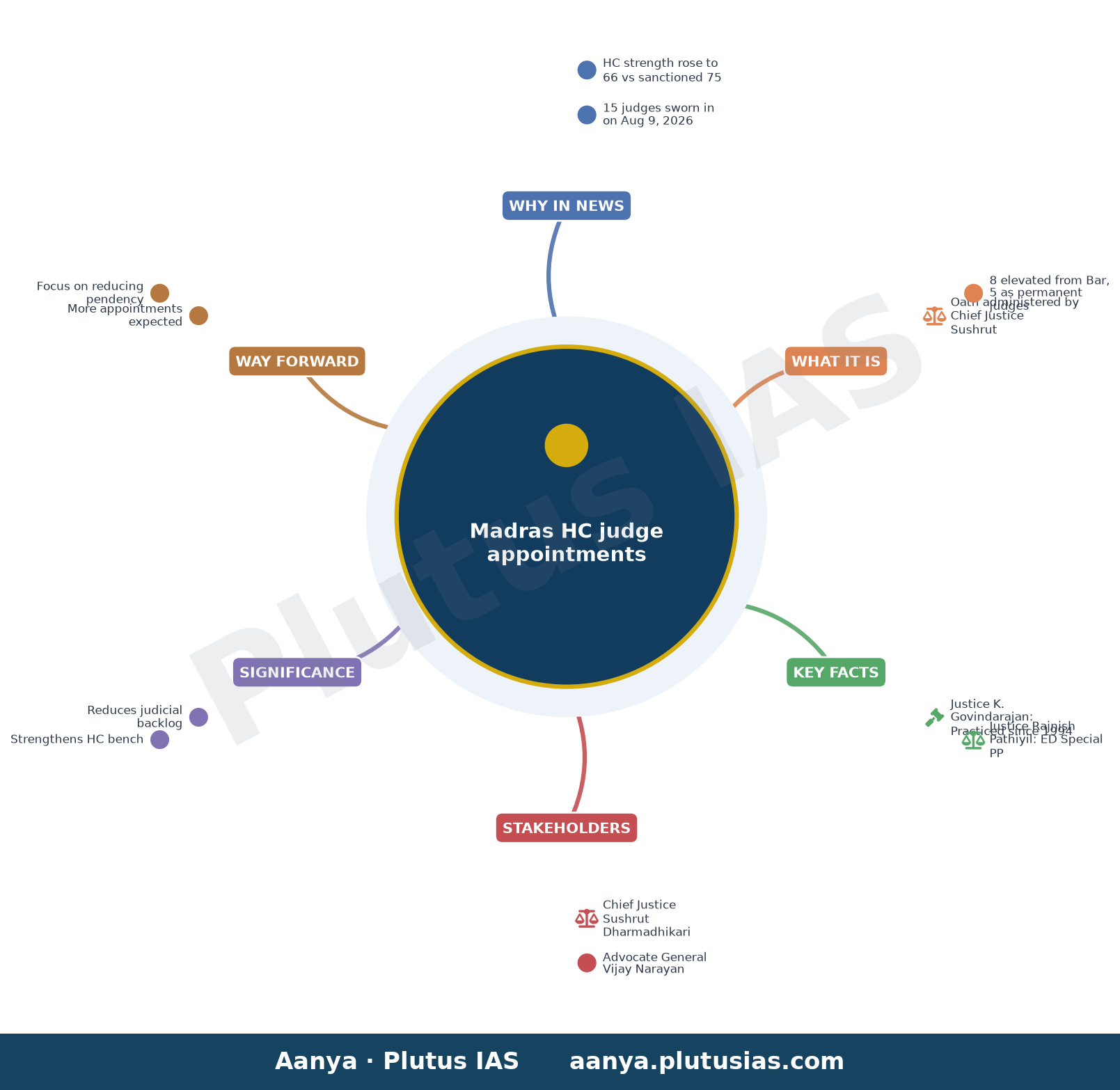
Fifteen new judges were sworn in at the Madras High Court on August 9, 2026, increasing the court’s working strength to 66 against its sanctioned strength of 75. The appointments included eight lawyers elevated directly as permanent judges and seven others appointed as additional judges for fixed tenures. Among them were Justice K. Govindarajan, a former Deputy Solicitor General, and Justice Rajnish Pathiyil, who had served as Special Public Prosecutor for the Enforcement Directorate (ED). The new judges bring diverse expertise, including intellectual property law, indirect taxes, and cyber forensics, enhancing the court’s judicial capacity.
This development holds significance for Banking, SSC, and RBI Grade B exam aspirants as it reflects the constitutional process of judicial appointments under Article 217 of the Constitution, which involves the Governor, Chief Justice of India, and the President. Understanding the functioning of high courts, their sanctioned and working strengths, and the roles of judges in the judicial system is crucial for Polity sections in these examinations. Additionally, the emphasis on social inclusivity and gender representation in judicial appointments aligns with contemporary governance themes often tested in competitive exams.
Source: The Hindu
Generated by AanyaAi for educational purpose.
