
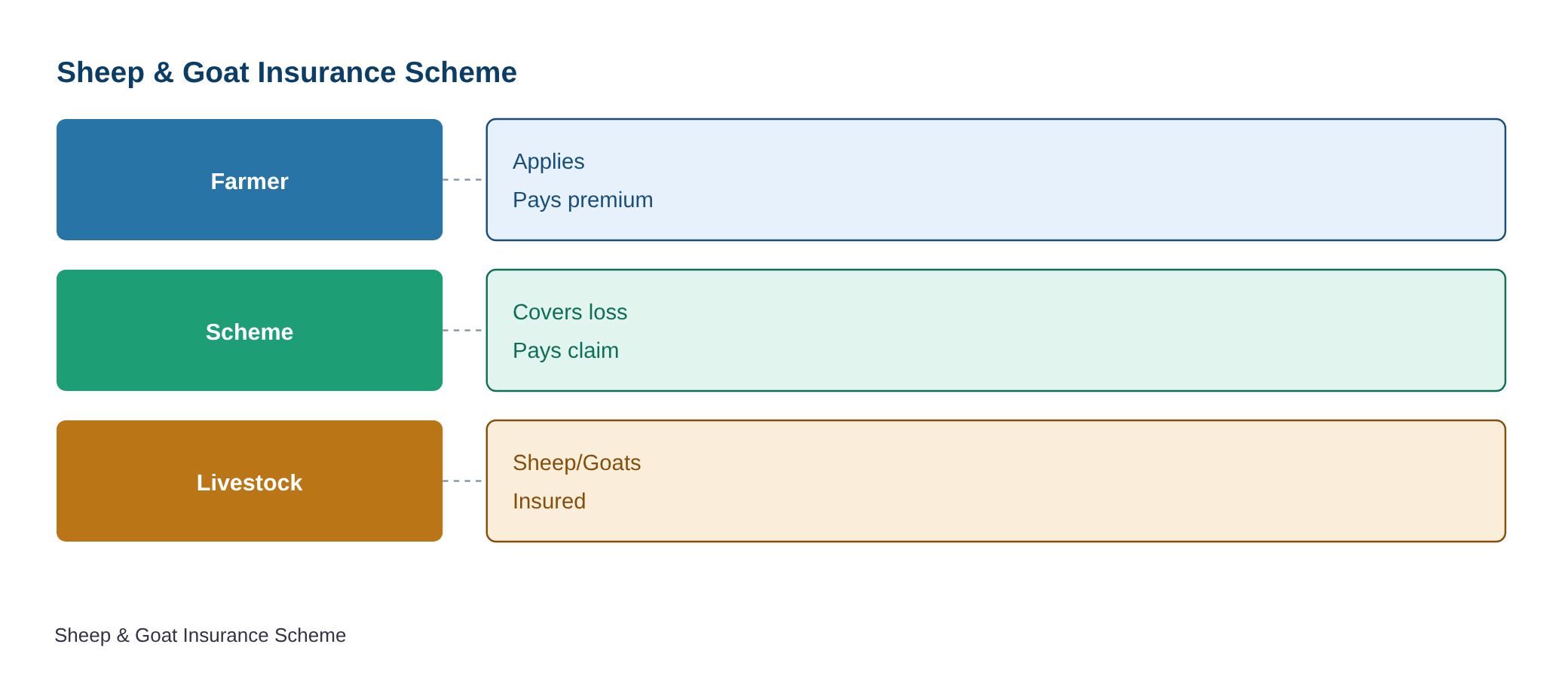
✎ Telangana’s sheep/goat insurance scheme at ₹13/animal/year aims to boost livestock productivity and welfare for shepherds.
Relevance for Banking, SSC & RBI Grade B exams: Polity & Governance
The launch of the sheep and goat insurance scheme in Karimnagar by the Telangana government highlights its focus on livestock welfare and rural economic upliftment. Under this scheme, shepherds can insure their animals at a minimal annual premium of ₹13 per animal, with the state covering the remaining cost, ensuring financial security against disease or death. This initiative aligns with broader governance goals of enhancing agricultural productivity and supporting marginalized communities, particularly those dependent on livestock rearing. For banking and SSC aspirants, understanding such welfare schemes is crucial as they reflect government priorities in rural development, which often influence credit policies, subsidies, and employment generation programs. RBI Grade B candidates should note how such schemes integrate with financial inclusion efforts, as insurance penetration and livestock-based livelihoods are key areas for policy intervention.
The scheme’s implementation through cooperative societies, with over 3,200 members across 750 societies, underscores the role of formal institutions in grassroots economic empowerment. The proposal to waive loans for sheep rearers and extend life insurance under the Indiramma Bima scheme further demonstrates the government’s multi-pronged approach to social security. For SSC aspirants, this provides context for questions on cooperative movements, rural welfare policies, and constitutional provisions related to animal husbandry. Banking candidates should recognize the potential for livestock insurance to drive financial products like micro-insurance and credit linkages, while RBI Grade B examinees may draw parallels with agricultural credit policies and risk mitigation strategies in rural economies.
Source: The Hindu
Generated by AanyaAi for educational purpose.
