
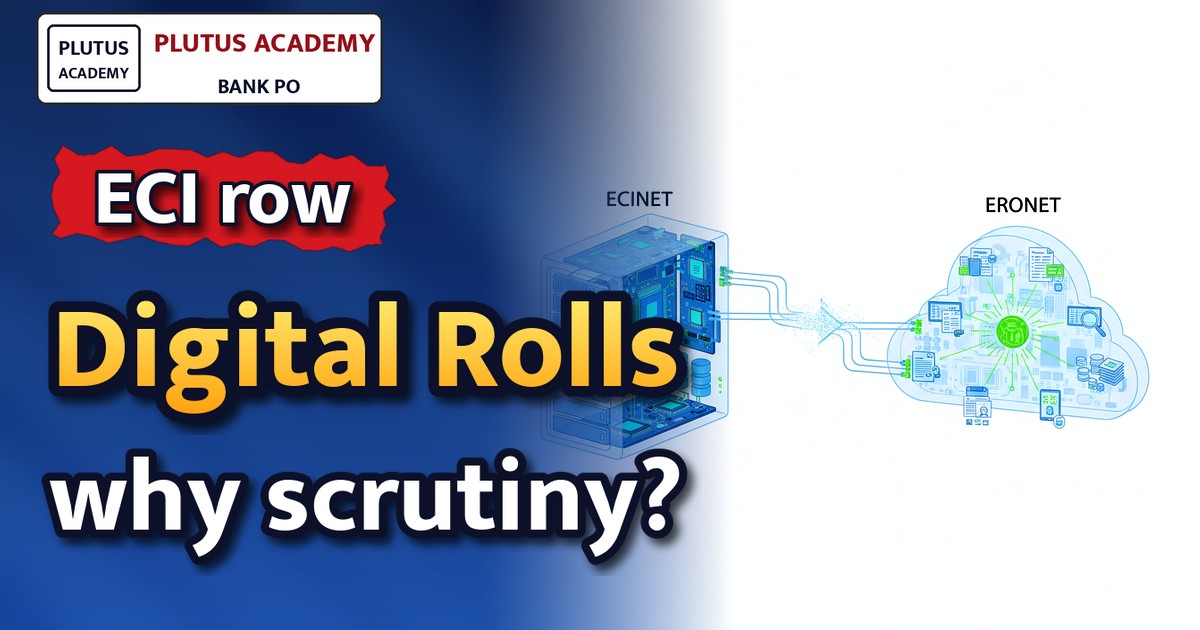
✎ ECINET and ERONET are critical digital platforms for managing electoral rolls, with recent scrutiny over ERO powers and centralization concerns.
Relevance for Banking, SSC & RBI Grade B exams: Polity
The Election Commission of India (ECI) uses two key digital platforms, **ECINET** and **ERONET**, to manage and revise electoral rolls across the country. ERONET, launched earlier, serves as a centralized system for processing voter registration, migration, and deletion requests, replacing 36 state-specific databases. It acts as a decision-support tool for Electoral Registration Officers (EROs), who are statutory authorities under the Representation of the People Act, 1950, responsible for preparing and revising voter lists. ERONET flags potential duplicate entries or discrepancies for the ERO’s review, who then conducts field verification before finalizing changes. Meanwhile, **ECINET**, introduced in January 2026, consolidates over 40 applications and services, including voter registration, roll searches, and e-EPIC downloads, streamlining processes for voters, candidates, and officials. Its electoral roll module, previously part of ERONET, now handles these functions under a unified system.
The functioning of these platforms has come under scrutiny, particularly regarding the **Special Intensive Revision (SIR)** process, where discrepancies in voter rolls are addressed. Concerns were raised by Election Commissioners Sukhbir Singh Sandhu and Vivek Joshi, who highlighted issues like the centralization of the electoral roll database—a traditionally decentralized process—and the software’s alleged curtailment of EROs’ statutory powers. Maharashtra’s Chief Electoral Officer, S Chockalingam, recently sought changes to ECINET, citing difficulties in EROs exercising their decision-making authority during the SIR process. For banking and SSC aspirants, understanding these systems is crucial as they reflect the ECI’s efforts to modernize electoral processes, which may appear in questions related to governance, digital initiatives, or constitutional bodies. For RBI Grade B candidates, the discussion on data centralization and decentralization in electoral rolls could be relevant in the context of administrative efficiency and digital governance, a topic often tested in economic and political awareness sections.
Source: The Indian Express
Generated by AanyaAi for educational purpose.

2 comments on “ECINET & ERONET: Election Commission’s Electoral Roll Systems Explained”