Relevance for Banking, SSC & RBI Grade B exams: Polity & Governance
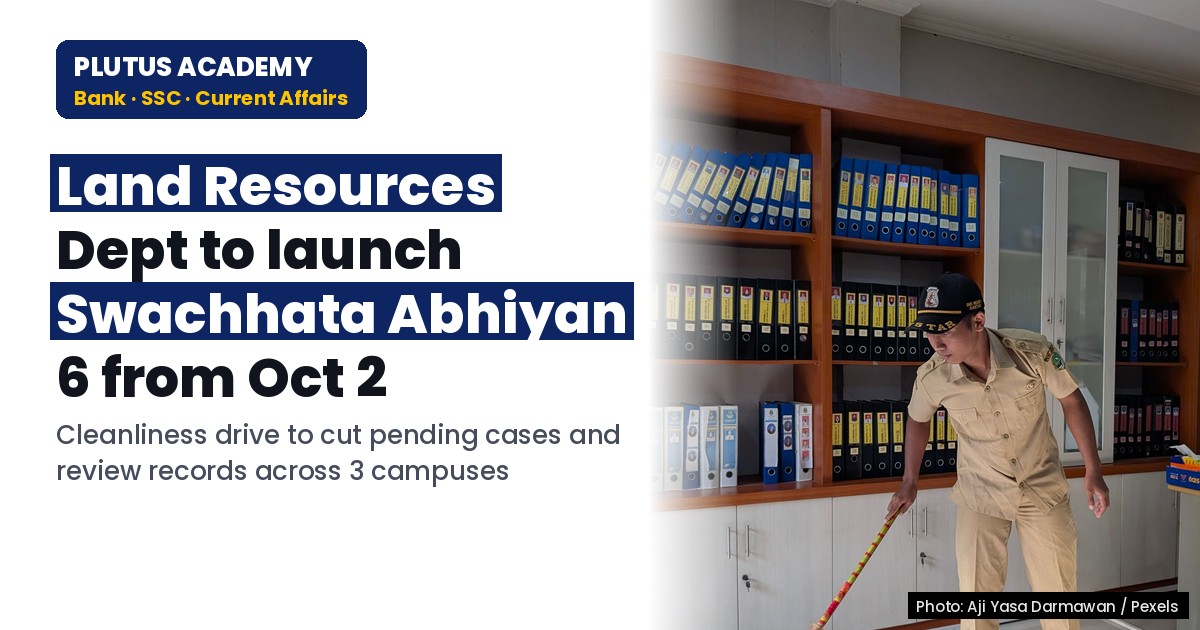
The Department of Land Resources is set to implement *Special Campaign 6* from 2 October to 31 October 2026, aligning with the government’s broader cleanliness initiatives to institutionalize sanitation and reduce pending matters in government offices. The campaign will be conducted across three premises—Kartavya Bhawan-3, CGO Complex, and Shivaji Stadium Annex—and follows a preparatory phase (15-30 September 2026) focused on setting targets for reducing pendency, reviewing records, removing e-waste, and planning cleanliness drives. Notably, during *Special Campaign 5.0*, the department achieved 100% disposal of public grievances, reviewed 2,415 physical and e-files for digitization or closure, and organized 16 cleanliness drives within its campuses. The campaign underscores the government’s commitment to transparency, efficiency, and citizen-centric governance, themes that are frequently tested in competitive exams like IBPS, SBI, and SSC, where questions on government schemes and administrative reforms are common.
For aspirants preparing for exams like RBI Grade B, understanding such campaigns is crucial as they reflect the government’s push for *minimum government, maximum governance*—a concept often highlighted in economic and governance sections. The emphasis on record management, waste reduction, and public service delivery also ties into broader themes of digital governance and sustainability, which are increasingly relevant in banking and SSC examinations. Questions may probe the objectives of such campaigns, their implementation mechanisms, or their impact on administrative efficiency, making this a key current-affairs topic for aspirants to contextualize within governance and polity frameworks.
Source: PIB (Press Information Bureau)
Generated by AanyaAi for educational purpose.
