
Relevance for Banking, SSC & RBI Grade B exams: Polity & Governance
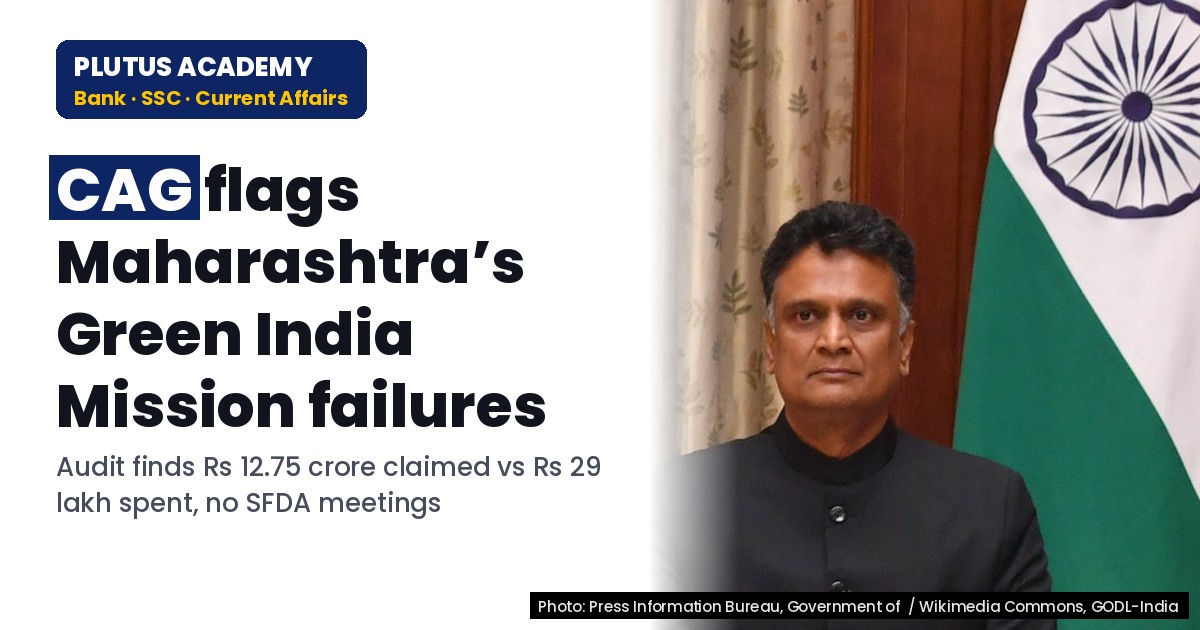
The Comptroller and Auditor General (CAG) of India has exposed severe lapses in Maharashtra’s implementation of the Green India Mission (GIM), a flagship afforestation programme under India’s climate action plan. The audit revealed systemic failures, including inflated survival claims of saplings, financial misappropriation, and institutional neglect. Funds amounting to Rs 12.75 crore were falsely reported as spent, while actual utilisation stood at just Rs 29 lakh. The state’s Forest Development Agency (SFDA) failed to revamp its structure as mandated, held no meetings in a decade, and even delayed fund releases by over 200 days. Such mismanagement highlights governance deficits that could undermine India’s climate commitments under the Paris Agreement, making it a critical issue for aspirants preparing for exams like RBI Grade B, where environmental governance intersects with policy and fiscal responsibility.
For banking and SSC aspirants, this case underscores the importance of auditing mechanisms, financial accountability, and the role of institutions in public welfare schemes. The CAG’s findings—such as unspent funds being diverted to unrelated districts and saplings being planted outside designated areas—reflect risks of corruption and inefficiency in government programmes. Such issues are often tested in exams through questions on governance, fiscal prudence, or the functions of constitutional bodies like the CAG. Understanding these failures can help candidates analyse similar scenarios in other schemes, linking them to broader themes of sustainable development and administrative reforms.
Source: The Indian Express
Generated by AanyaAi for educational purpose.

2 comments on “CAG Exposes Maharashtra’s Green India Mission Failures: Key Facts for Exams”