
Relevance for Banking, SSC & RBI Grade B exams: Polity & Governance
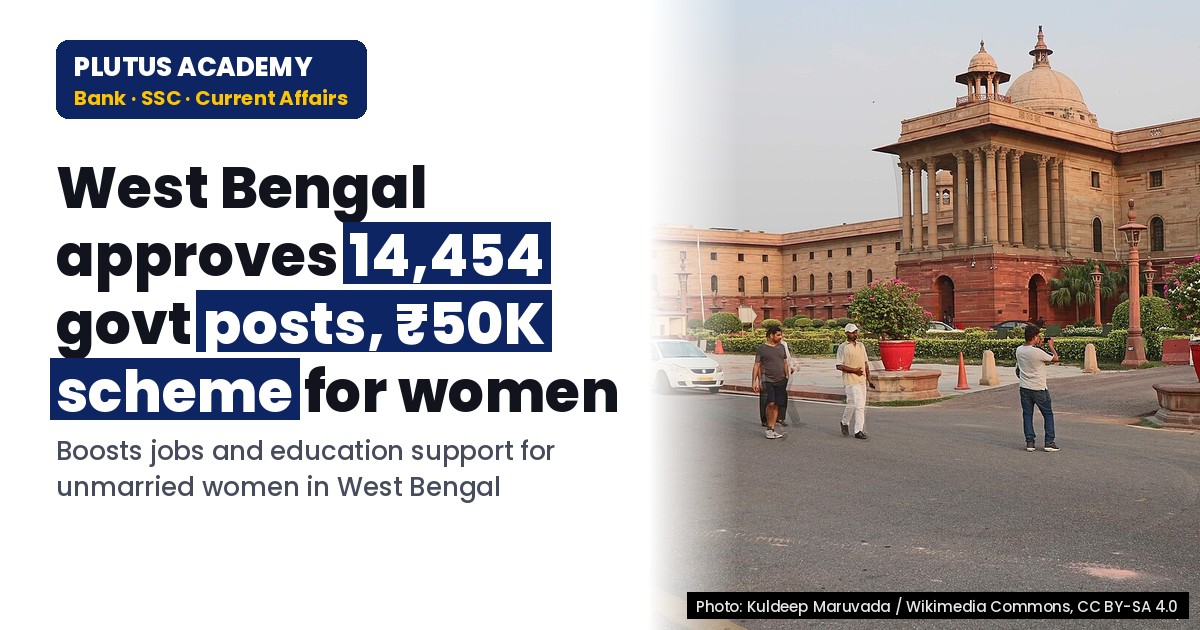
The West Bengal government’s recent approval of 14,454 government posts and the launch of the ₹50,000 Bhagini Nivedita Scheme for unmarried women pursuing higher education highlights key governance initiatives with broader implications for socio-economic development. The recruitment drive, aimed at filling vacancies across departments like forests, fire services, and prisons, aligns with the state’s commitment to job creation, a critical factor for banking and SSC exams where questions on government schemes, employment policies, and public sector recruitment often feature. The scheme’s focus on financial assistance for women’s education also underscores the state’s emphasis on gender inclusivity and human capital development, a theme frequently tested in RBI Grade B examinations under social justice and welfare policies.
Additionally, the increase in remuneration for ‘Karmabandhus’ (part-time sanitation workers) and the enhanced food allowance for SC/ST hostel students reflect the government’s efforts to address labor welfare and educational equity. For banking aspirants, such initiatives are relevant in understanding the interplay between fiscal policies, social sector spending, and economic growth, while SSC candidates may encounter questions on welfare schemes and their implementation. RBI Grade B candidates, in particular, should note how state-level policies can influence broader economic indicators like employment rates, inflation, and social development indices, which are often discussed in monetary policy and governance sections.
Source: Hindustan Times
Generated by AanyaAi for educational purpose.

2 comments on “West Bengal’s 14,454 govt posts & ₹50K scheme for women education”