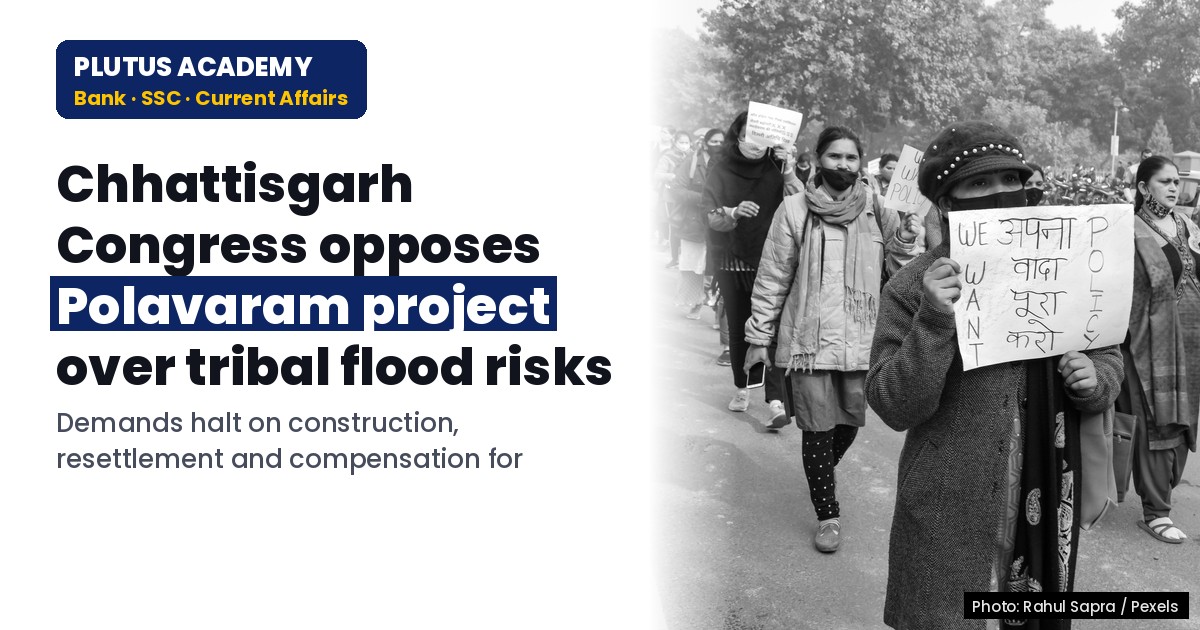
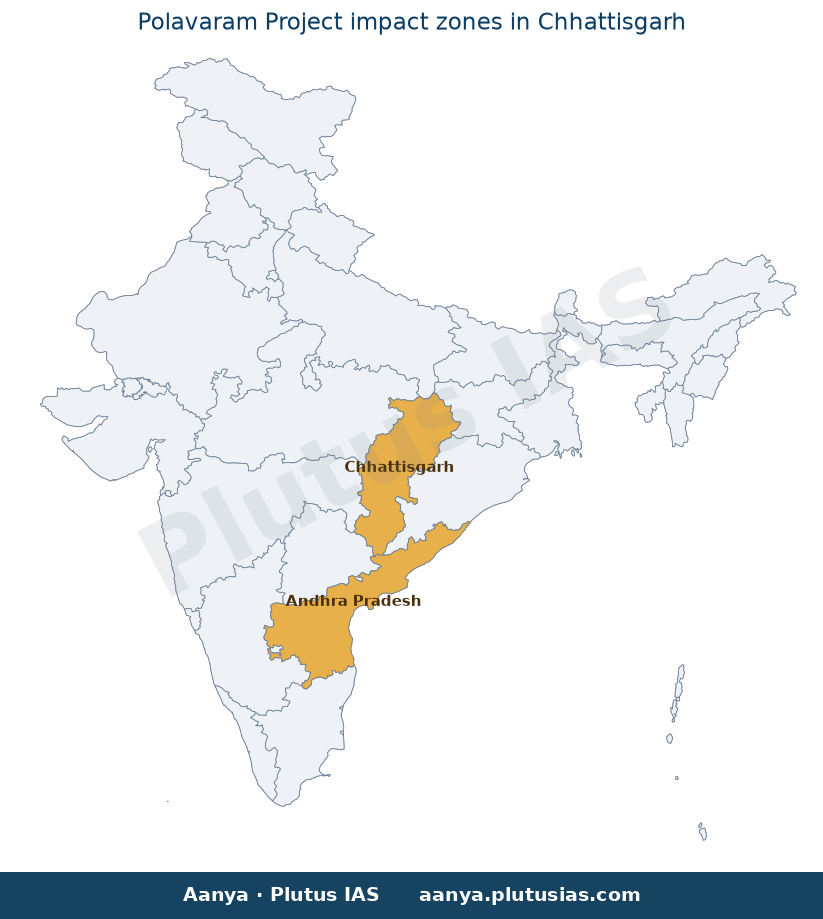
✎ Polavaram Multipurpose Irrigation Project in Andhra Pradesh may submerge villages in Chhattisgarh's Sukma, Bijapur, and Dantewada districts, leading to displacement and demand for rehabilitation.
Relevance for Banking, SSC & RBI Grade B exams: Polity & Governance
The recent opposition by the Congress in Chhattisgarh against the Polavaram Multipurpose Irrigation Project highlights critical governance and political challenges, particularly concerning inter-state river disputes and tribal rights. The Polavaram project, primarily located in Andhra Pradesh, threatens to submerge large parts of Chhattisgarh’s tribal-dominated districts like Sukma, Bijapur, and Dantewada, raising concerns over displacement, loss of fertile land, and cultural erosion. The Congress has submitted a memorandum to the Governor demanding a fresh survey of submergence areas, immediate halt to construction until proper rehabilitation and compensation policies are in place, and intervention by the central government. This issue underscores the broader theme of federalism, environmental justice, and the need for inclusive policymaking—topics frequently tested in exams like RBI Grade B, SBI PO, and SSC CGL, where questions on governance, federal relations, and constitutional provisions are common.
For banking and SSC aspirants, this case serves as a practical example of how political parties leverage constitutional mechanisms (like submitting memorandums to the Governor) to address regional grievances, reflecting the interplay between politics and administration. It also ties into broader themes such as environmental impact assessments, tribal welfare under the Forest Rights Act, and the role of state governments in inter-state disputes. Such real-world cases are often cited in descriptive questions or group discussions in competitive exams, where candidates are expected to analyze the interplay of governance, federalism, and social justice. Understanding these dynamics can help aspirants frame nuanced answers in exams that test both factual knowledge and analytical reasoning.
Source: amarujala.com
Generated by AanyaAi for educational purpose.
