
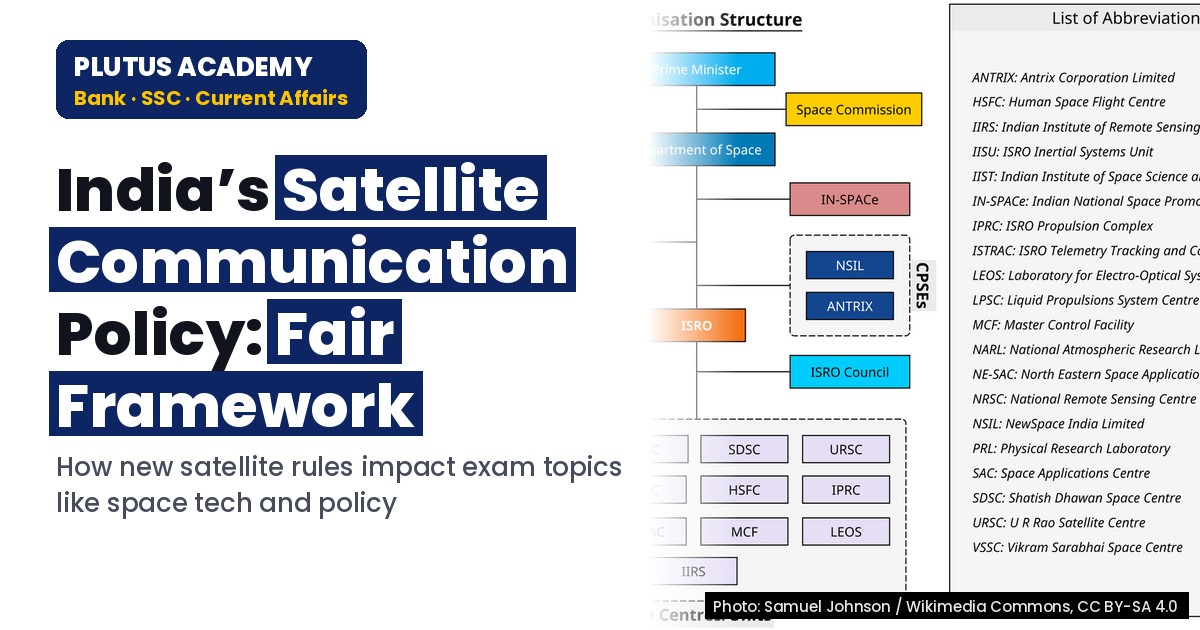
✎ India's satellite communication regulatory framework is designed to be fair and non-discriminatory, ensuring equitable access for all stakeholders.
Relevance for Banking, SSC & RBI Grade B exams: Science & Technology
India’s regulatory framework for satellite communication services is fair and non-discriminatory, as affirmed by the Department of Telecommunications (DoT) in response to concerns raised by the US Trade Representative (USTR). The DoT stated that India’s policies governing satellite communication services align with international standards and ensure a level playing field for all stakeholders, without favoring any particular entity or country. This framework is designed to promote competition, innovation, and affordability in the sector while maintaining national security and sovereignty. The government’s emphasis on transparency and adherence to global best practices underscores its commitment to fostering a robust and inclusive satellite communication ecosystem.
For aspirants preparing for Banking, SSC, and RBI Grade B exams, this development holds significance as it reflects India’s evolving digital infrastructure and its alignment with global trade norms. A sound regulatory environment in satellite communication can boost financial inclusion by enabling affordable broadband services, which are critical for digital banking and fintech growth. Additionally, the focus on non-discriminatory policies aligns with the RBI’s emphasis on fair competition in financial services, making it relevant for exam questions on regulatory frameworks and technology-driven financial services.
Source: PIB (Press Information Bureau)
Generated by AanyaAi for educational purpose.

2 comments on “India’s Satellite Communication Regulatory Framework: Fair & Non-Discriminatory”