
Relevance for Banking, SSC & RBI Grade B exams: Polity
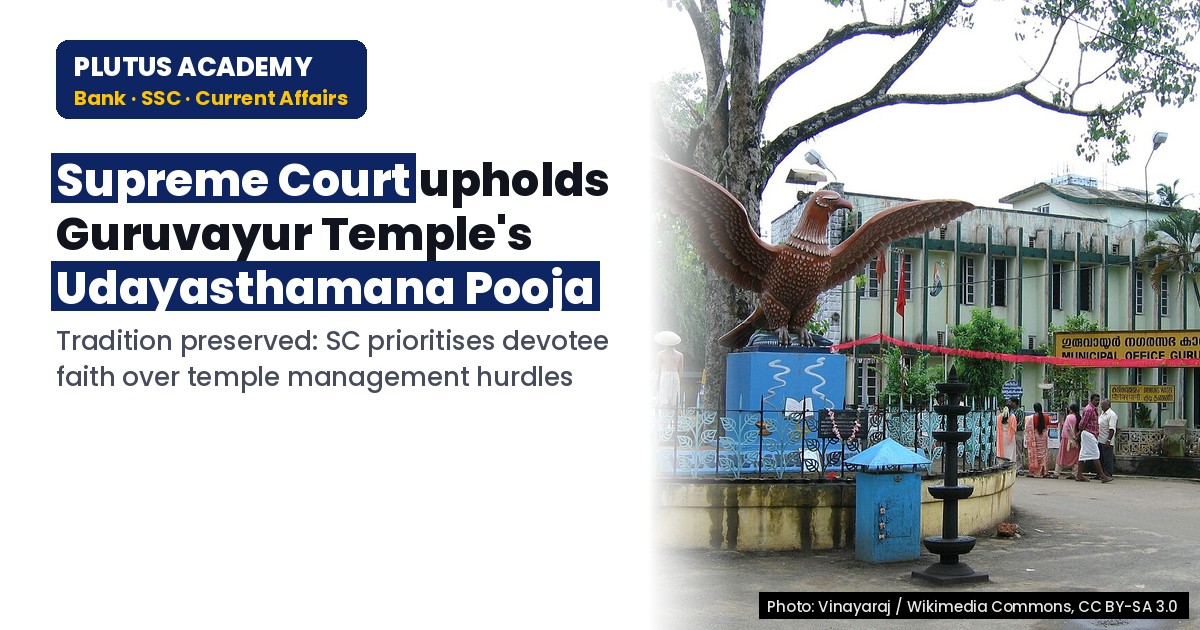
The Supreme Court on October 8, 2026, directed that the Udayasthamana pooja at the Guruvayur Sri Krishna Temple must be conducted strictly as per the temple’s age-old traditions, overriding management concerns. A Bench led by Justice Aravind Kumar emphasized that the faith and sentiments of devotees should take precedence over logistical challenges, such as the massive influx of pilgrims during Vrishchikam Ekadasi. The petitioners, including traditional managing families, had challenged the temple’s devaswom committee for attempting to alter or reschedule the ritual in recent years, arguing that it violated centuries-old practices. The court also highlighted that the pooja, a series of 15-18 rituals from sunrise to sunset, holds deep religious significance and cannot be compromised.
This judgment holds relevance for aspirants preparing for Banking, SSC, and RBI Grade B exams as it underscores the interplay between constitutional provisions like religious freedom (Article 25) and temple management under the Constitution’s Article 26. Questions on fundamental rights, secularism, and judicial interventions in religious matters are common in these examinations. Additionally, the case exemplifies how the judiciary balances tradition with administrative challenges, a theme often tested in polity and governance sections. Aspirants should note the Supreme Court’s emphasis on faith and tradition, which may appear in descriptive or analytical questions in mains exams.
Source: The Hindu
Generated by AanyaAi for educational purpose.

2 comments on “Supreme Court Upholds Guruvayur Temple’s Udayasthamana Pooja Ritual”