
Relevance for Banking, SSC & RBI Grade B exams: Economy
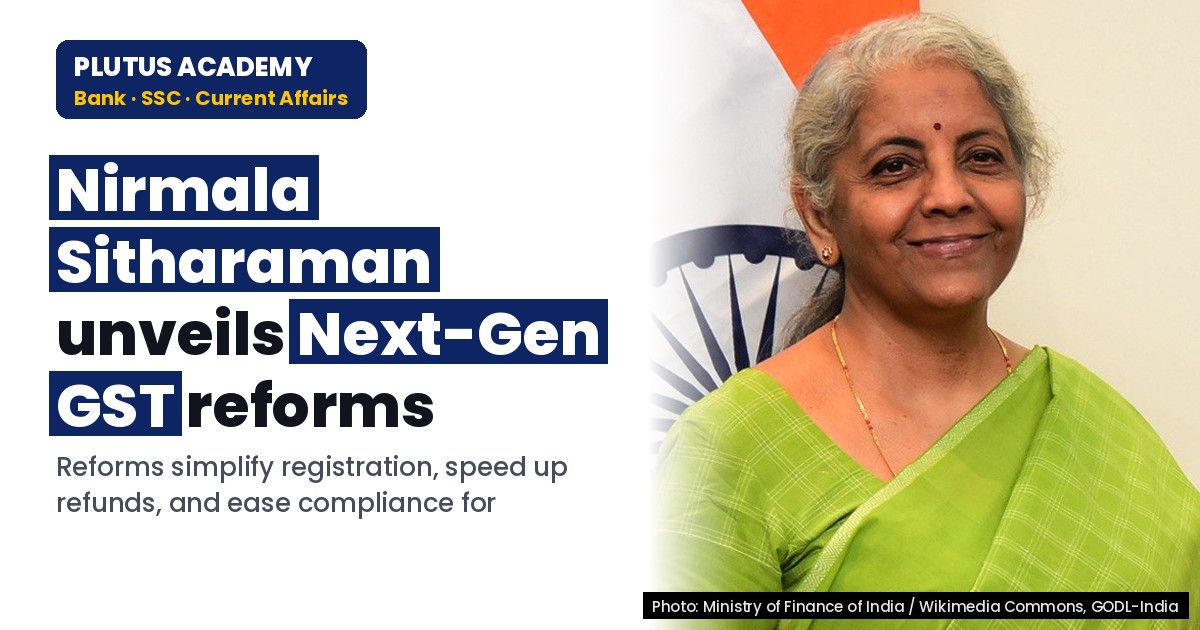
The latest GST reforms announced by the 57th GST Council Meeting, led by Finance Minister Nirmala Sitharaman, aim to streamline compliance and address long-standing grievances of taxpayers, such as delayed refunds, cumbersome registration processes, and harassment during disputes. Key measures include automatic acceptance of routine registration changes, faster refund acknowledgments (reduced from 15 to 10 days), and 90% refunds sanctioned within three days of acknowledgment, which will ease liquidity constraints for businesses, particularly MSMEs. The reforms also expand input tax credit to include employee health and life insurance, reduce harassment by restricting inspections to officers of the supply or destination state, and remove arrest powers for GST officers while raising the prosecution threshold from ₹1 crore to ₹5 crore and lowering penalties from ₹25,000 to ₹10,000. These steps are crucial for sustaining India’s growth momentum amid global economic headwinds, as they foster a more business-friendly environment and reinforce the single unified market vision.
For banking and SSC aspirants, these reforms highlight the government’s focus on ease of doing business, which is directly relevant to economic policies and financial inclusion. The emphasis on faster refunds and reduced compliance burdens underscores the importance of liquidity management and MSME support—key areas often tested in exams like IBPS PO and RBI Grade B. For SSC aspirants, the reforms reflect broader economic governance, including tax administration and dispute resolution, which are part of the syllabus for exams like SSC CGL. The GST Council’s decisions also demonstrate intergovernmental cooperation between the Centre and states, a theme relevant for understanding fiscal federalism in India.
Source: The Indian Express
Generated by AanyaAi for educational purpose.

2 comments on “Next-Gen GST Reforms: Boosting Growth & Easing Compliance for Exams”