
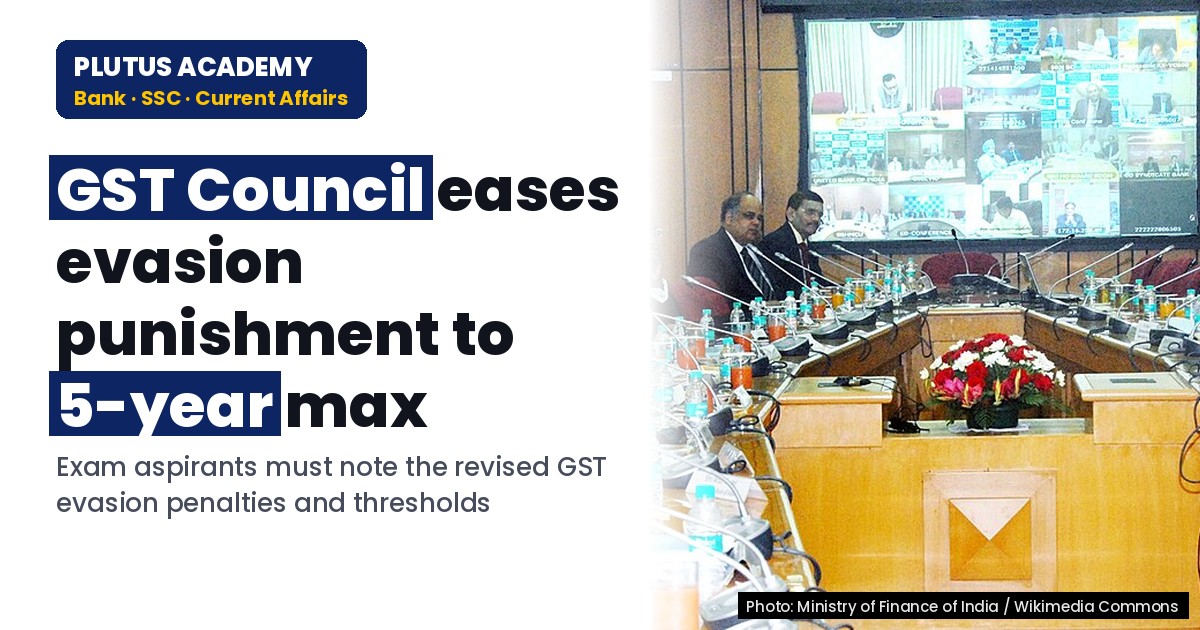
✎ GST evasion punishment rationalised to 'imprisonment or fine or both' with maximum 5 years imprisonment for evasion >Rs 10 crore, effective from April 1, 2027.
Relevance for Banking, SSC & RBI Grade B exams: Economy
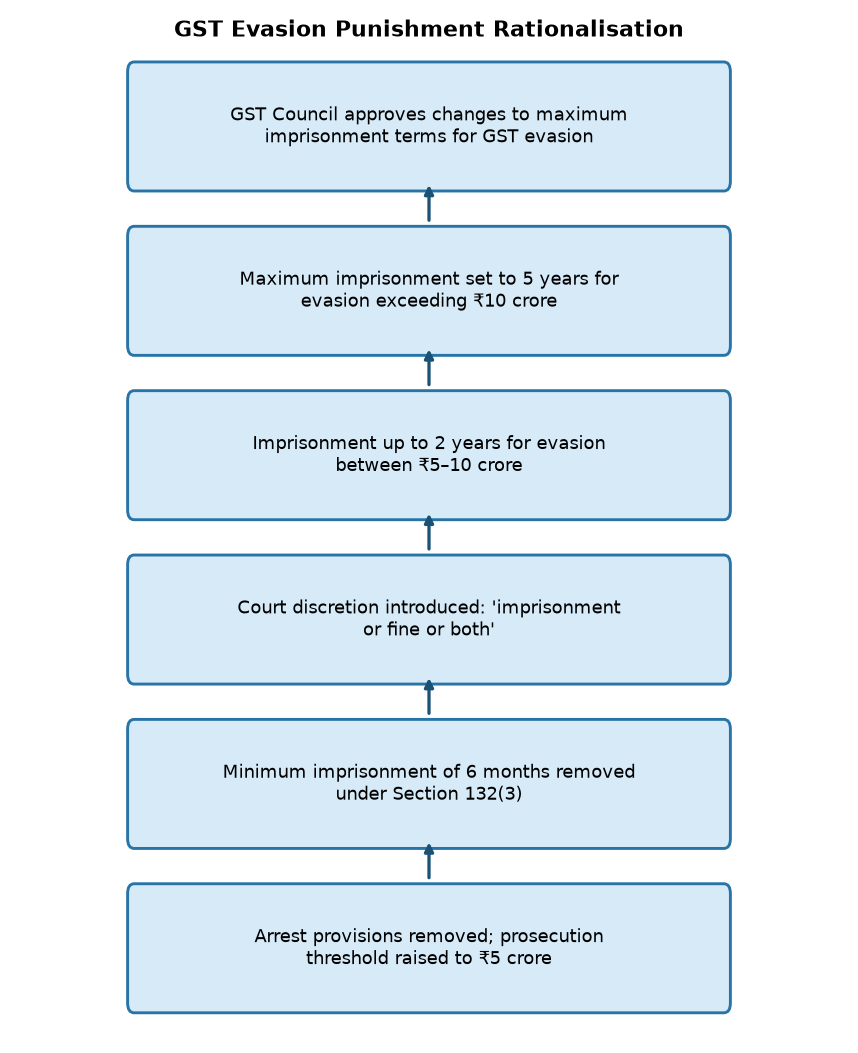
The 57th GST Council meeting has rationalised penalties for GST evasion, replacing the mandatory “imprisonment and fine” clause with “imprisonment or a fine or both,” giving courts discretion in sentencing. The maximum imprisonment term has been capped at five years for tax evasion exceeding ₹10 crore, while offences involving ₹5 crore to ₹10 crore may attract up to two years in jail. Additionally, the requirement for a minimum six-month imprisonment has been removed, and arrest provisions under GST have been abolished, though prosecution can still be initiated for cases involving over ₹5 crore. These changes, set to take effect from April 1, 2027, aim to decriminalise minor offences while maintaining strict penalties for large-scale evasion.
For banking and SSC aspirants, this development is crucial as it reflects the government’s focus on indirect tax reforms and ease of doing business, a topic often tested in exams. RBI Grade B candidates should note the shift toward judicial discretion in penalties, which could influence compliance frameworks and financial governance. The threshold hike for prosecution to ₹5 crore also signals a move toward reducing frivolous litigation, a trend likely to impact tax administration and revenue collection strategies—key areas in economic awareness sections of competitive exams.
Source: orissapost.com
Generated by AanyaAi for educational purpose.

2 comments on “GST Council rationalises punishment for evasion: Key changes for Banking exams”