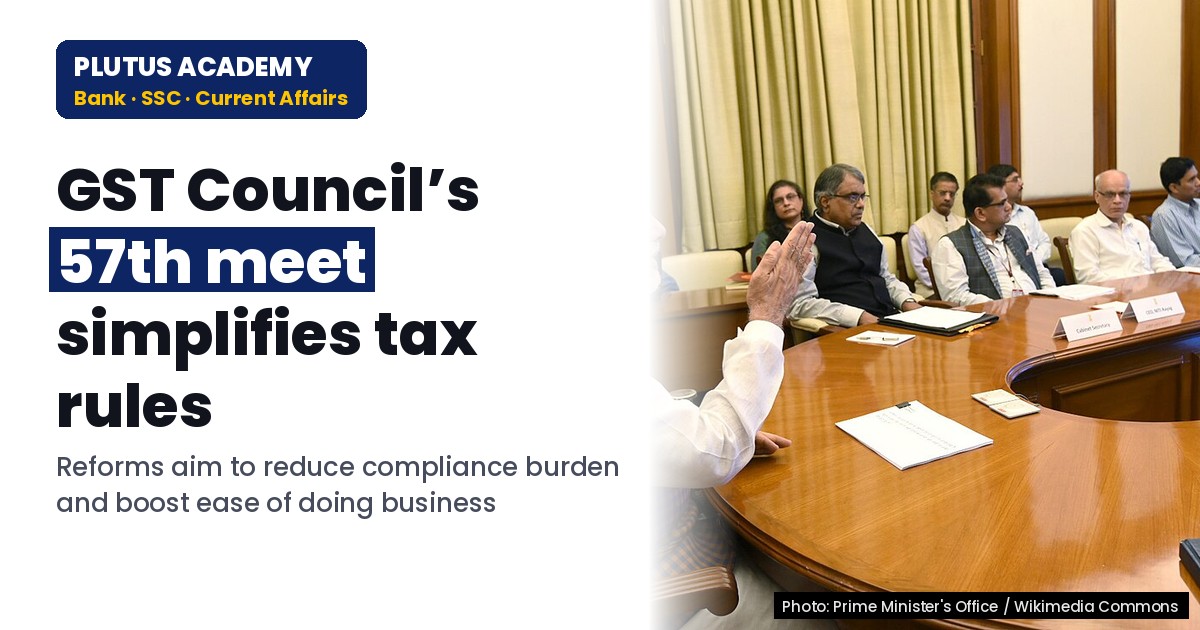
✎ GST Council's 57th meeting (Oct 2026) reduced GST slabs, automated registrations/verifications, and limited officer discretion to simplify compliance.
Relevance for Banking, SSC & RBI Grade B exams: Economy
The 57th GST Council meeting held on October 9, 2026, marked a significant shift in India’s indirect tax regime by emphasizing taxpayer trust and administrative simplification. The reforms, including automation of registrations, faceless assessments, and reduced return filing for small businesses, align with the broader goals of ease of doing business—a key focus in banking and SSC exams. The decision to remove arrest powers of GST officers and limit inspection powers addresses long-standing grievances of businesses, which is relevant for aspirants preparing for RBI Grade B and SSC exams, where questions on tax reforms and their economic impact are common. The move to streamline input tax credit (ITC) processes and reduce compliance burden also reflects the government’s push for a more business-friendly environment, a topic often tested in financial awareness sections of these exams.
The annual review of GST rates and the shift toward a faceless assessment system mirror similar reforms in income tax, making it a crucial case study for candidates. For banking aspirants, understanding these reforms helps in analyzing their impact on credit flow, working capital, and business sentiment—key areas in economic surveys and policy discussions. SSC aspirants, particularly in the General Awareness section, may encounter questions on GST reforms, their objectives, and their role in boosting tax buoyancy and economic growth. The Council’s emphasis on trust-based compliance over punitive measures also underscores the evolving nature of tax administration, a theme that resonates with contemporary economic policies.
Source: The Hindu
Generated by AanyaAi for educational purpose.
