
Relevance for Banking, SSC & RBI Grade B exams: Economy/Governance
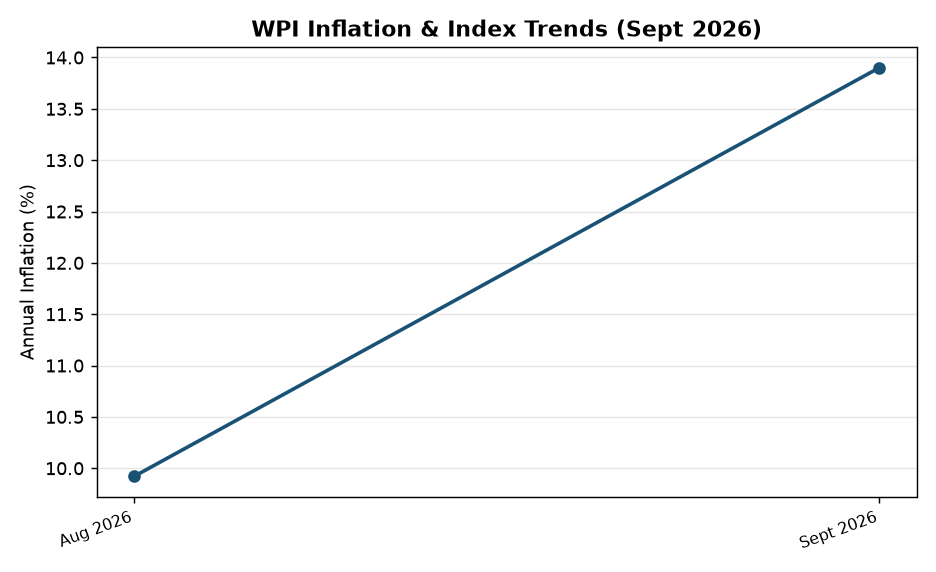
The Ministry of Commerce and Industry released provisional Wholesale Price Index (WPI) data for September 2026, showing an annual inflation rate of 13.9%, up from 9.92% in August 2026. The all-commodity WPI stood at 112.5 in September 2026, compared to 110.8 in August 2026, with primary articles, fuel & power, and manufactured products recording inflation rates of 8.67%, 25.85%, and 9.76%, respectively. Key inflation drivers included mineral oils, food products, crude petroleum, coal, basic metals, chemicals, textiles, rubber, plastics, and electrical equipment. Meanwhile, the final WPI for July 2026 remained unchanged at 110.0, with inflation at 9.78%, reflecting stable price trends in that month. These indices, based on the 2022-23 base year, are critical for policymakers and businesses to assess inflationary pressures and adjust economic strategies accordingly.
For banking, SSC, and RBI Grade B aspirants, understanding WPI trends is essential as they directly impact monetary policy, interest rates, and fiscal decisions. High WPI inflation, as seen in September 2026, may prompt the RBI to tighten monetary policy to curb price rise, affecting loan EMIs and credit availability. SSC candidates preparing for exams like CGL or CHSL should note how WPI influences GDP growth, employment, and government revenue. RBI Grade B officers must analyze these indices to forecast inflation, design policy responses, and ensure economic stability. The data also highlights sector-specific inflation, aiding aspirants in grasping real-world economic challenges relevant to competitive exams.
Source: PIB (Press Information Bureau)
Generated by AanyaAi for educational purpose.

2 comments on “WPI Inflation Rises to 13.9% in September 2026: Key Takeaways for Banking Exams”