
Relevance for Banking, SSC & RBI Grade B exams: Polity & Governance
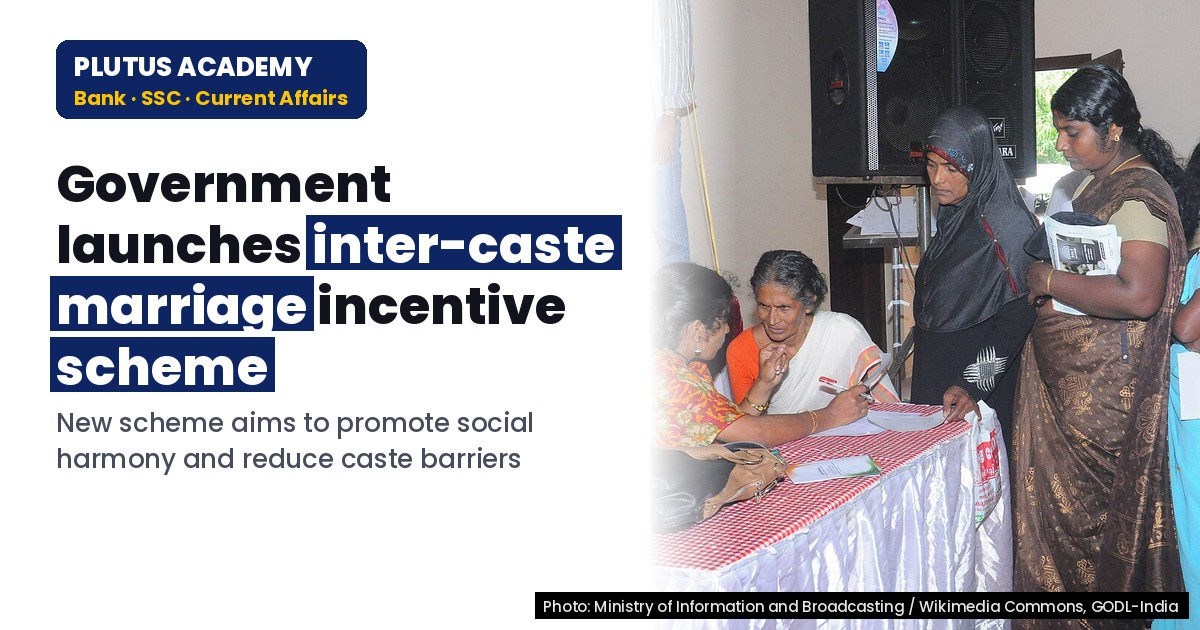
The Inter-Caste Marriage Incentive Scheme, recently highlighted by the Union Ministry of Social Justice and Empowerment, aims to foster social harmony and inclusivity by encouraging inter-caste marriages through financial incentives. Under this scheme, couples who marry outside their caste receive monetary support, including a one-time grant and monthly stipends for a fixed period, to help them establish their lives without societal barriers. This initiative aligns with constitutional principles of equality (Article 14) and non-discrimination (Article 15), addressing deep-rooted caste prejudices that persist despite progressive legislation. For aspirants preparing for banking exams like IBPS PO or SBI Clerk, understanding such governance schemes is crucial as they reflect government priorities in social welfare, which often influence budget allocations and policy frameworks—key areas tested in exams.
For SSC and RBI Grade B candidates, the scheme’s emphasis on reducing caste-based discrimination ties into broader themes of inclusive growth and sustainable development, often discussed in economic surveys and government reports. The scheme’s implementation also showcases the role of state-led interventions in tackling social inequalities, a topic frequently examined in polity sections. Additionally, aspirants should note how such policies can impact financial inclusion efforts, as inter-caste marriages often correlate with higher mobility and economic empowerment, indirectly benefiting sectors like banking and microfinance. Keeping abreast of such initiatives ensures a well-rounded preparation for exams that test both static and dynamic aspects of governance.
Source: PIB (Press Information Bureau)
Generated by AanyaAi for educational purpose.

2 comments on “Inter-Caste Marriage Incentive Scheme: Boosting Social Harmony & Governance”