
Relevance for Banking, SSC & RBI Grade B exams: Science & Technology
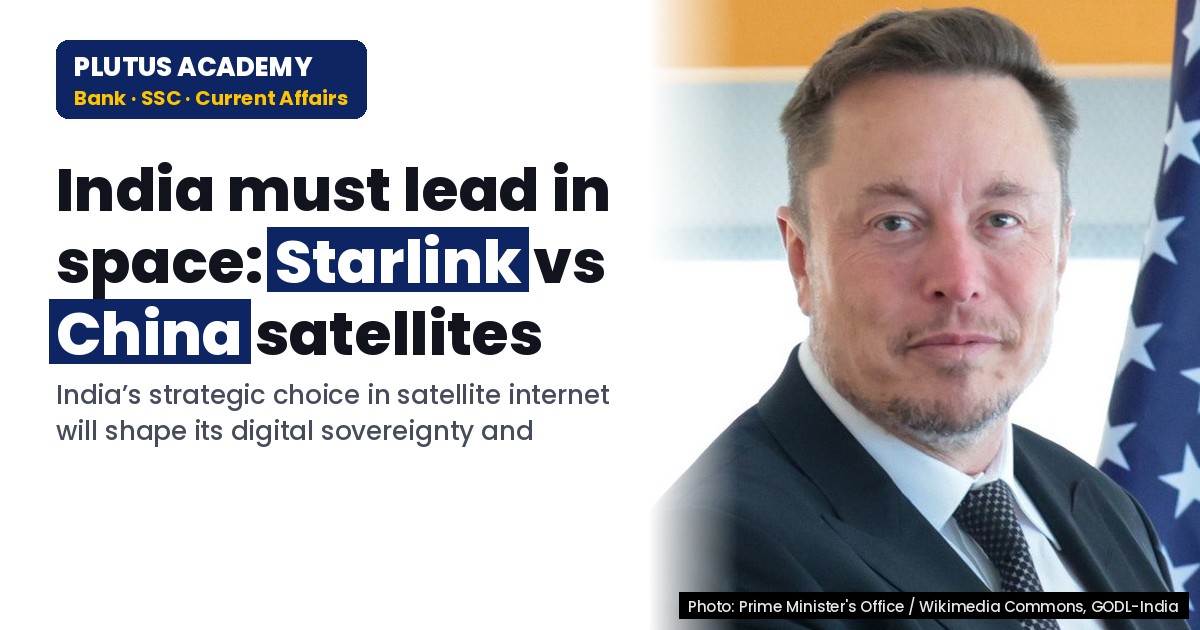
The rapid expansion of satellite networks like SpaceX’s Starlink and China’s Guowang and Qianfan is reshaping global connectivity, raising concerns over sovereignty, security, and economic dependence. For aspirants preparing for Bank PO, IBPS, SBI, RBI Grade B, and SSC exams, this issue highlights the intersection of technology, geopolitics, and regulatory frameworks. India, as a major emerging market and space power, must navigate this “new Cold War in the sky” by ensuring fair access to satellite internet while safeguarding its strategic interests. The debate over spectrum allocation, pricing, and security—currently centered on Starlink’s entry—mirrors broader challenges in balancing innovation with national autonomy, a theme relevant to banking and administrative roles that require policy foresight.
The article’s call for India to adopt an “orbital non-alignment” stance—advocating for constellation portability, fair ITU rules, and regional satellite partnerships—underscores the importance of multilateral diplomacy in technology governance. For RBI Grade B and SSC aspirants, this underscores the need to understand how global tech trends impact domestic policies, financial systems, and national security. The historical precedent of the Bogotá Declaration (1976) further illustrates how developing nations can shape international norms, a lesson critical for aspirants preparing for exams that test awareness of global governance structures and their implications for India’s economic and strategic future.
Source: The Indian Express
Generated by AanyaAi for educational purpose.
