
Relevance for Banking, SSC & RBI Grade B exams: Polity & Governance
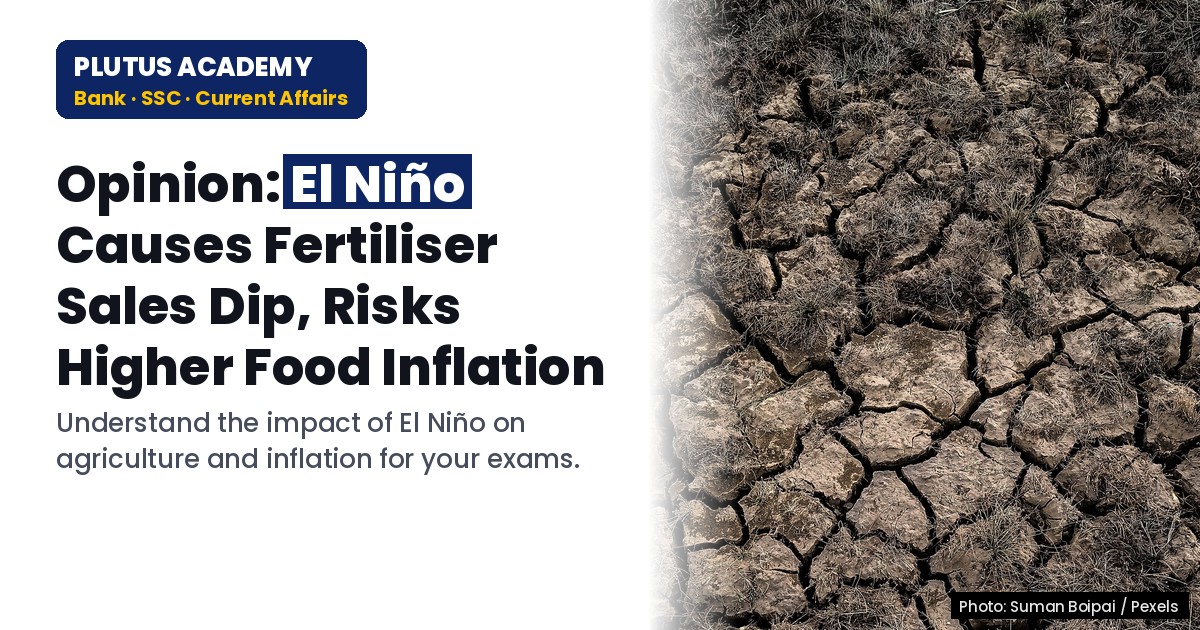
The significant dip in fertiliser sales from April-September 2026, including urea, despite increased production and imports, directly reflects subdued farmer demand due to El Niño-induced dry weather conditions. This reduced fertiliser application, stemming from inadequate monsoon rains and a substantial October rainfall deficit, is projected to result in lower crop yields for both kharif and rabi seasons. Such an outcome, coupled with projections of a “super strong” El Niño persisting through January-March 2027 and causing warmer winters, poses a serious threat to consumer food inflation, which has already surged from 4.2 to over 7.7 percent year-on-year between April and September.
For aspirants of Banking, SSC, and RBI Grade B exams, this scenario highlights critical aspects of Polity & Governance and their economic ramifications. The immediate government response, involving duty-free imports of pulses, raw sugar, and cotton, along with potentially scrapping basic customs duty on crude palm and soyabean oil, demonstrates fiscal and trade policy interventions aimed at mitigating food inflation. Furthermore, the call for a fundamental reordering of the current inefficient subsidy regime and fiscal priorities, alongside long-term investments in climate-smart breeding and efficient resource utilization, underscores the intricate relationship between agricultural policy, climate change, and macroeconomic stability, all of which are crucial for understanding India’s economic landscape and the role of regulatory bodies like the RBI.
Source: The Indian Express
Generated by AanyaAi for educational purpose.

2 comments on “El Niño Impact: Fertiliser Sales Dip & Food Inflation Risk”