
Relevance for Banking, SSC & RBI Grade B exams: Polity
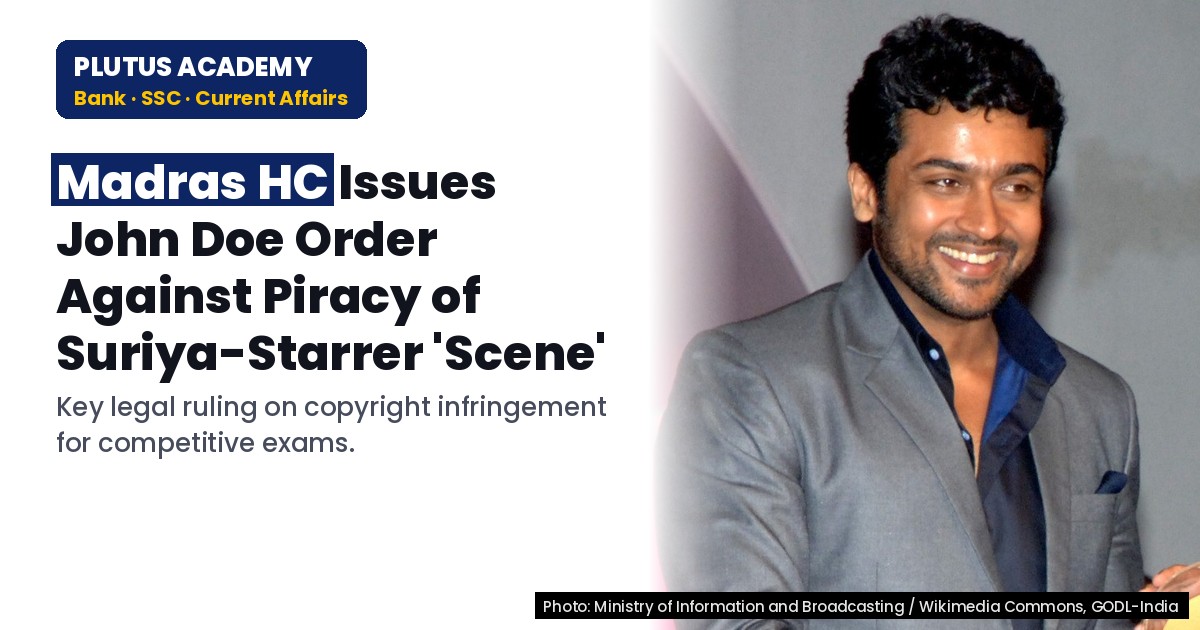
The Madras High Court recently issued a significant John Doe order, an injunction against unknown individuals and entities, prohibiting the unauthorised camcording, uploading, downloading, streaming, or hosting of the Suriya-starrer Tamil movie *Scene*. This interim injunction, granted by Justice P.B. Balaji pursuant to a copyright infringement suit filed by Zhagaram Studios LLP, underscores the judiciary’s role in protecting intellectual property rights in the digital age. The court’s directive extends to blocking access to websites and mirror websites with alphanumeric variants that might facilitate piracy, highlighting the legal framework’s adaptation to combat digital content theft and ensure producers do not suffer irreparable loss and hardships.
For aspirants of Banking, SSC, and RBI Grade B exams, this development is relevant to understanding the practical application of intellectual property law, specifically copyright, and the judicial process in India. It illustrates how legal mechanisms like John Doe orders are employed to protect commercial interests, which is crucial for the financial health of industries like film production. Furthermore, it touches upon the role of Internet Service Providers (ISPs) in enforcing court orders, a topic that can appear in questions related to cyber law, digital governance, and the regulatory environment affecting businesses and financial institutions.
Source: The Hindu
Generated by AanyaAi for educational purpose.

2 comments on “Madras HC Injunction on Film Piracy: Key Legal Ruling”