Relevance for Banking, SSC & RBI Grade B exams: Polity & Governance
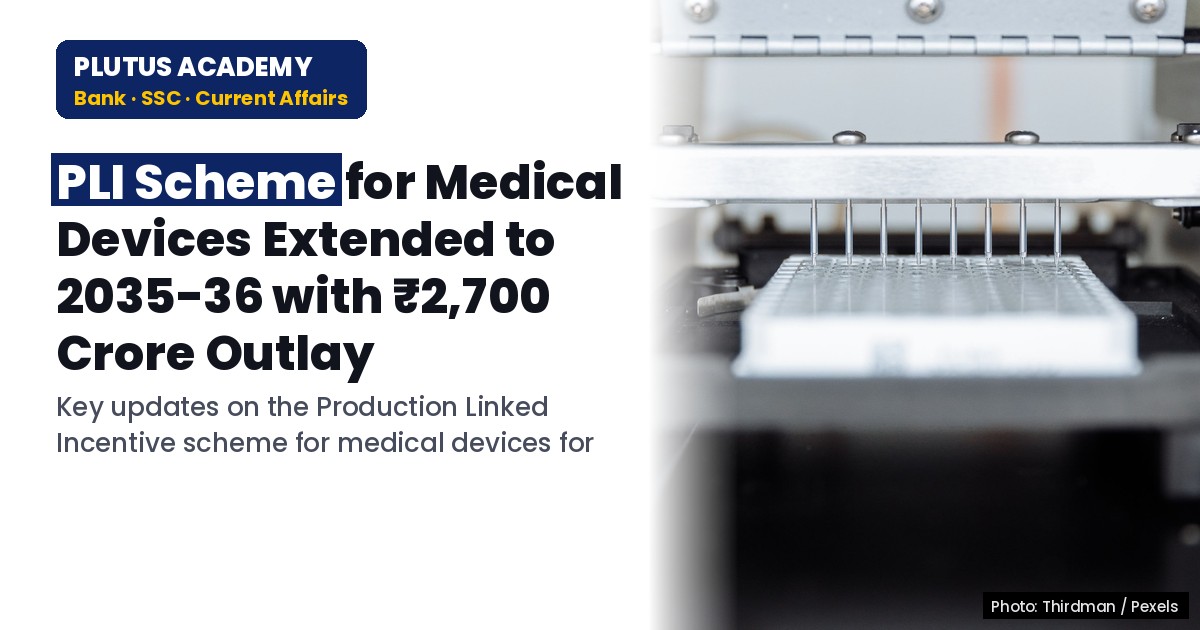
The Department of Pharmaceuticals, under the central government, has invited new applications for the Production Linked Incentive (PLI) scheme for medical devices, extending it until 2035-36 with an outlay of approximately ₹2,700 crore. This initiative, which began in 2021-22 and has already facilitated the domestic manufacturing of over 60 high-end medical devices and components worth more than ₹16,000 crore, aims to boost indigenous production. The revised scheme simplifies provisions for ease of doing business, removing the minimum sales condition for incentives, reducing minimum investment requirements, and allowing applications across four targeted segments: medical consumables, disposables and implants (TS-1); critical components (TS-2); high-end medical devices in early-stage domestic manufacturing (TS-3); and high-end medical devices currently only assembled in India (TS-4), with varying incentive rates.
This development is highly relevant for Banking, SSC, and RBI Grade B aspirants, particularly in Polity & Governance, as it demonstrates the government’s strategic policy interventions to foster self-reliance (“Atmanirbhar Bharat” and “Make in India”) and strengthen domestic manufacturing capabilities in a critical sector. Candidates should understand the scheme’s objectives, such as attracting investment, creating employment, improving quality, reducing prices, and enhancing global competitiveness in high-end medical technology, including devices like 3 Tesla MRI and PET-CT. The focus on integrating value chains, promoting MSMEs through critical component manufacturing, and simplifying regulatory hurdles reflects key governance principles and economic policy directions that are frequently tested in these exams.
Source: PIB (Press Information Bureau)
Generated by AanyaAi for educational purpose.

2 comments on “PLI Scheme for Medical Devices: Key Updates for Exams”