
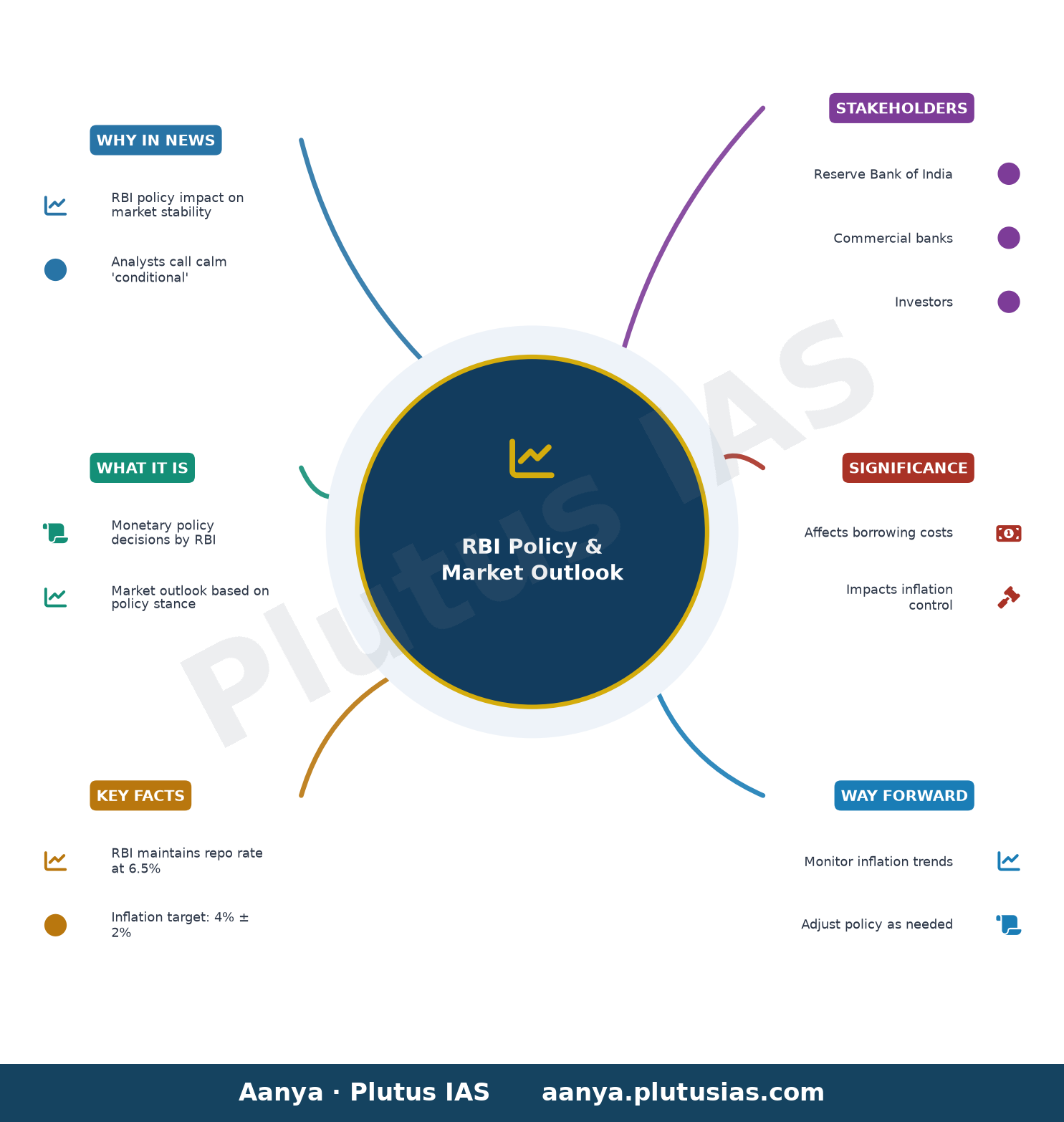
✎ RBI policy shapes market calm but depends on inflation and growth conditions.
Relevance for Banking, SSC & RBI Grade B exams: Polity & Governance
The Reserve Bank of India (RBI) has maintained a cautious stance in its recent monetary policy reviews, with analysts noting that the current calm in financial markets is “conditional” rather than structural. The central bank’s decisions, including its stance on interest rates and liquidity measures, continue to be influenced by inflation dynamics, global economic uncertainties, and domestic growth concerns. For banking aspirants preparing for exams like RBI Grade B, IBPS PO, or SBI Clerk, understanding the RBI’s policy framework—particularly its focus on inflation targeting, liquidity adjustments, and macroeconomic stability—remains critical. The conditional calm in markets suggests that future policy shifts could hinge on incoming data, making it essential for candidates to track key indicators like CPI inflation, GDP growth, and global financial trends.
For SSC and other competitive exams, the RBI’s policy outlook underscores the interplay between governance, economics, and market sentiment. Analysts’ emphasis on “conditional calm” highlights the fragility of current market stability, which could be disrupted by geopolitical tensions, commodity price fluctuations, or domestic fiscal challenges. Aspirants should focus on how such macroeconomic factors influence banking operations, regulatory compliance, and policy responses. Questions in these exams often test the ability to connect monetary policy tools—like repo rates, CRR, or OMOs—with broader economic objectives, making this topic a recurring theme in syllabi for both banking and SSC examinations.
Source: Business Standard
Generated by AanyaAi for educational purpose.
