
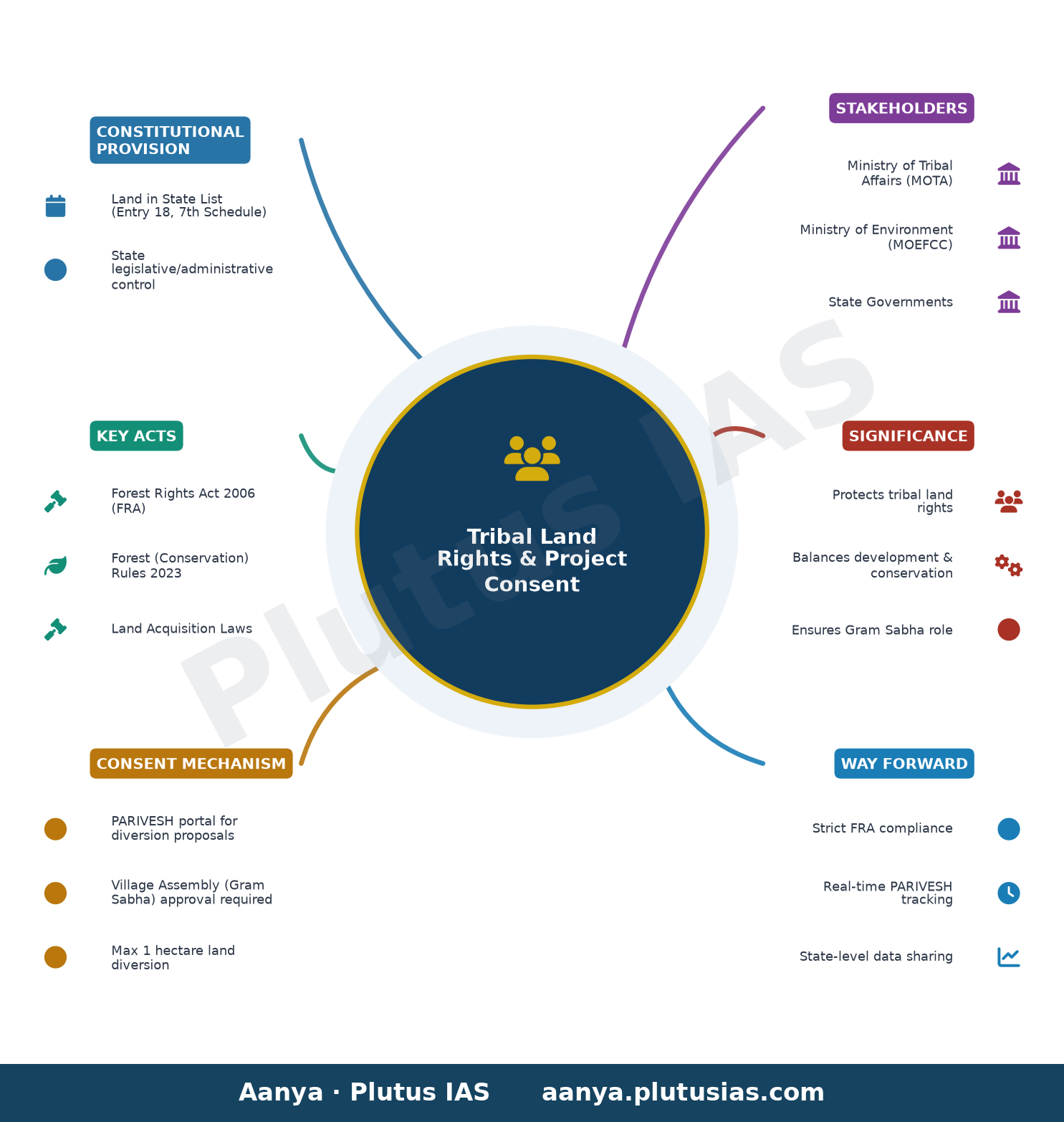
✎ Tribal land diversion for projects requires Gram Sabha consent, FRA compliance, and state-level approvals under constitutional and statutory frameworks.
Relevance for Banking, SSC & RBI Grade B exams: Polity & Governance
The recent PIB release highlights the constitutional and legal framework governing tribal land rights and consent in project clearances, a critical issue for governance and policy in India. Under the Constitution’s Seventh Schedule (State List, Entry 18), land management and acquisition fall under state jurisdiction, while central laws like the Forest Rights Act (FRA) 2006 and the Forest (Conservation) Rules 2023 regulate forest land diversion. Projects requiring forest land diversion must secure prior approval from the central government, ensure compliance with FRA provisions—including mandatory Gram Sabha consent—and cannot exceed one hectare without such consent. However, the Tribal Affairs Ministry (MoTA) does not centrally track land diversion cases, leaving enforcement largely to state governments, which often face disputes over land acquisition, rehabilitation, and consent violations in tribal areas.
This governance challenge has direct implications for banking and financial institutions, particularly in project financing where tribal land disputes can lead to delays, legal risks, and reputational damage. For SSC aspirants, understanding the FRA’s role in protecting tribal rights—such as preventing eviction before rights verification—and the jurisdictional divide between state and central authorities is essential for governance and polity sections. RBI Grade B candidates should note that tribal land conflicts can disrupt infrastructure projects, affecting credit risk assessments for banks financing such ventures, making awareness of these legal safeguards crucial for risk management frameworks.
Source: PIB (Press Information Bureau)
Generated by AanyaAi for educational purpose.
