
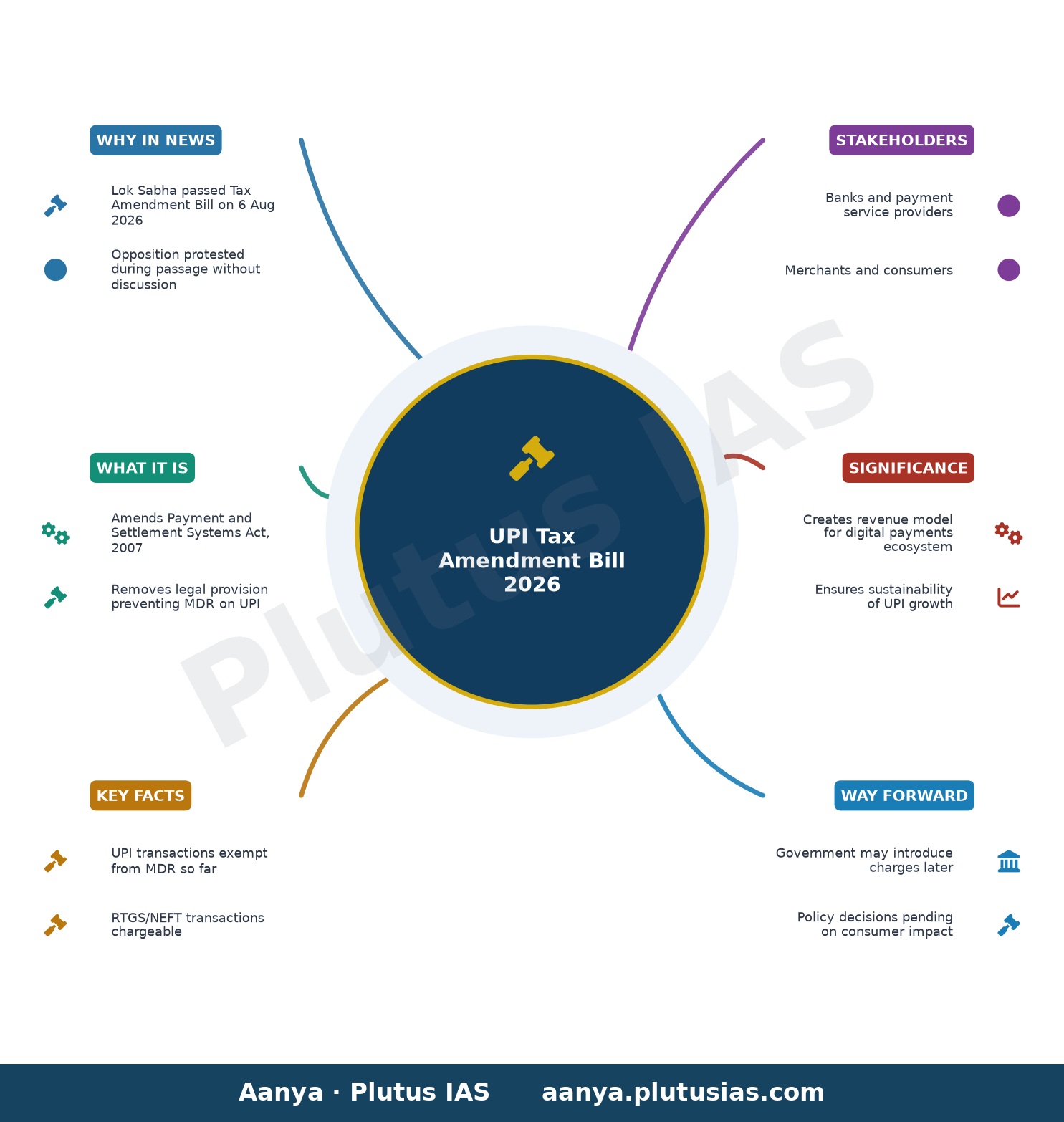
✎ UPI transactions may face charges in future as government removes zero-MDR legal provision.
Relevance for Banking, SSC & RBI Grade B exams: Polity
The Lok Sabha recently passed the Taxation and Other Laws (Amendment) Bill, 2026, which amends the Payment and Settlement Systems Act, 2007, to allow banks and payment service providers to charge Merchant Discount Rate (MDR) on UPI transactions and RuPay card payments. Currently, UPI transactions are exempt from such charges, but the amendment removes the legal restriction, giving the government the authority to introduce fees for these digital payment modes in the future. This move aims to create a sustainable revenue model for banks and payment infrastructure firms, ensuring the growth of India’s digital payments ecosystem. For banking and SSC aspirants, this change highlights the evolving regulatory framework governing digital transactions, a key topic in exams like IBPS PO and RBI Grade B, where questions on payment systems and financial regulations are common.
The Bill also introduces tax exemptions for offshore funds, particularly those managed by Foreign Portfolio Investors (FPIs) investing in government securities (G-Secs), to attract global capital and boost India’s financial services sector. By easing conditions for fund managers to relocate to India, including those operating in International Financial Services Centres (IFSCs), the amendment seeks to enhance job creation and economic activity. For RBI Grade B and SSC aspirants, this reflects the government’s focus on financial sector reforms and tax policy adjustments, which are frequently tested in exams. The amendment’s broader implications on digital payments and foreign investments underscore its relevance for candidates preparing for competitive examinations in banking and governance.
Source: Mint
Generated by AanyaAi for educational purpose.
