
✎ RBI drafts capital adequacy norms aligning with Basel 2017 to strengthen banking stability.
Relevance for Banking, SSC & RBI Grade B exams: Economy
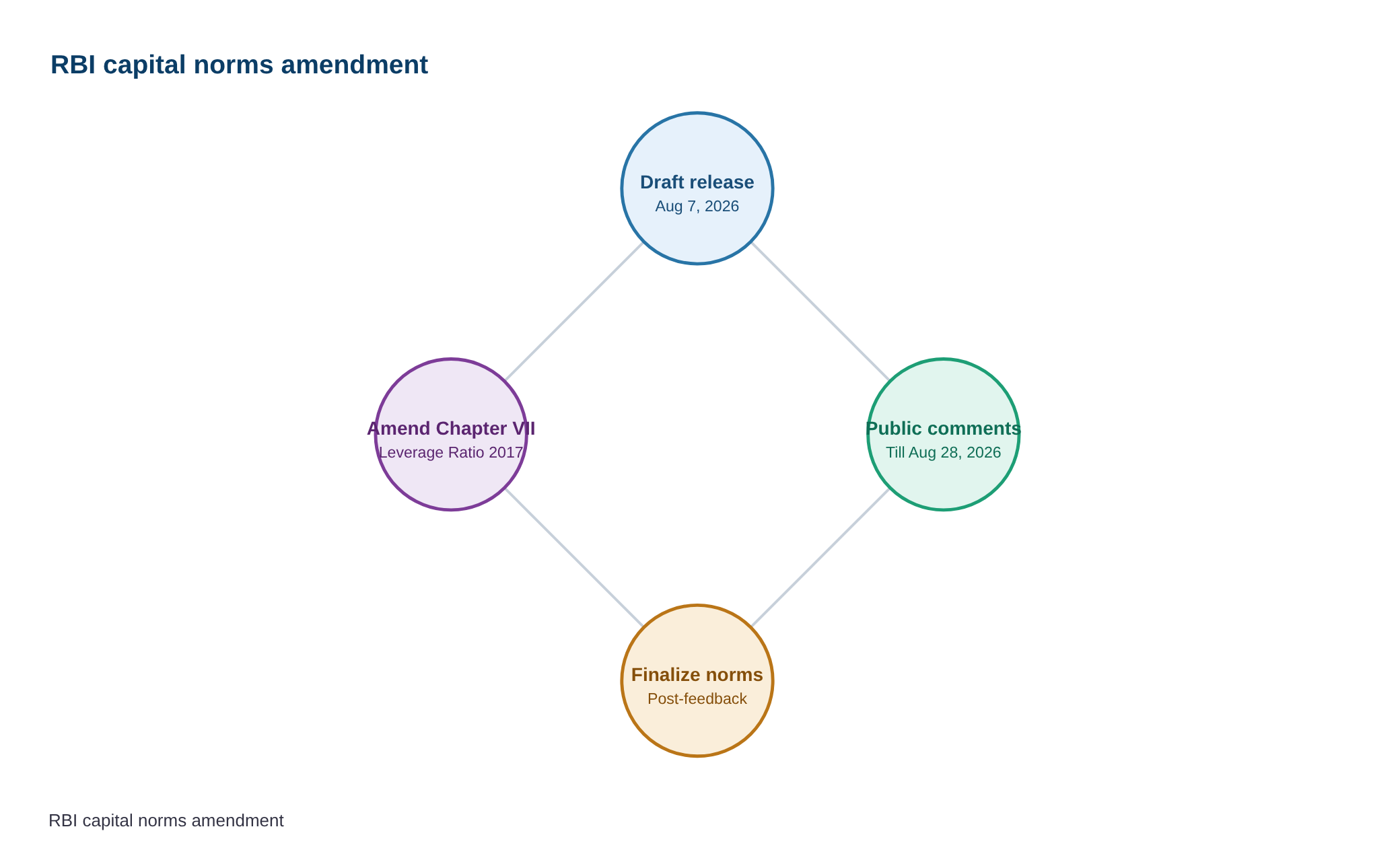
The Reserve Bank of India (RBI) has released a draft notification proposing amendments to the leverage ratio framework for commercial banks under the *Reserve Bank of India (Commercial Banks – Prudential Norms on Capital Adequacy) Directions, 2025*. The proposed changes aim to align India’s banking regulations with the *Leverage Ratio 2017 Standard* issued by the Basel Committee on Banking Supervision, which seeks to enhance financial stability by limiting excessive leverage in the banking sector. The draft amendments specifically target *Chapter VII: Leverage Ratio framework*, introducing stricter norms to ensure banks maintain adequate capital buffers against potential risks. Stakeholders have been invited to submit feedback on the draft until *August 28, 2026*, via the RBI’s website or through written submissions to the central office in Mumbai.
For aspirants preparing for *Bank PO, IBPS, SBI, RBI Grade B, and SSC exams*, this development holds significant relevance as it reflects the RBI’s ongoing efforts to strengthen prudential norms in line with global banking standards. Questions on leverage ratios, Basel III norms, and capital adequacy are common in these examinations, particularly in the *Economy* and *Banking Awareness* sections. Understanding the rationale behind such regulatory changes—such as risk mitigation and financial stability—can help candidates answer questions on banking reforms, monetary policy, and financial sector governance. Additionally, awareness of current RBI initiatives demonstrates a candidate’s engagement with contemporary economic developments, a key evaluation criterion in competitive exams.
Source: RBI
Generated by AanyaAi for educational purpose.
