
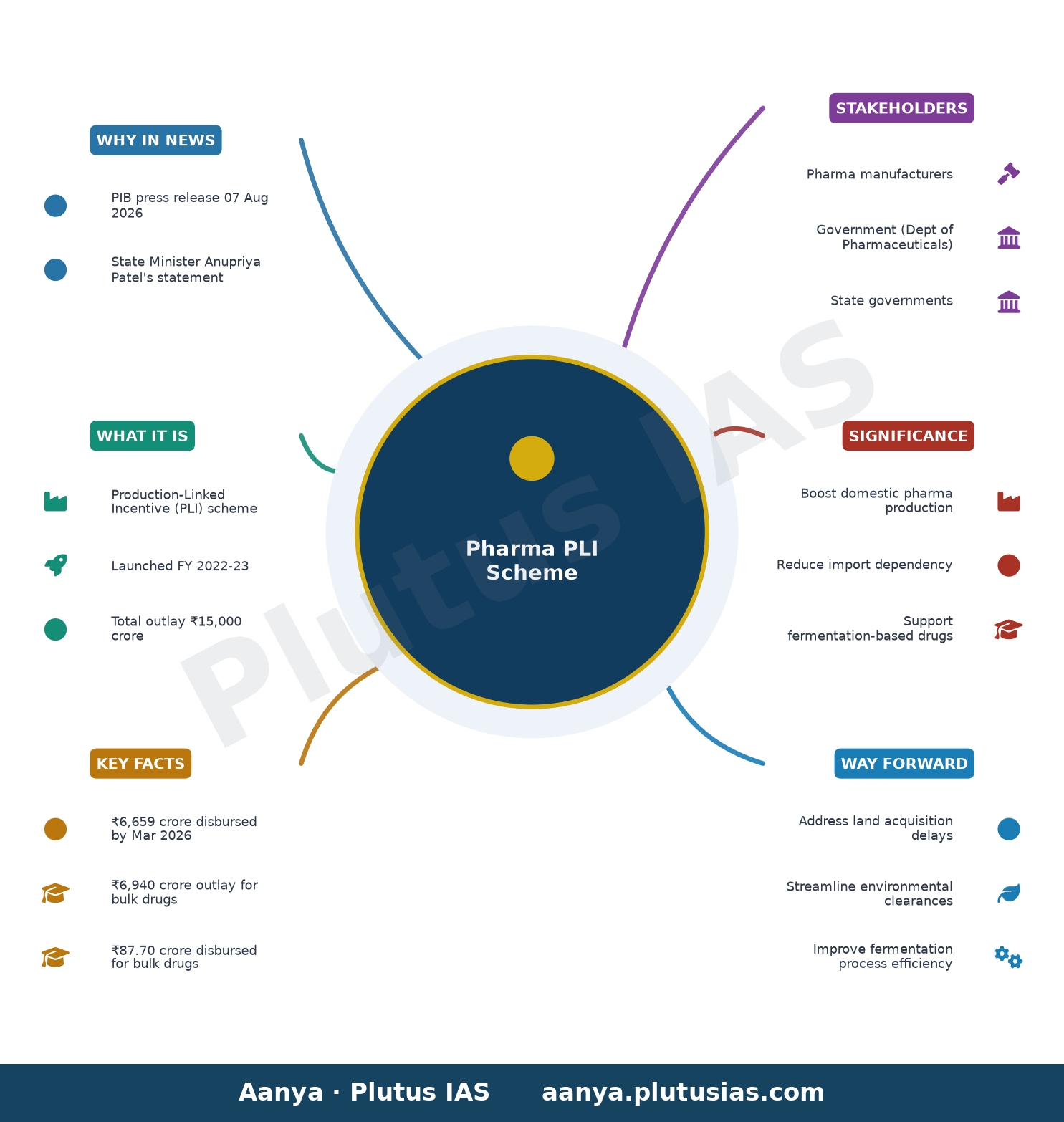
✎ PLI scheme for pharma aims to boost domestic production with ₹15,000 crore outlay, ₹6,659 crore already disbursed by March 2026.
Relevance for Banking, SSC & RBI Grade B exams: Polity & Governance
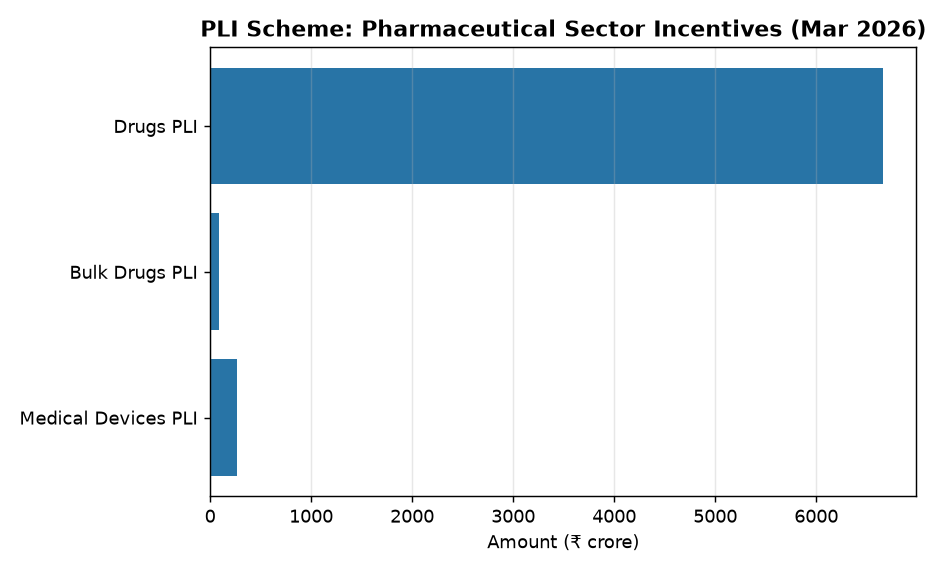
The Production-Linked Incentive (PLI) scheme for the pharmaceutical sector, launched in FY 2022-23 with a total outlay of ₹15,000 crore, aims to boost domestic manufacturing and reduce import dependence. As of March 2026, ₹6,659 crore has been disbursed under the scheme for drugs, while the bulk drugs PLI has seen ₹87.70 crore distributed against a ₹6,940 crore allocation. Challenges such as land acquisition delays, environmental clearances, high utility costs, and prolonged fermentation-based production cycles have slowed implementation, particularly for bulk drugs where biological processes dictate slower growth rates. The disbursement of incentives is tied to sales of manufactured products, further delaying fund flow. For banking and SSC aspirants, understanding the PLI scheme’s structure and challenges is crucial, as it reflects government efforts to strengthen self-reliance in critical sectors like pharmaceuticals, a topic often tested in exams through questions on policy frameworks, fiscal allocations, and sectoral growth.
For RBI Grade B and other competitive exams, the PLI scheme’s relevance extends to macroeconomic policies, fiscal stimulus, and industrial growth. The scheme’s mixed results—with higher disbursements in the drugs segment compared to bulk drugs—highlight the complexities of incentivizing high-tech manufacturing in India. Aspirants should note how such schemes align with broader goals like the ‘Atmanirbhar Bharat’ initiative and their impact on employment, exports, and import substitution. Additionally, the distinction between chemical synthesis and fermentation-based production underscores the need for tailored policy interventions, a concept that may appear in descriptive questions on governance and economic reforms.
Source: PIB (Press Information Bureau)
Generated by AanyaAi for educational purpose.
