✎ PLI scheme boosts domestic bulk drug production, reducing imports and enhancing self-reliance in India's pharma sector.
Relevance for Banking, SSC & RBI Grade B exams: Polity & Governance
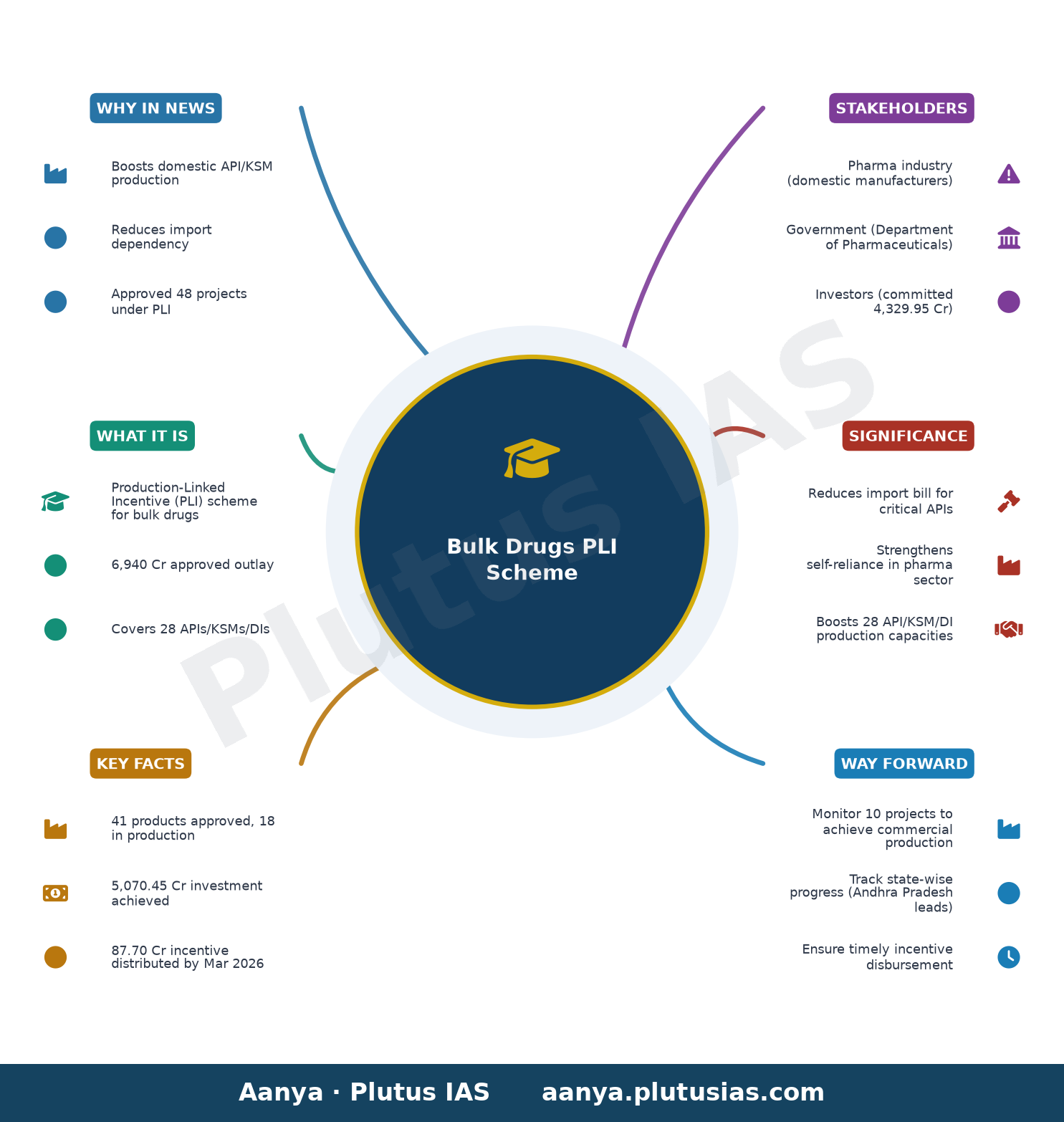
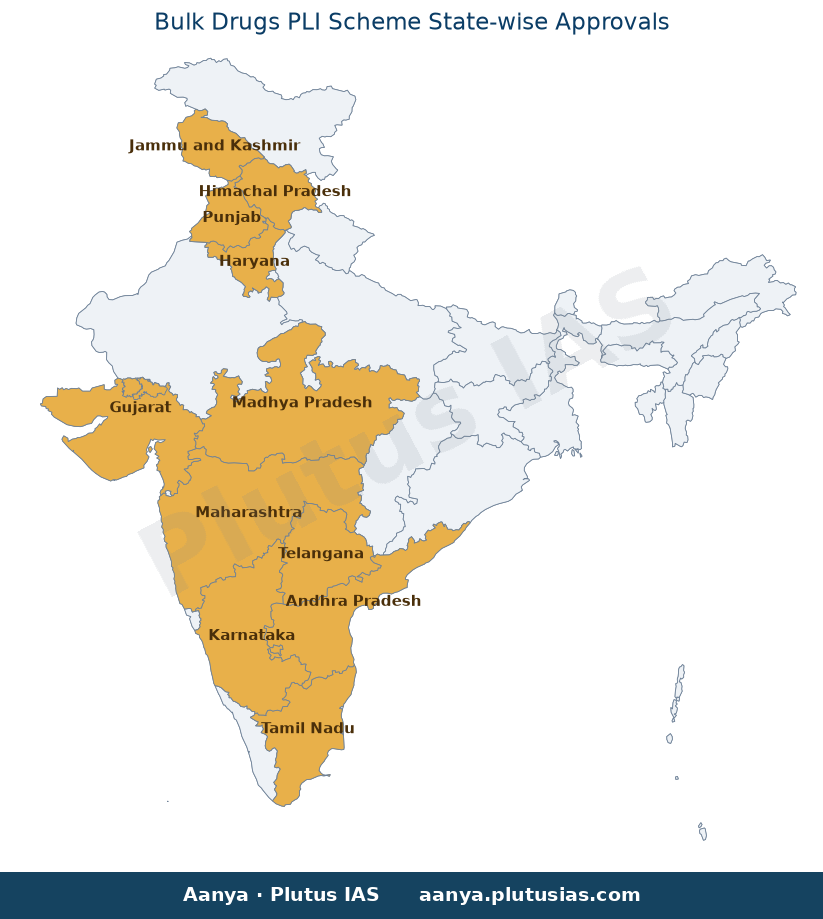
The Press Information Bureau (PIB) has recently highlighted the progress of the Production-Linked Incentive (PLI) scheme for bulk drugs, aimed at boosting domestic production of key starting materials (KSMs), drug intermediates (DIs), and active pharmaceutical ingredients (APIs). As of March 2026, 48 projects have been approved under this scheme with a sanctioned outlay of ₹6,940 crore, of which ₹87.70 crore has already been disbursed as incentives. The scheme has facilitated the creation of production capacity for 28 APIs/KSMs/DIs, with 18 critical drugs such as penicillin G, dexamethasone, and paracetamol now being produced domestically, reducing reliance on imports. A total investment of ₹5,070.45 crore has been mobilized against a committed ₹4,329.95 crore, with states like Andhra Pradesh, Gujarat, and Maharashtra leading in project approvals and investment. This initiative aligns with the government’s ‘Atmanirbhar Bharat’ vision, fostering self-reliance in pharmaceutical manufacturing while creating employment and economic growth.
For banking and SSC aspirants, this scheme underscores the government’s focus on industrial policy and sectoral growth, which often forms part of the economic and social development sections in exams. RBI Grade B candidates should note how such schemes integrate with monetary policy and financial sector stability by reducing import dependency and strengthening domestic industries. The PLI scheme’s success in mobilizing investments and generating production capacity reflects broader trends in India’s economic reforms, making it a relevant case study for understanding policy interventions in critical sectors.
Source: PIB (Press Information Bureau)
Generated by AanyaAi for educational purpose.
