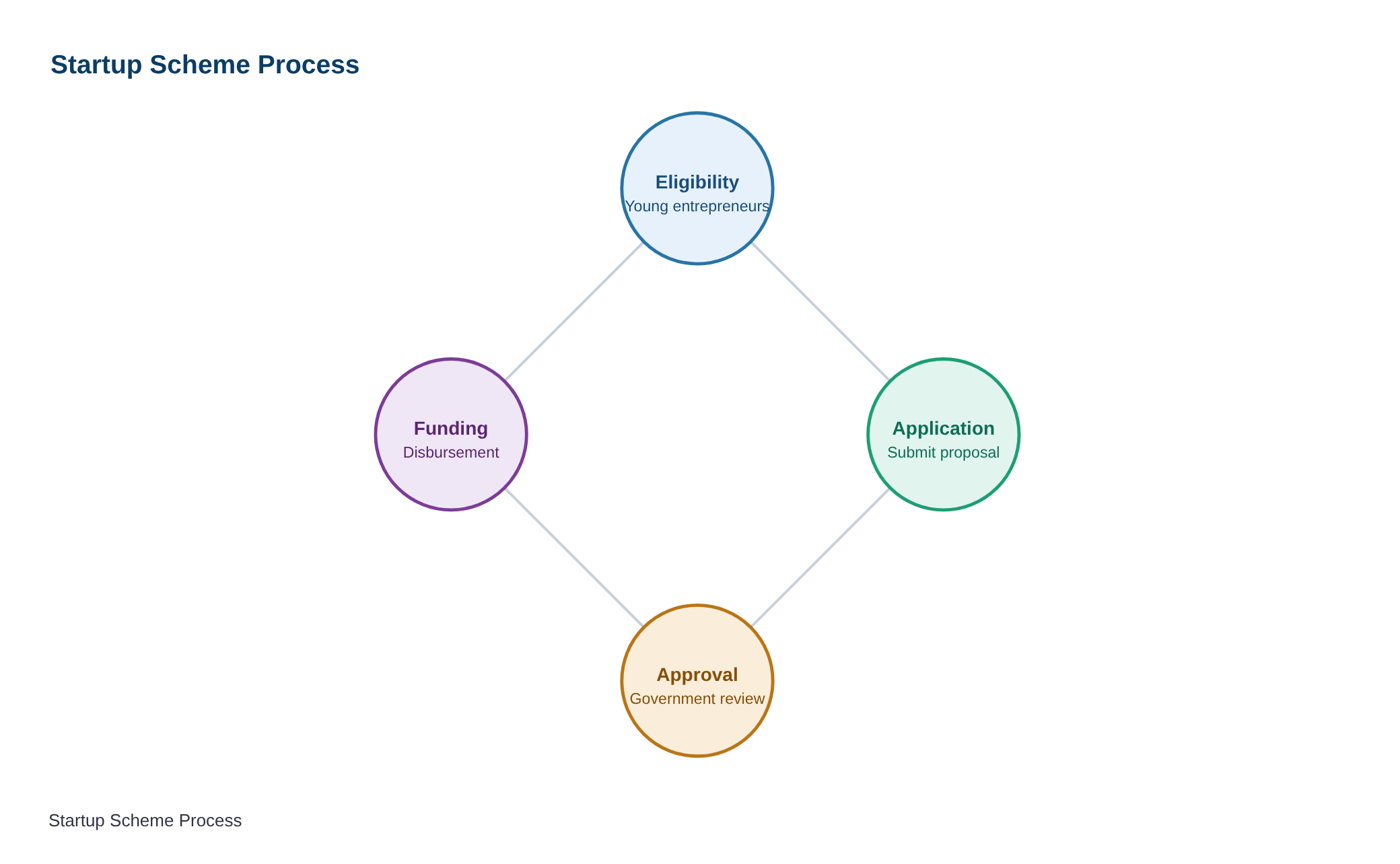
✎ Startup India Seed Fund Scheme empowers youth with collateral-free loans and fosters innovation-driven growth.
Relevance for Banking, SSC & RBI Grade B exams: Polity & Governance
The Centre’s Startup India Seed Fund Scheme has been hailed by Confederation of Indian Industry (CII) Chairman G. Krishna Mohan as a transformative initiative for young entrepreneurs, enabling them to launch startups swiftly by leveraging innovation without the burden of collateral security for bank loans. Addressing the ‘Vikasit Bharat-Human Capital Conclave’ at Centurion University in Vizianagaram, he underscored how the scheme aligns with the government’s broader push for self-reliance and skill development, particularly in emerging sectors. This policy intervention is particularly relevant for banking and financial services aspirants, as it reflects the government’s focus on fostering entrepreneurship through accessible credit mechanisms, a key theme in exams like RBI Grade B and SBI PO, where questions on schemes like Startup India, Mudra Yojana, and credit facilitation often appear. For SSC aspirants preparing for the General Studies paper, understanding such schemes highlights the government’s role in economic empowerment and youth employment, a recurring topic in the polity and governance sections.
The scheme’s emphasis on collateral-free loans and rapid implementation of ideas also ties into the broader discourse on financial inclusion and innovation-driven growth, which is frequently tested in competitive exams. Banking aspirants preparing for IBPS PO or RBI Grade B would benefit from analyzing how such policies reduce entry barriers for startups, thereby stimulating job creation and economic dynamism. For SSC candidates, the scheme exemplifies the intersection of governance, economics, and youth empowerment, making it a critical case study for questions on government initiatives and their socio-economic impact. The discussion at the conclave, including calls for revamping academic curricula to match technological advancements, further underscores the need for aspirants to stay updated on policy shifts that bridge education, skill development, and industry demands.
Source: The Hindu
Generated by AanyaAi for educational purpose.
