
✎ PM E-DRIVE portal facilitates private CPOs to set up EV charging stations under a ₹10,900 crore scheme with ₹2,000 crore allocation till 2028.
Relevance for Banking, SSC & RBI Grade B exams: Polity & Governance
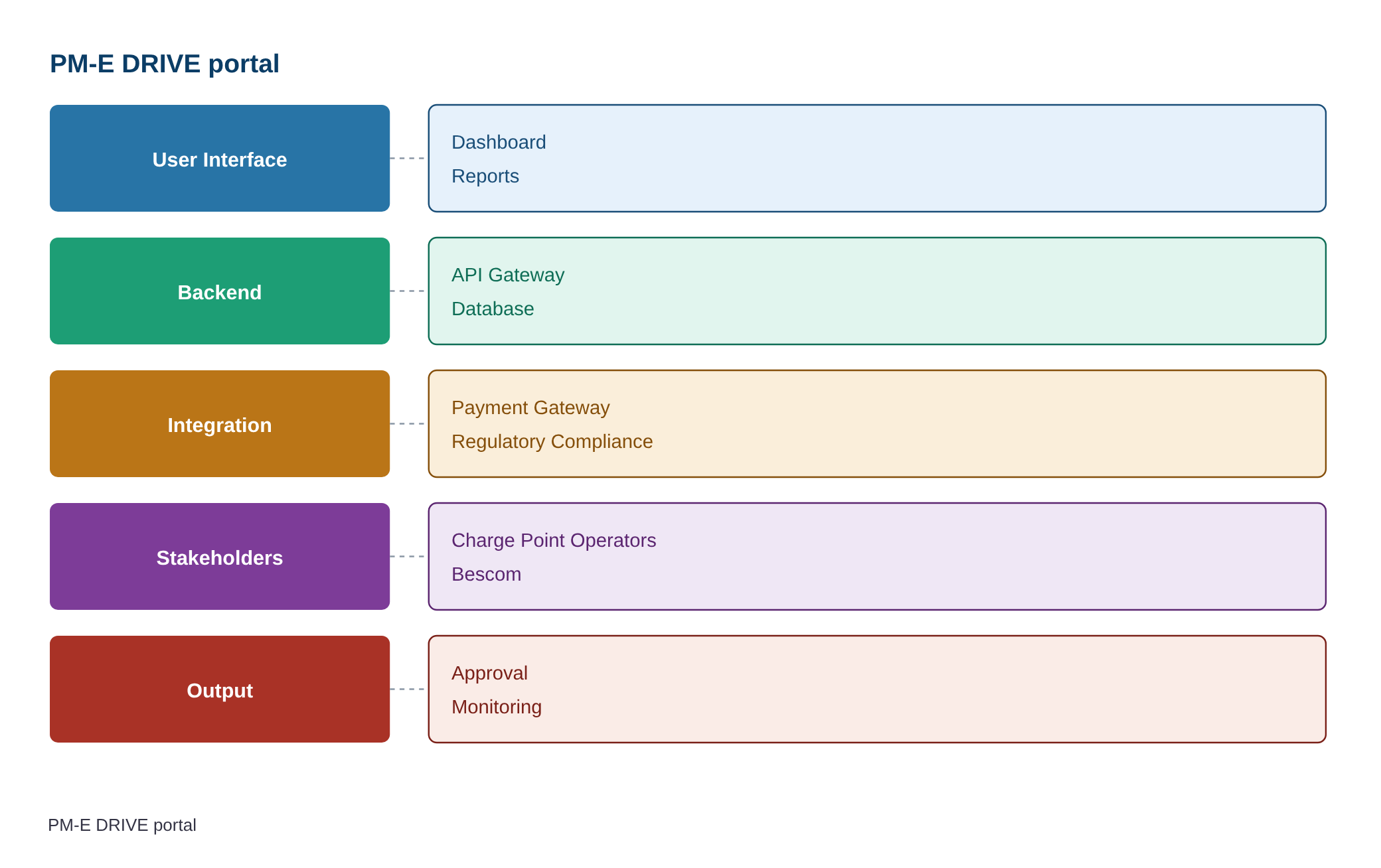
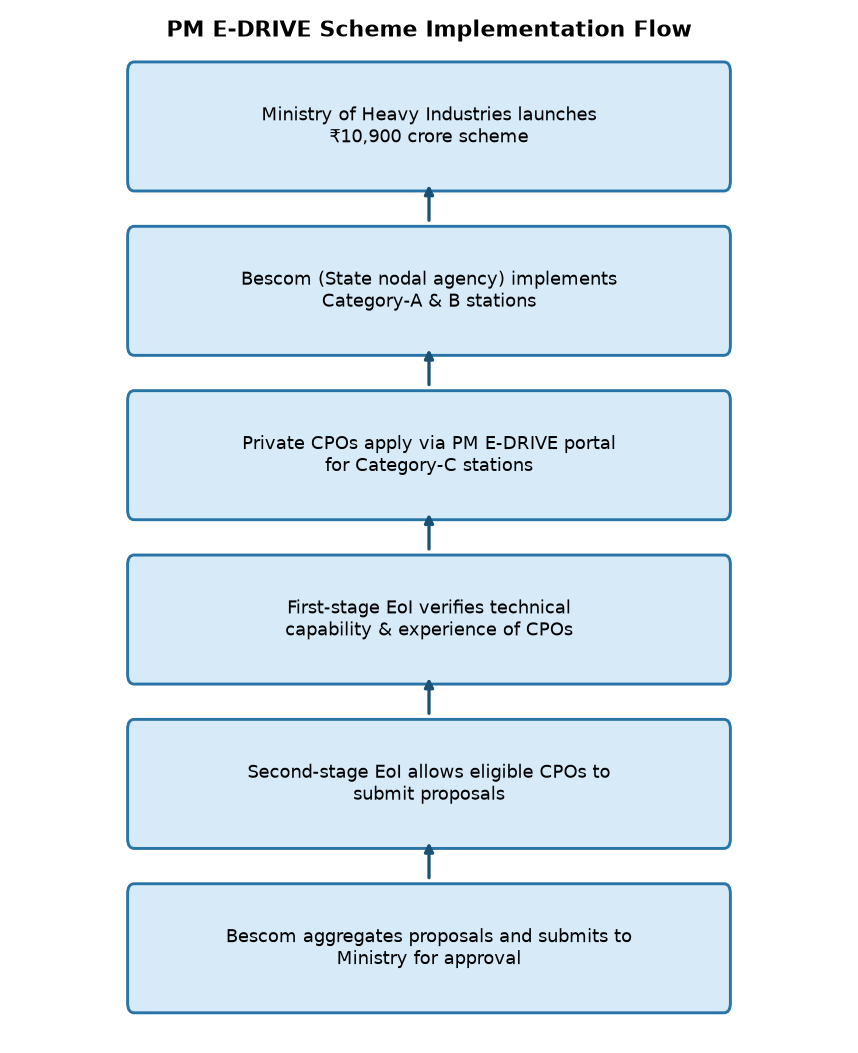
The Bangalore Electricity Supply Company Limited (Bescom) has launched the PM-E DRIVE portal to facilitate private Charge Point Operators (CPOs) in setting up electric vehicle (EV) charging stations under Category-C of the PM E-DRIVE Scheme, a ₹10,900 crore initiative by the Ministry of Heavy Industries aimed at boosting India’s EV infrastructure. With ₹2,000 crore allocated for public charging stations nationwide by March 2028, the portal streamlines the application process through a two-stage Expression of Interest (EoI) mechanism, ensuring transparency and efficiency. For banking and SSC aspirants, this initiative highlights the government’s push for sustainable mobility, a key theme in current affairs that often intersects with financial sector policies, such as green financing and infrastructure development. RBI Grade B candidates should note how such schemes align with the central bank’s focus on sustainable finance and digital governance, as the portal exemplifies the integration of technology in public service delivery.
The scheme’s categorization—separating government-led projects (Category-A and B) from private participation (Category-C)—reflects a structured approach to public-private partnerships, a concept frequently tested in competitive exams. Banking exams may probe the financial implications of such schemes, including subsidies, investments, and their impact on credit growth, while SSC aspirants could encounter questions on the administrative framework or the role of nodal agencies like Bescom. For RBI Grade B, understanding the broader policy context—such as the Ministry of Heavy Industries’ role in industrial development and the Ministry of Power’s oversight of electricity supply—can provide an edge in governance-related questions. The standardized configurations for charging stations also underscore the government’s emphasis on uniformity and scalability, themes that resonate with exam syllabi on policy implementation and economic reforms.
Source: The Hindu
Generated by AanyaAi for educational purpose.
