
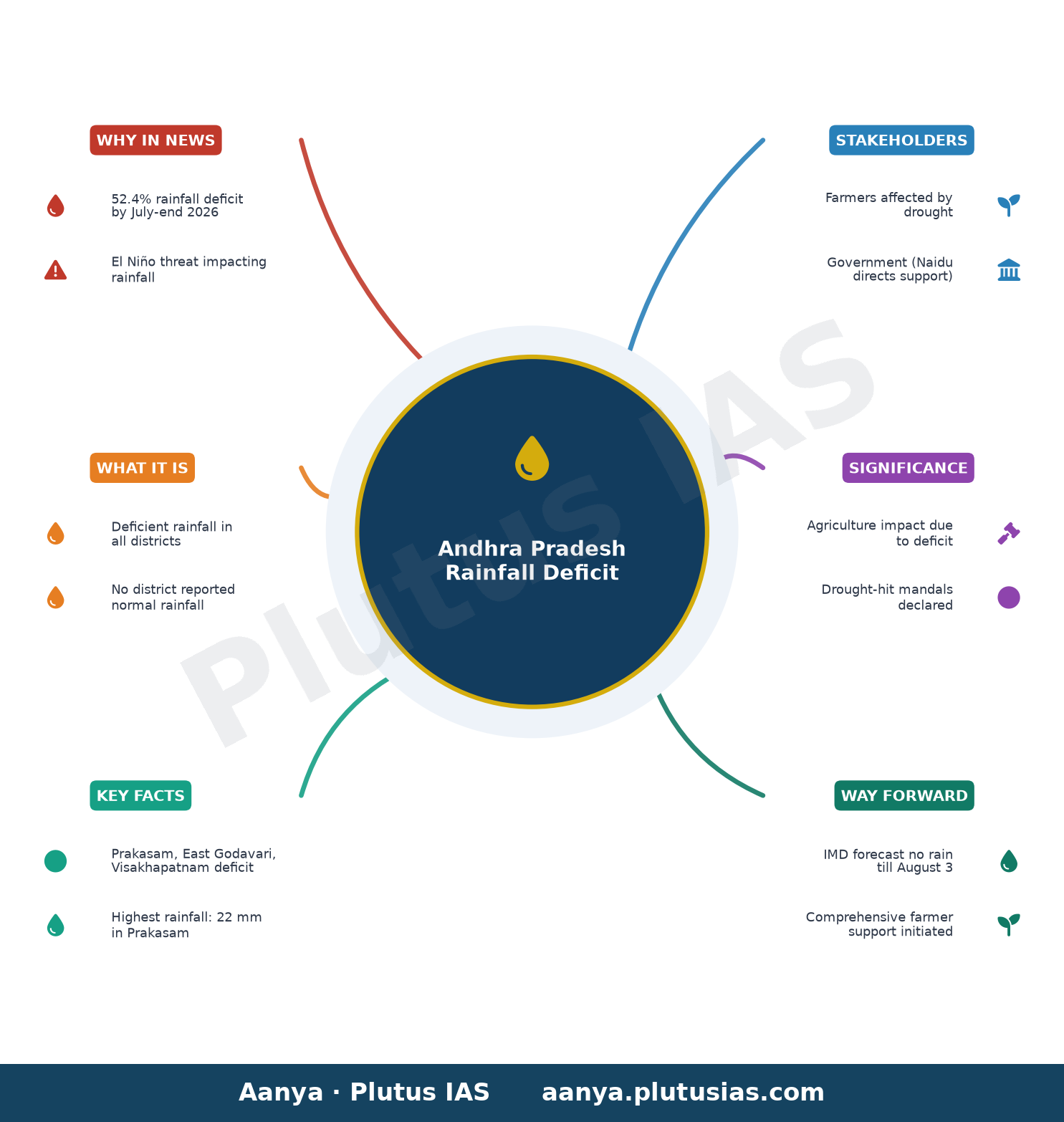
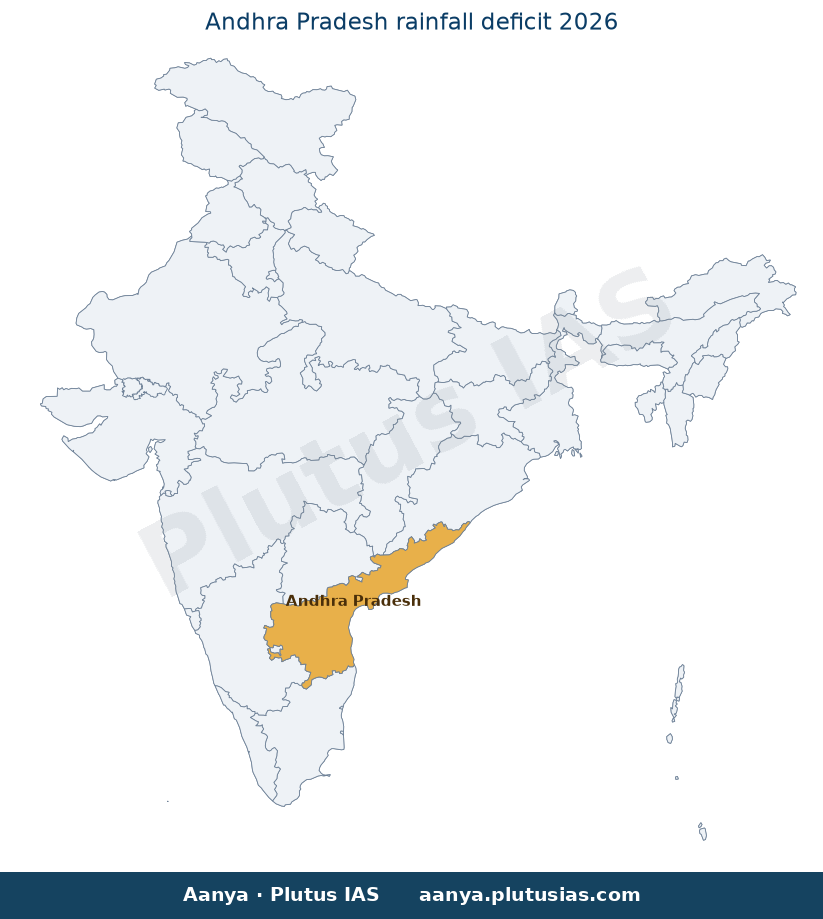
✎ Andhra Pradesh faces severe rainfall deficit (52.4%) by July-end 2026, impacting agriculture and necessitating government intervention.
Relevance for Banking, SSC & RBI Grade B exams: Economy/Governance
All districts in Andhra Pradesh have reported deficient rainfall, with the state’s deficit standing at 52.4% by July-end, according to the Directorate of Economics and Statistics. This widespread shortfall, affecting even previously normal districts like NTR and Nellore, poses significant challenges for agriculture, water resources, and rural livelihoods, potentially impacting crop yields and farmer incomes. The India Meteorological Department (IMD) has forecasted no substantial rainfall for the state until August 3, with only light showers expected in isolated pockets. The situation has prompted calls for declaring drought-hit mandals, while Deputy Chief Minister N. Chandrababu Naidu has directed comprehensive support for farmers amid concerns over the El Niño threat, which could further exacerbate the deficit.
For banking and government exam aspirants, this scenario highlights critical aspects of rural economy management, fiscal policies, and disaster response mechanisms. Questions in exams like Bank PO, RBI Grade B, or SSC may test understanding of how deficient rainfall impacts agricultural credit, rural infrastructure funding, and government schemes like PM-KISAN or MNREGA. Additionally, the IMD’s weather predictions and their economic implications could be relevant for questions on climate change, monsoon variability, and their effects on GDP growth, inflation, or inflation targeting—key topics for RBI Grade B and economic governance sections. The need for drought relief measures also underscores the role of cooperative federalism and inter-state water resource management, which are often examined in governance and polity sections of these exams.
Source: The Hindu
Generated by AanyaAi for educational purpose.
