
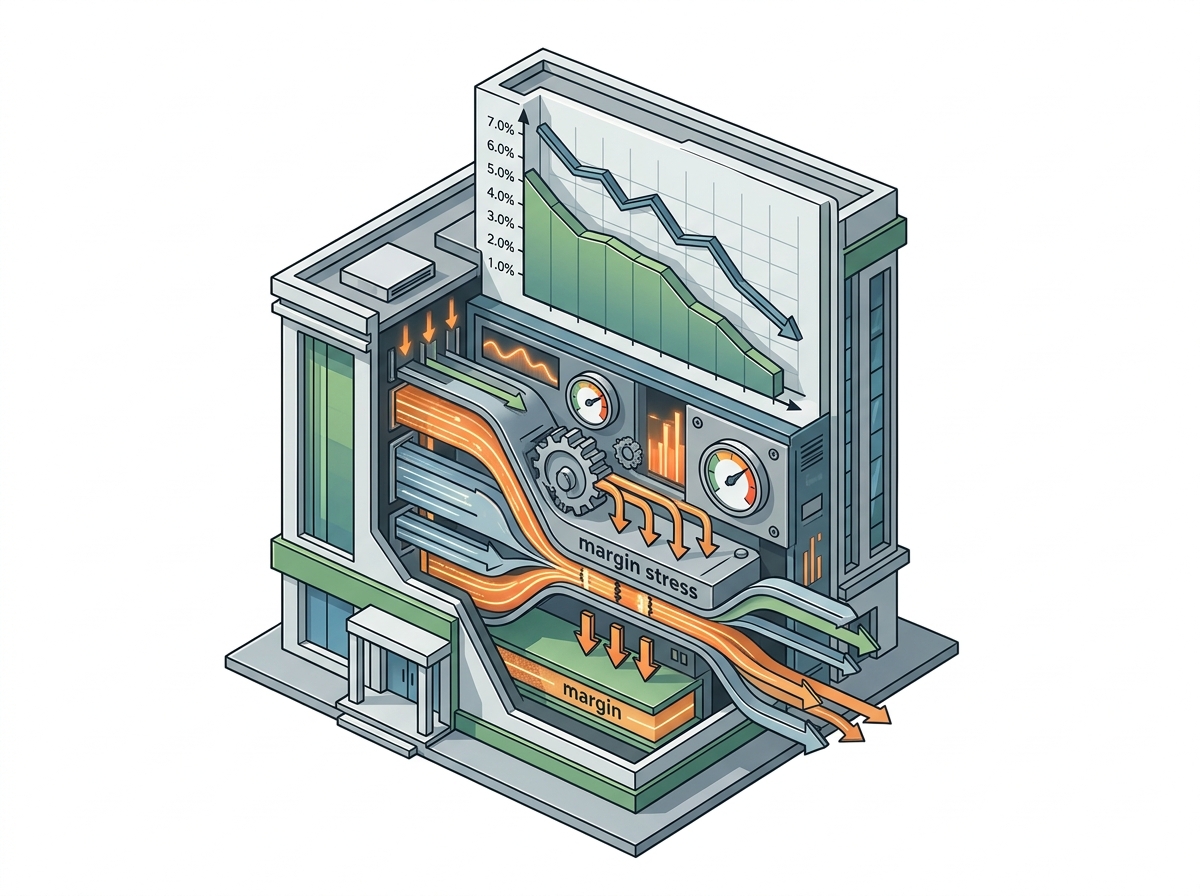
✎ Banks face margin stress due to high deposit costs and strong credit growth, with NIM declining to 3.21% in June 2026.
Relevance for Banking, SSC & RBI Grade B exams: Economy
The Reserve Bank of India (RBI) Governor Sanjay Malhotra recently highlighted a decline in the net interest margin (NIM) of India’s banking sector, which fell to 3.21% in June 2026 from 3.26% a year ago, signaling margin stress. Banks anticipate continued pressure due to high deposit costs, intense competition for funds, and strong credit growth, which outpaces deposit mobilization. The situation is further exacerbated by flows under the FCNR(B) deposit scheme, which, despite offering cheaper funds, dilute margins due to leverage constraints. While some banks like Axis Bank expect stabilization, others such as ICICI Bank and SBI foresee range-bound margins in the near term, citing macroeconomic uncertainties and elevated operating expenses.
For banking and financial services aspirants preparing for exams like Bank PO, IBPS, SBI, RBI Grade B, and SSC, this development underscores the critical importance of understanding NIM dynamics, deposit pricing strategies, and the interplay between credit growth and funding costs. Questions on monetary policy, liquidity management, and sectoral challenges are likely to feature prominently in exams, making this topic highly relevant. Additionally, awareness of regulatory frameworks like FCNR(B) deposits and their impact on bank profitability is essential for aspirants targeting RBI Grade B and other competitive examinations.
Source: Mint
Generated by AanyaAi for educational purpose.
