✎ Monsoon Session 2026 highlights legislative delays due to Opposition protests and key bills like Tribunals Reforms and FCRA under scrutiny.
Relevance for Banking, SSC & RBI Grade B exams: Polity
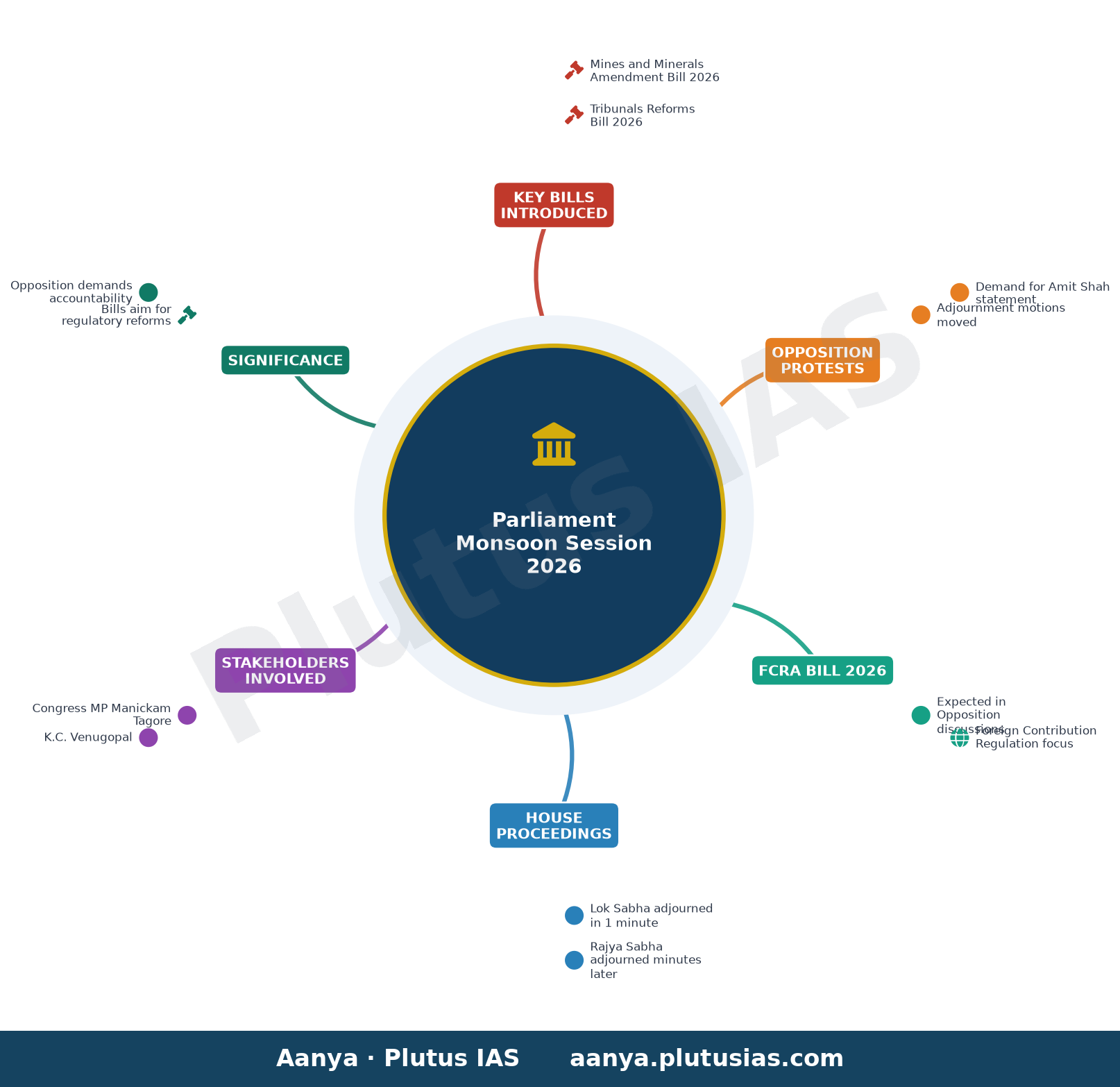
The Lok Sabha’s Monsoon Session on August 10, 2026, saw both Houses adjourned amid Opposition protests, delaying key legislative business. The session was marked by adjournment motions and demands for discussions on issues like the Ram Mandir donation row and police action in Delhi, with Congress MP Manickam Tagore seeking Home Minister Amit Shah’s statement. Among the bills introduced was the Tribunals Reforms Bill, 2026, which aims to streamline tribunal functioning by establishing a National Tribunals Commission and ensuring uniformity in appointments and service conditions. For banking and SSC aspirants, this highlights the importance of parliamentary processes, including bill introductions, adjournment motions, and Opposition strategies, which often feature in polity sections of exams. Understanding such legislative dynamics is crucial for questions on constitutional amendments, parliamentary procedures, and governance, especially in RBI Grade B exams where economic policies and regulatory frameworks are frequently tested.
The session also underscored the role of Opposition-led discussions on bills like the Foreign Contribution (Regulation) Amendment Bill, 2026, reflecting broader themes of regulatory oversight and accountability. Aspirants should note how such bills impact sectors like banking and cooperatives, as seen in the Mines and Minerals (Development and Regulation) Amendment Bill, 2026, which could influence resource governance and economic policies. For banking exams, this ties into regulatory reforms and their implications for financial institutions, while SSC aspirants may encounter questions on cooperative societies and governance. The session’s adjournments and protests also serve as a case study in federalism and inter-party dynamics, relevant for polity and governance segments in competitive exams.
Source: The Hindu
Generated by AanyaAi for educational purpose.
