
✎ NEP 2020-driven NCERT curriculum reforms emphasize competency-based, inclusive, and multidisciplinary learning with extensive stakeholder consultation.
Relevance for Banking, SSC & RBI Grade B exams: Polity & Governance
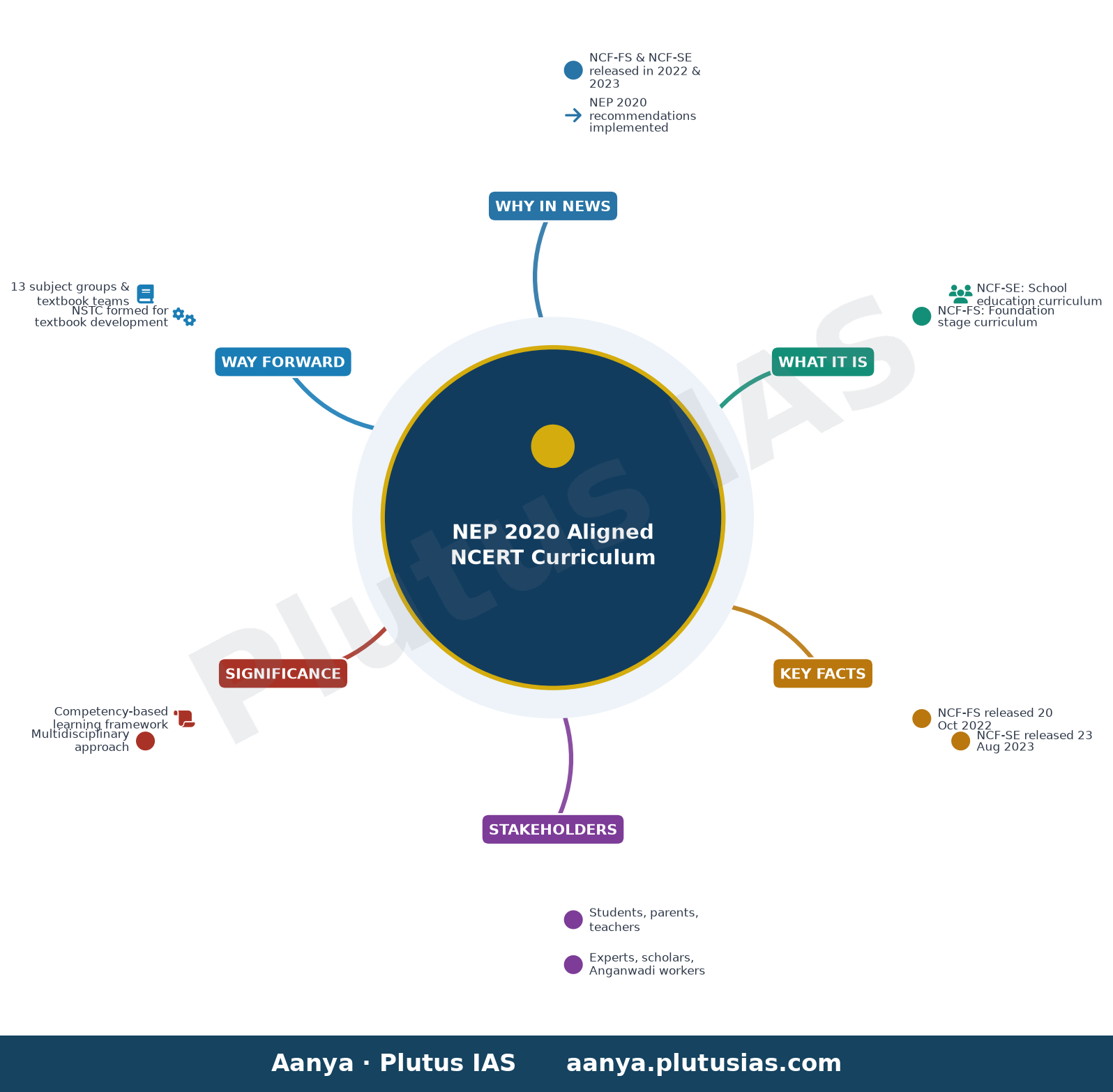
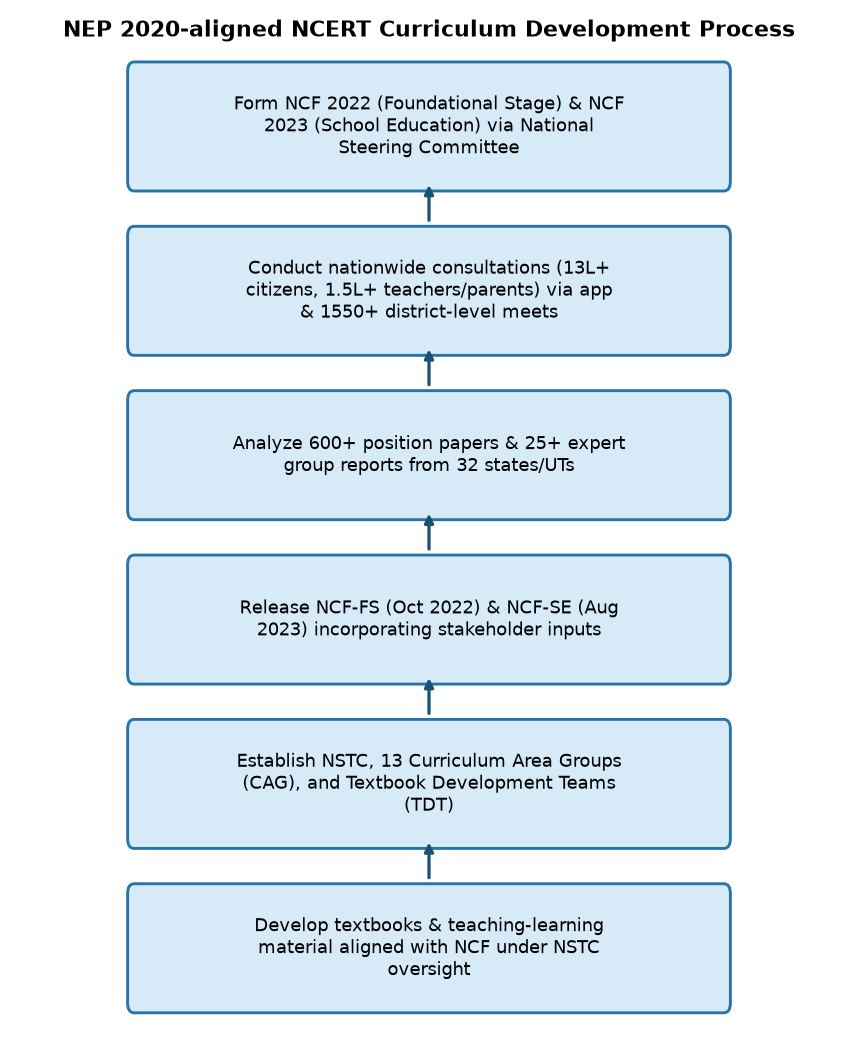
The National Education Policy (NEP) 2020, a landmark reform in India’s education system, has prompted the National Council of Educational Research and Training (NCERT) to revise its curriculum framework in alignment with its recommendations. The NCERT released the National Curriculum Framework for Foundational Stage (NCF-FS) in 2022 and the National Curriculum Framework for School Education (NCF-SE) in 2023, which outline curriculum goals, competencies, learning outcomes, teaching methods, and assessment strategies across different subjects and classes. These frameworks were developed through extensive consultations with stakeholders, including teachers, parents, students, experts, and even illiterate individuals, ensuring inclusivity and relevance. The process involved over 13 lakh citizens at the national level and 1.5 lakh educators and students at the state level, reflecting a participatory approach to policy implementation. For aspirants preparing for competitive exams like Bank PO, IBPS, SBI, RBI Grade B, and SSC, understanding NEP 2020 and its alignment with NCERT’s curriculum is crucial, as questions related to education policies, governance reforms, and socio-economic development often feature in these examinations.
The revised curriculum, developed under the guidance of the National Steering Committee and implemented through bodies like the National Curriculum and Teaching-Learning Material Committee (NSTC), emphasizes multidisciplinary learning, skill development, and inclusive education. The NCERT has also introduced new textbooks and learning resources for classes 1-9, incorporating age-appropriate content, gender sensitivity, and constitutional values. For banking and SSC aspirants, this policy’s focus on foundational literacy, digital literacy, and vocational training can be linked to broader themes like human resource development, demographic dividend, and economic growth. Similarly, RBI Grade B exams may test candidates on the policy’s implications for workforce productivity and financial inclusion. Staying updated on such governance reforms not only aids exam preparation but also enhances awareness of India’s evolving socio-economic landscape.
Source: PIB (Press Information Bureau)
Generated by AanyaAi for educational purpose.
