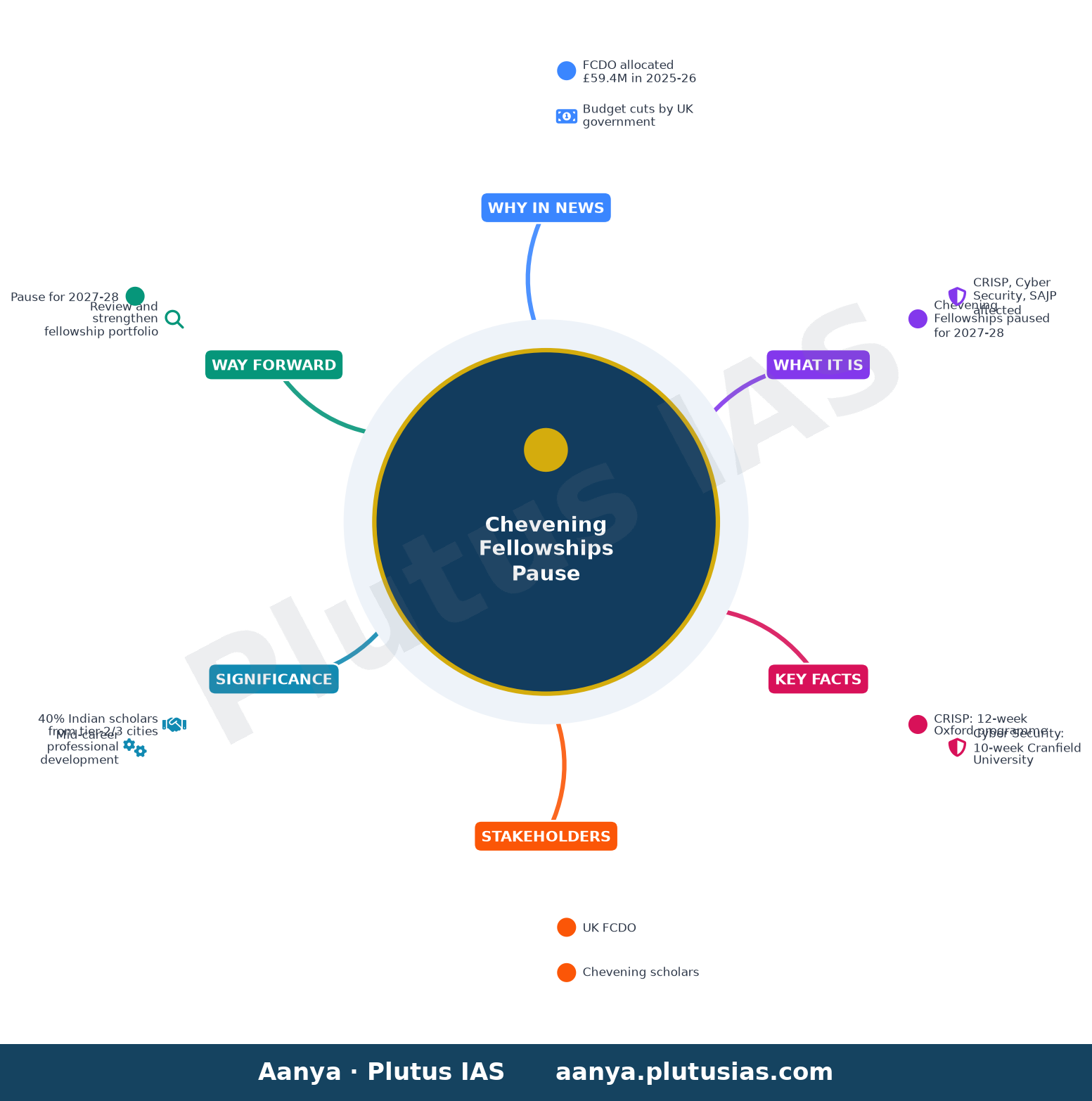
✎ Chevening Fellowships paused for 2027-28 due to UK budget cuts, affecting key programmes like CRISP, Cyber Security, and SAJP.
Relevance for Banking, SSC & RBI Grade B exams: Economy
The U.K. government’s decision to pause select Chevening Fellowships for 2027-28, including the CRISP programme for science and innovation, the Cyber Security Fellowship, and the South Asia Journalism Programme, reflects broader fiscal constraints impacting diplomatic and educational initiatives. The move, driven by capacity issues and cost-cutting measures, comes as the Foreign, Commonwealth and Development Office (FCDO) faces budgetary pressures, with £59.4 million allocated to Chevening in 2025-26—a figure that may see reductions in subsequent years. For banking and SSC aspirants, this underscores the interplay between government budgets and international cooperation, a theme often tested in exams through questions on fiscal policy, public expenditure, or global partnerships. RBI Grade B candidates, in particular, may draw parallels with India’s own scholarship and fellowship programmes, where budget allocations influence outreach and diplomatic soft power.
The pause in fellowships also highlights the strategic role of such programmes in fostering global networks, a concept relevant to SSC exams covering international relations or governance. The Chevening Scholarships, which remain open, serve as a tool of soft diplomacy, with alumni including heads of state and ambassadors—an example of how education and cultural exchange align with foreign policy goals. Aspirants should note how such initiatives are funded (e.g., through government allocations, corporate partnerships, or university collaborations) and their broader economic implications, such as the impact on bilateral ties or skill development in partner countries. The historical context of past budget cuts to Chevening, like the £10 million reduction in 2010, further ties into discussions on fiscal prudence and priority-setting in public spending.
Source: The Hindu
Generated by AanyaAi for educational purpose.
