
✎ Judicial corruption probe under scrutiny after cash discovery and Varma's resignation.
Relevance for Banking, SSC & RBI Grade B exams: Economy/Governance
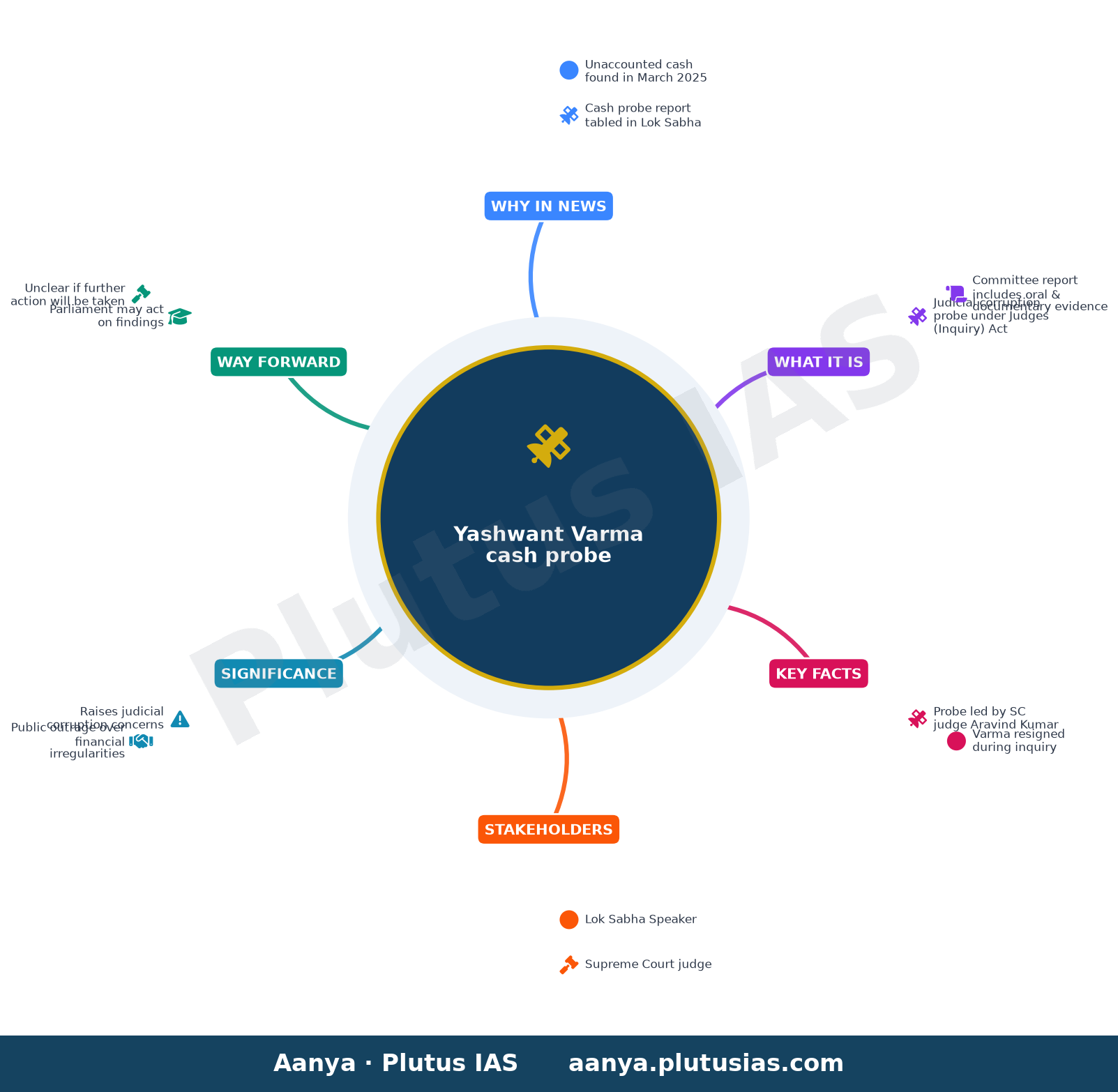
The Lok Sabha is set to table the inquiry committee report on former Allahabad High Court judge Yashwant Varma today, following allegations of financial irregularities that surfaced after a large sum of unaccounted, partially-burnt cash was found in the outhouse of his residence during a fire incident in March 2025. The report, prepared under the Judges (Inquiry) Act, includes oral and documentary evidence collected during the probe, which was initiated after an in-house inquiry by the then Chief Justice of India and later escalated to a parliamentary panel headed by a Supreme Court judge. Varma resigned during the inquiry, raising questions about the legal recourse available now that he is no longer a serving judge. The development is significant for banking and governance aspirants as it highlights the accountability mechanisms within the judiciary and the role of parliamentary oversight in addressing misconduct, a theme often tested in exams like RBI Grade B and SSC CGL.
For banking and SSC aspirants, this case underscores the importance of ethical governance and the consequences of financial impropriety, which are frequently examined in the General Awareness sections of these exams. The Judges (Inquiry) Act and the process of parliamentary scrutiny over judicial conduct are relevant for understanding institutional checks and balances, a topic that may appear in RBI Grade B’s economic and social issues segment or SSC’s polity and governance questions. The episode also reflects broader concerns about judicial integrity, a subject that connects to current affairs in governance, making it a pertinent case study for aspirants preparing for interviews or descriptive papers in these competitive exams.
Source: Times of India
Generated by AanyaAi for educational purpose.
