
✎ T-Bill auctions indicate short-term borrowing costs and liquidity trends for competitive exams.
Relevance for Banking, SSC & RBI Grade B exams: Polity
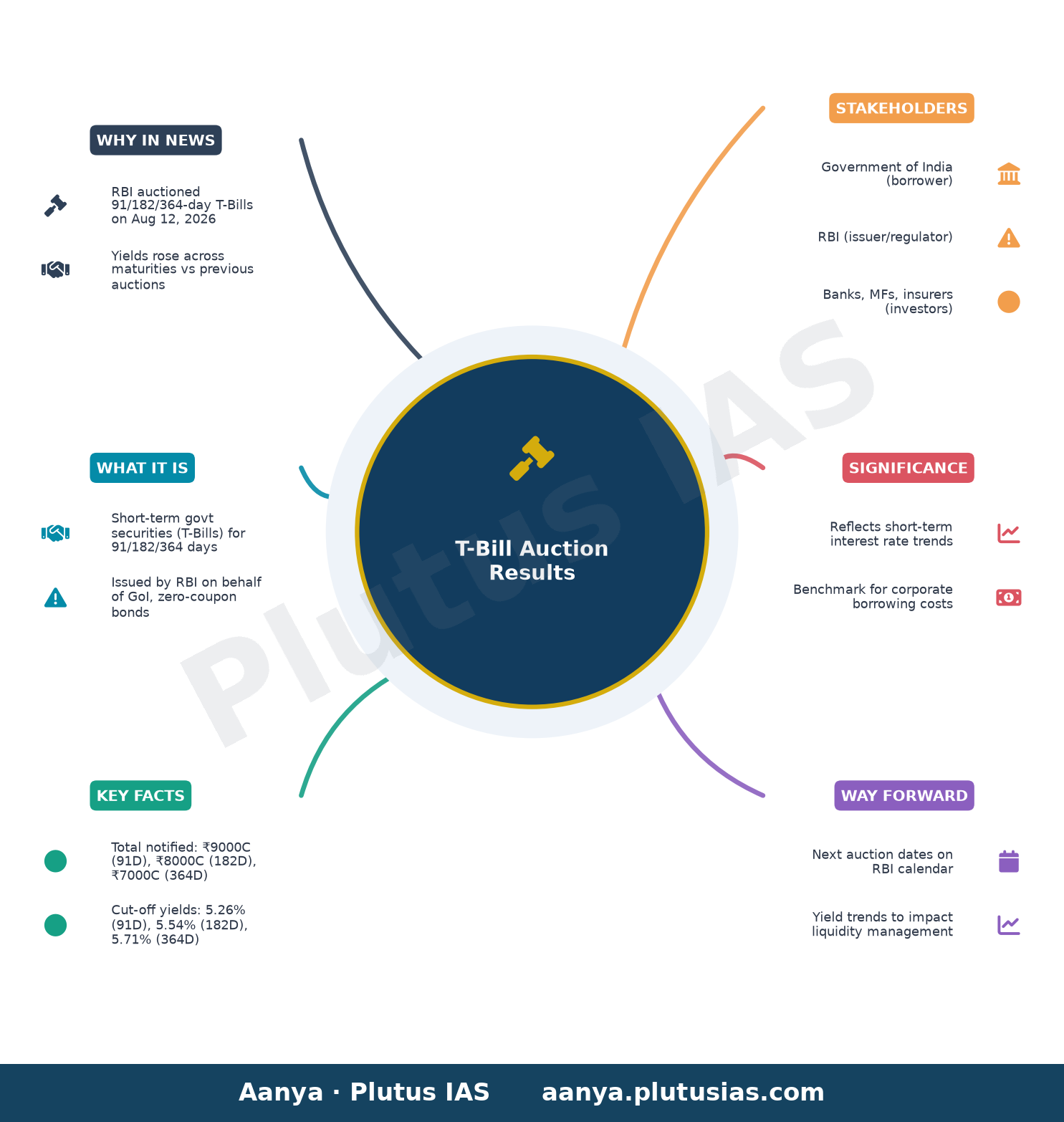
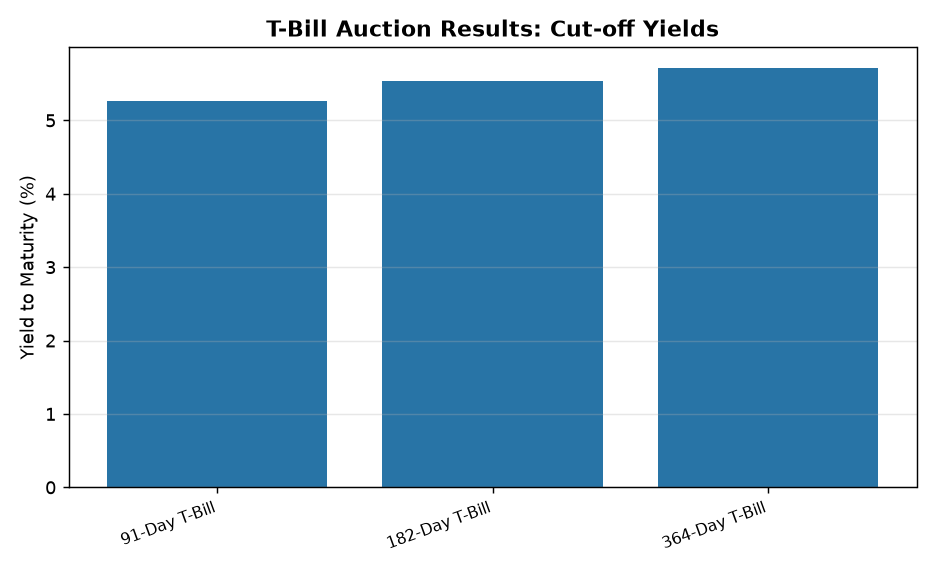
The Reserve Bank of India (RBI) recently announced the auction results for 91-day, 182-day, and 364-day Treasury Bills (T-Bills) with a total notified face value of ₹9,000 crore, ₹8,000 crore, and ₹7,000 crore respectively. The cut-off prices for these T-Bills were ₹98.7050 (yielding 5.2624%), ₹97.3123 (yielding 5.5390%), and ₹94.6130 (yielding 5.7094%), indicating a rising yield trend with longer maturities. All notified amounts were fully accepted, reflecting strong market demand. For banking aspirants preparing for exams like IBPS PO, SBI Clerk, or RBI Grade B, understanding T-Bill auctions is crucial as they are key instruments for liquidity management and benchmarking interest rates in the economy. The yield movements also signal broader monetary policy expectations, making them relevant for macroeconomic analysis in competitive exams.
For SSC aspirants, particularly those appearing for exams like CGL or CHSL, knowledge of T-Bills is essential for understanding government borrowing and fiscal policy. The auction results highlight how the government raises short-term funds and the RBI’s role in managing liquidity through these instruments. Similarly, for RBI Grade B officers, analyzing such data is vital for assessing market sentiment, inflation expectations, and the transmission of monetary policy. The increasing yields with longer tenors may also hint at rising inflation concerns or tighter liquidity conditions, a topic often tested in descriptive papers of RBI Grade B exams. Aspirants should correlate these trends with broader economic indicators like GDP growth, inflation, and repo rate decisions to strengthen their answers in exams.
Source: RBI
Generated by AanyaAi for educational purpose.
