✎ Parliament Monsoon Session 2026 focuses on FCRA Bill, NCDC Amendment, and NEET protests amid Opposition protests and government discussions.
Relevance for Banking, SSC & RBI Grade B exams: Polity
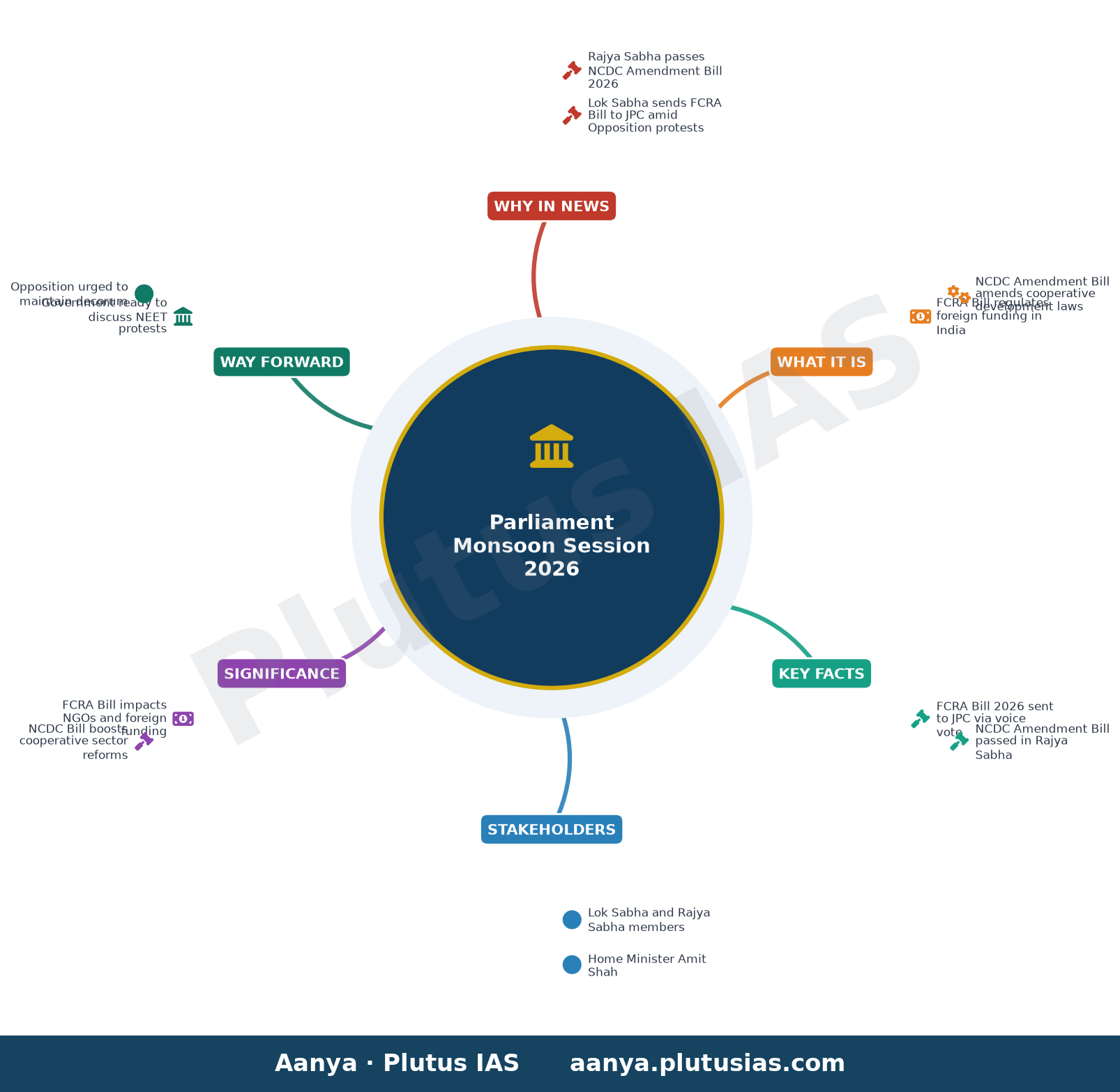
The Lok Sabha’s adoption of the motion to send the Foreign Contribution (Regulation) Amendment Bill, 2026, to a Joint Parliamentary Committee (JPC) on the 18th day of the monsoon session amid Opposition protests highlights the procedural role of Parliament in lawmaking. The Bill, aimed at amending the FCRA, 2010, which regulates foreign funding for NGOs and associations, is particularly relevant for banking and financial regulatory exams like RBI Grade B, where questions on financial governance, compliance, and parliamentary oversight often appear. The Opposition’s furore over the Bill underscores the checks and balances in Parliament, a key topic in polity syllabi for SSC and Bank PO exams, where aspirants must understand the dynamics between the government and Parliament in legislative processes.
The session also saw the Rajya Sabha passing the National Co-operative Development Corporation (Amendment) Bill, 2026, and discussions on renaming Kerala to ‘Keralam,’ which, while primarily a state-specific issue, reflects the broader themes of federalism and constitutional amendments—frequent subjects in competitive exams. Union Minister Kiren Rijiju’s offer to extend the session for discussions on students’ protests, including NEET-related issues, ties into current affairs relevant for SSC and banking exams, where questions on government responses to public grievances and parliamentary procedures are common. The government’s willingness to engage in discussions, despite Opposition resistance, demonstrates the functioning of democratic institutions, a concept often tested in exams like RBI Grade B and IBPS.
Source: The Hindu
Generated by AanyaAi for educational purpose.
