
✎ 73% dropout before Class 12 highlights urgent need for education reforms and policy intervention.
Relevance for Banking, SSC & RBI Grade B exams: Economy/Governance
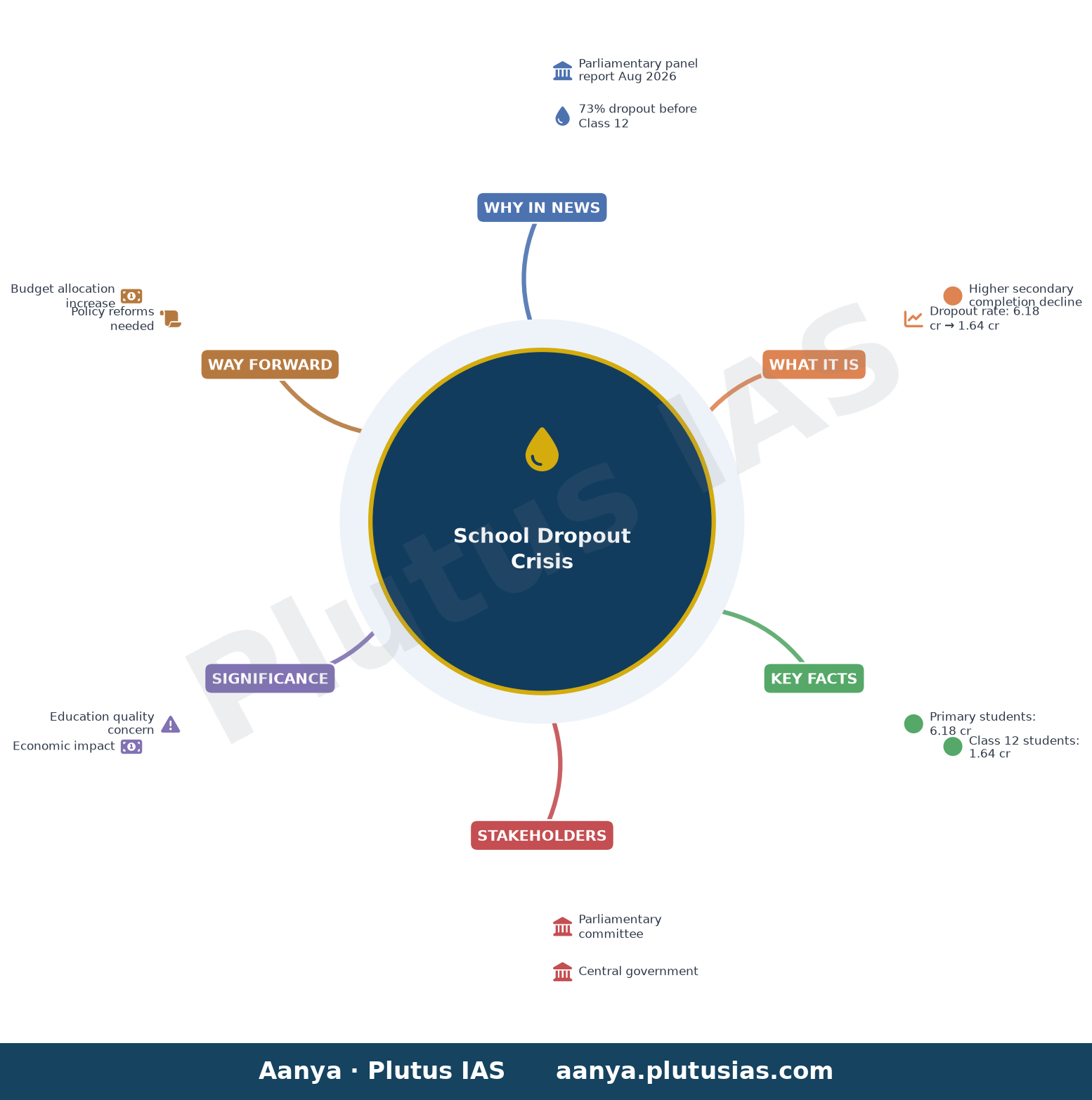
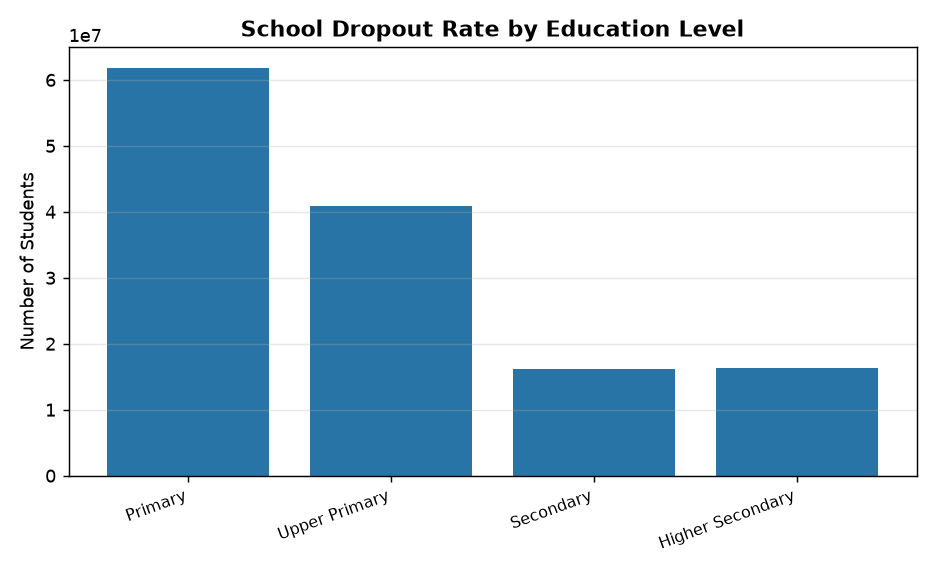
A parliamentary panel’s report has revealed a stark reality about India’s school education system, highlighting that 73% of students drop out before reaching higher secondary education. The data shows a drastic decline in student numbers from 6.18 crore at the primary level to just 1.64 crore at the higher secondary stage, alongside a severe shortage of secondary and higher secondary schools. The committee, in its 10th report for 2026-27, attributed this trend to inadequate infrastructure, lack of specialized educators for children with special needs (CwSN), and slow budget utilization for inclusive education initiatives. It also flagged concerns over the absence of disability-friendly facilities in over half of government schools, despite legal provisions under the RPwD Act, 2016, mandating free education up to age 18 for benchmark disabilities.
This issue holds critical relevance for banking, SSC, and RBI Grade B aspirants as it underscores systemic gaps in governance and public welfare delivery—key areas often tested in exams. For banking roles, understanding such socio-economic challenges helps in framing policies for financial inclusion and skill development. SSC exams, particularly in the General Studies section, frequently assess knowledge of government schemes, education policies, and demographic trends. RBI Grade B officers, tasked with macroeconomic stability, must recognize how education deficits impact workforce productivity and economic growth. The report’s emphasis on budgetary inefficiencies and infrastructure gaps also aligns with questions on fiscal governance and public expenditure analysis in competitive exams.
Source: amarujala.com
Generated by AanyaAi for educational purpose.
