✎ Centre gains control over major mineral pricing to ensure uniformity, while States retain minor mineral rights.
Relevance for Banking, SSC & RBI Grade B exams: Polity
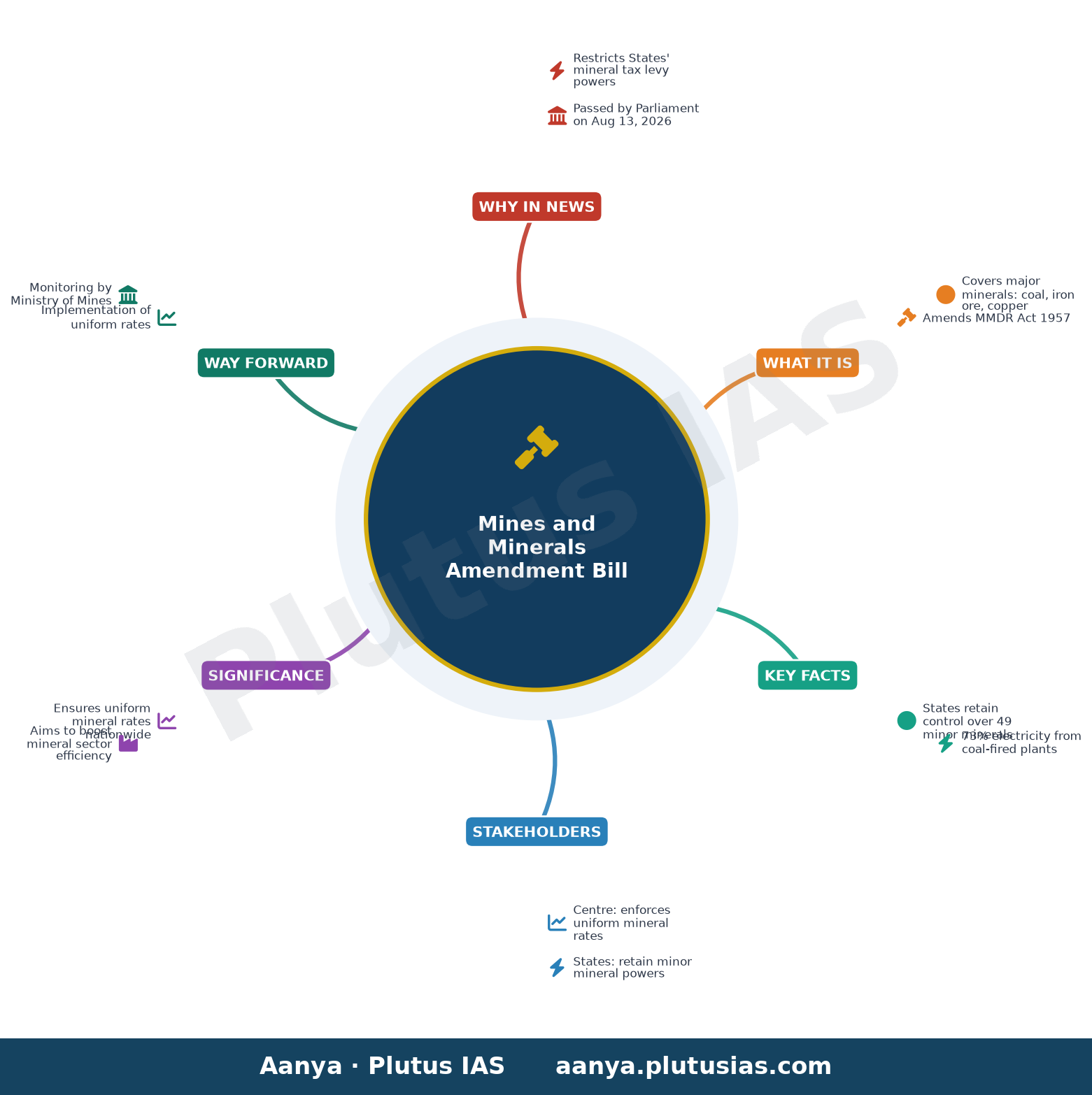
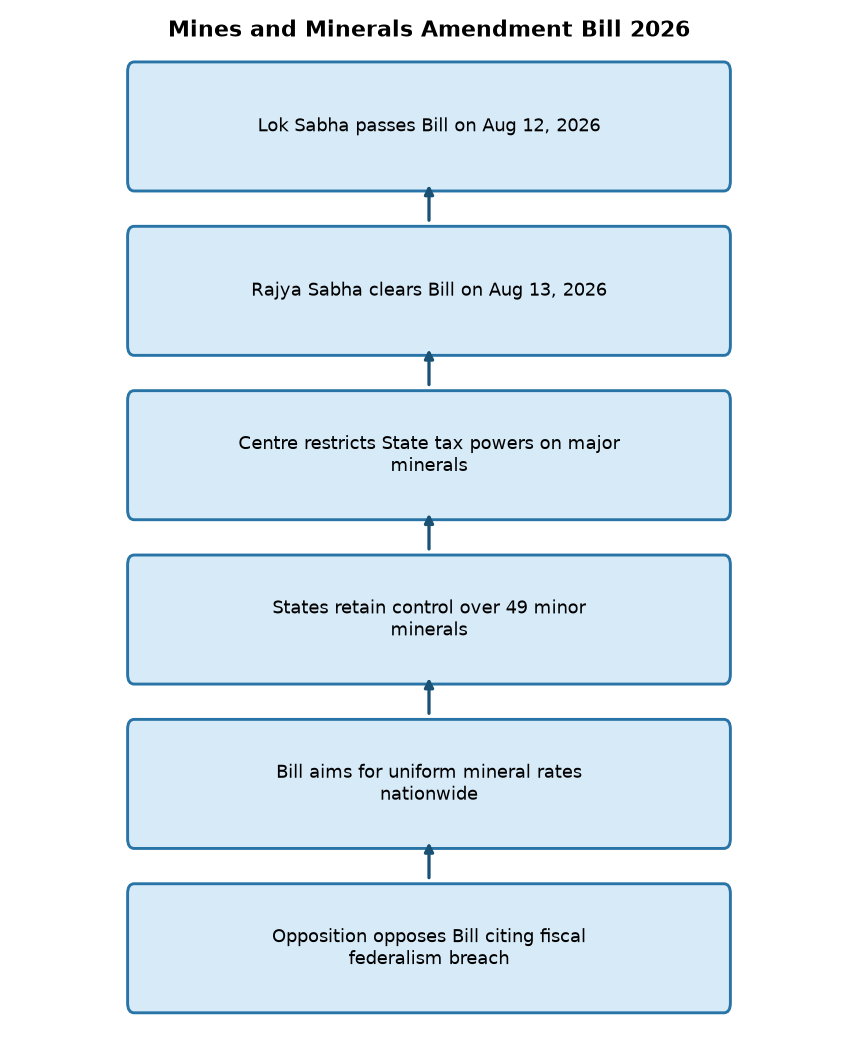
Parliament passed the Mines and Minerals (Development and Regulation) Amendment Bill, 2026, on August 13, 2026, restricting States’ powers to levy taxes on mineral rights and mineral-rich lands. The Bill, which the Lok Sabha cleared a day earlier and the Rajya Sabha on August 13, was opposed by the Opposition, which argued that it violated fiscal federalism enshrined in the Constitution. Mines Minister G. Kishan Reddy countered these claims, stating that the legislation aims to ensure uniform mineral rates nationwide while maintaining States’ revenue rights, as 88% of mineral and 96% of coal revenues already accrue to them. The Centre retains control over major minerals like coal, iron ore, and manganese, while States will continue to manage 49 minor minerals, ensuring no revenue loss for any State.
This development holds significance for Banking, SSC, and RBI Grade B exam aspirants as it touches upon constitutional provisions, federalism, and resource allocation—key topics in Polity and Economy sections. For Banking exams like IBPS PO and SBI Clerk, questions may arise on the role of Parliament in regulating inter-State economic matters or the distribution of financial resources between the Centre and States. SSC aspirants may encounter questions linking this Bill to the Seventh Schedule of the Constitution or the principles of cooperative federalism. RBI Grade B candidates, particularly in the Economic and Social Issues paper, might need to analyze how such legislative changes impact resource mobilization, fiscal policies, or the balance of power between Union and State governments.
Source: The Hindu
Generated by AanyaAi for educational purpose.
