
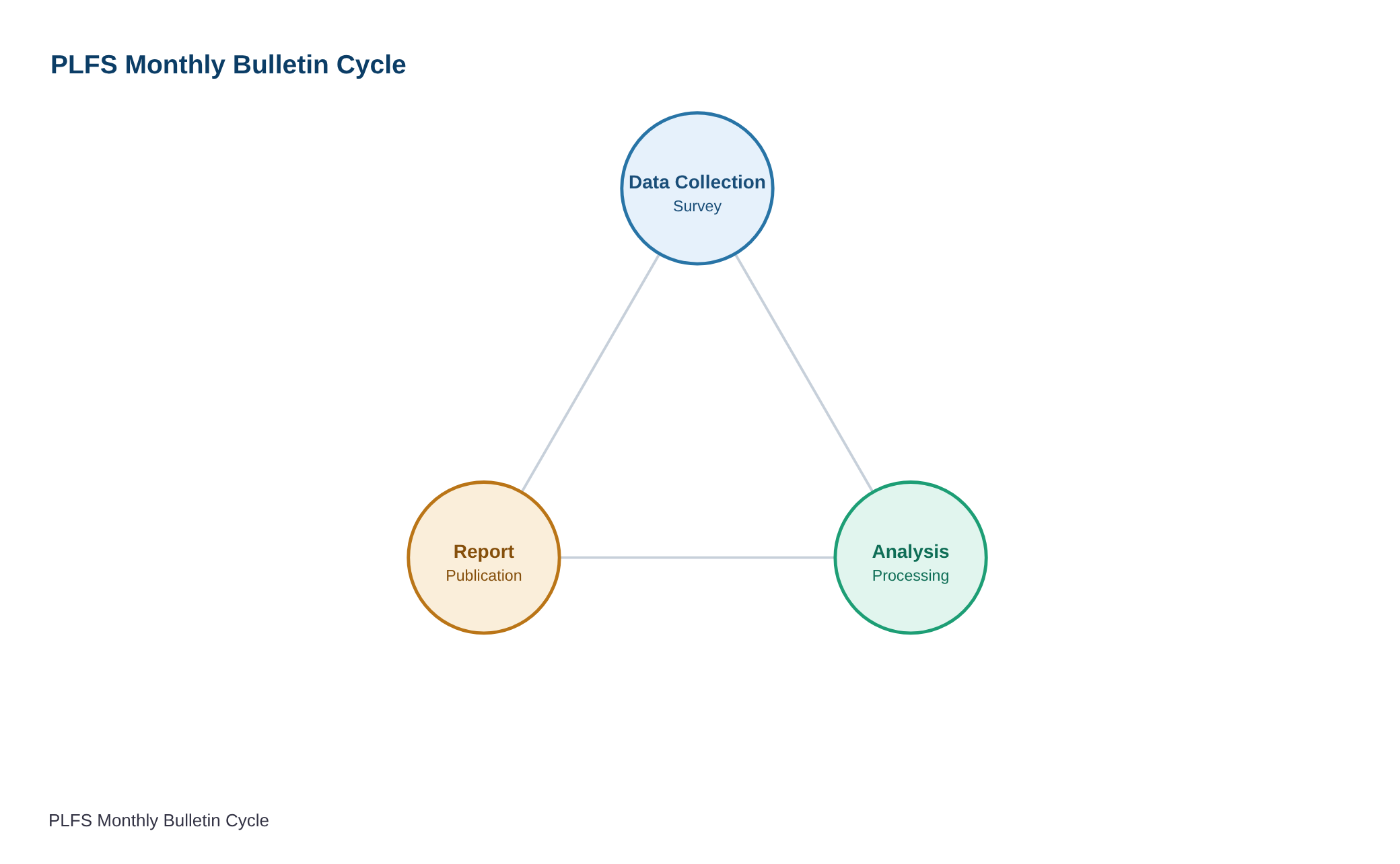
✎ PLFS July 2026 shows improved LFPR, WPR, and declining unemployment, reflecting better labor market conditions.
Relevance for Banking, SSC & RBI Grade B exams: Economy/Governance
The **Periodic Labour Force Survey (PLFS) Monthly Bulletin for July 2026**, released by the Ministry of Statistics and Programme Implementation (MoSPI), highlights key improvements in India’s labour market indicators, making it a critical data point for banking and competitive exam aspirants. The report shows a rise in the **Labour Force Participation Rate (LFPR)** to 55.4% in July 2026 from 54.4% in June, with rural LFPR increasing by 1.4 percentage points to 58.0%, while urban LFPR saw a marginal rise to 50.4%. Notably, the **female LFPR** surged to 34.4%, reflecting a 1.7 percentage point increase, indicating growing female workforce engagement—a trend relevant for policy discussions on gender inclusivity in employment. The **Worker Population Ratio (WPR)** also improved to 52.5%, with rural WPR at 55.4%, while the **unemployment rate (UR)** declined to 5.1%, signaling a tightening labour market. These trends are particularly significant for **RBI Grade B and SSC exams**, where questions on employment statistics, economic indicators, and government policies often feature.
For **Bank PO and IBPS aspirants**, understanding PLFS data is essential as it directly impacts monetary policy decisions, inflation projections, and credit demand assessments. The RBI closely monitors employment trends to gauge economic recovery and adjust policy rates accordingly. Similarly, **SSC CGL/CHSL candidates** may encounter questions on labour statistics in the **Economy/Governance** section, where concepts like LFPR, WPR, and UR are frequently tested. The PLFS’s shift from a quarterly to a monthly format (since January 2025) further underscores its real-time relevance for policymakers and exam setters alike. Aspirants should focus on the **rural-urban divide, gender disparities, and trends in unemployment** to answer questions on labour market dynamics effectively.
Source: PIB (Press Information Bureau)
Generated by AanyaAi for educational purpose.
