
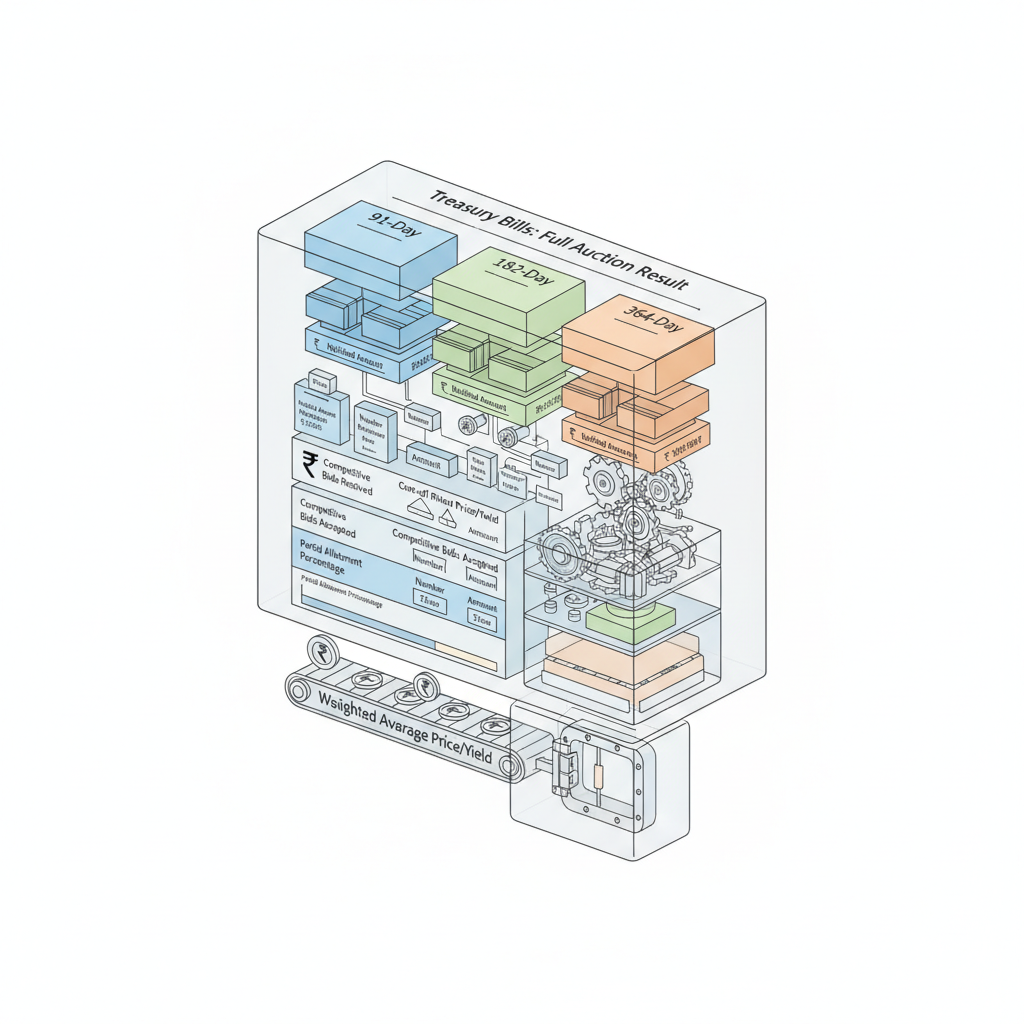
 Notified AmountCompetitive BidsCut-off PriceCompetitive Bids AcceptedPartial Allotment PercentageWeighted Average Yield
✎ Treasury bills are short-term govt securities auctioned by RBI to manage liquidity and fund deficits.
Relevance for Banking, SSC & RBI Grade B exams: Polity
The Reserve Bank of India (RBI) recently announced the full auction results for Treasury Bills (T-Bills) dated August 19, 2026, offering 91-day, 182-day, and 364-day maturities. The notified amounts were ₹9,000 crore, ₹8,000 crore, and ₹7,000 crore respectively, with competitive bids far exceeding the notified amounts—₹28,091.25 crore for 91-day, ₹15,874 crore for 182-day, and ₹21,375 crore for 364-day T-Bills. The cut-off yields for these bills were 5.2603%, 5.5678%, and 5.7373%, indicating rising interest rates, which is crucial for aspirants preparing for exams like RBI Grade B and SSC, where monetary policy and fiscal instruments are key topics. The weighted average yields were slightly lower, reflecting competitive bidding trends, and non-competitive bids were fully allotted, showing strong retail investor participation.
For banking exams like Bank PO, IBPS, and SBI, understanding T-Bill auctions is vital as they are primary instruments for government borrowing and liquidity management. The data highlights how the RBI manages short-term debt through competitive and non-competitive bidding, a concept often tested in exams. The higher yield on longer-duration T-Bills suggests market expectations of rising interest rates, which is relevant for questions on monetary policy and inflation. SSC aspirants should note that T-Bills are part of the money market, and their auction results reflect liquidity conditions, making this a frequent exam topic.
Source: RBI
Generated by AanyaAi for educational purpose.
