✎ India successfully rebalanced economic ties with US & China in 2026 by reducing tariffs and easing FDI norms.
Relevance for Banking, SSC & RBI Grade B exams: Economy/Governance
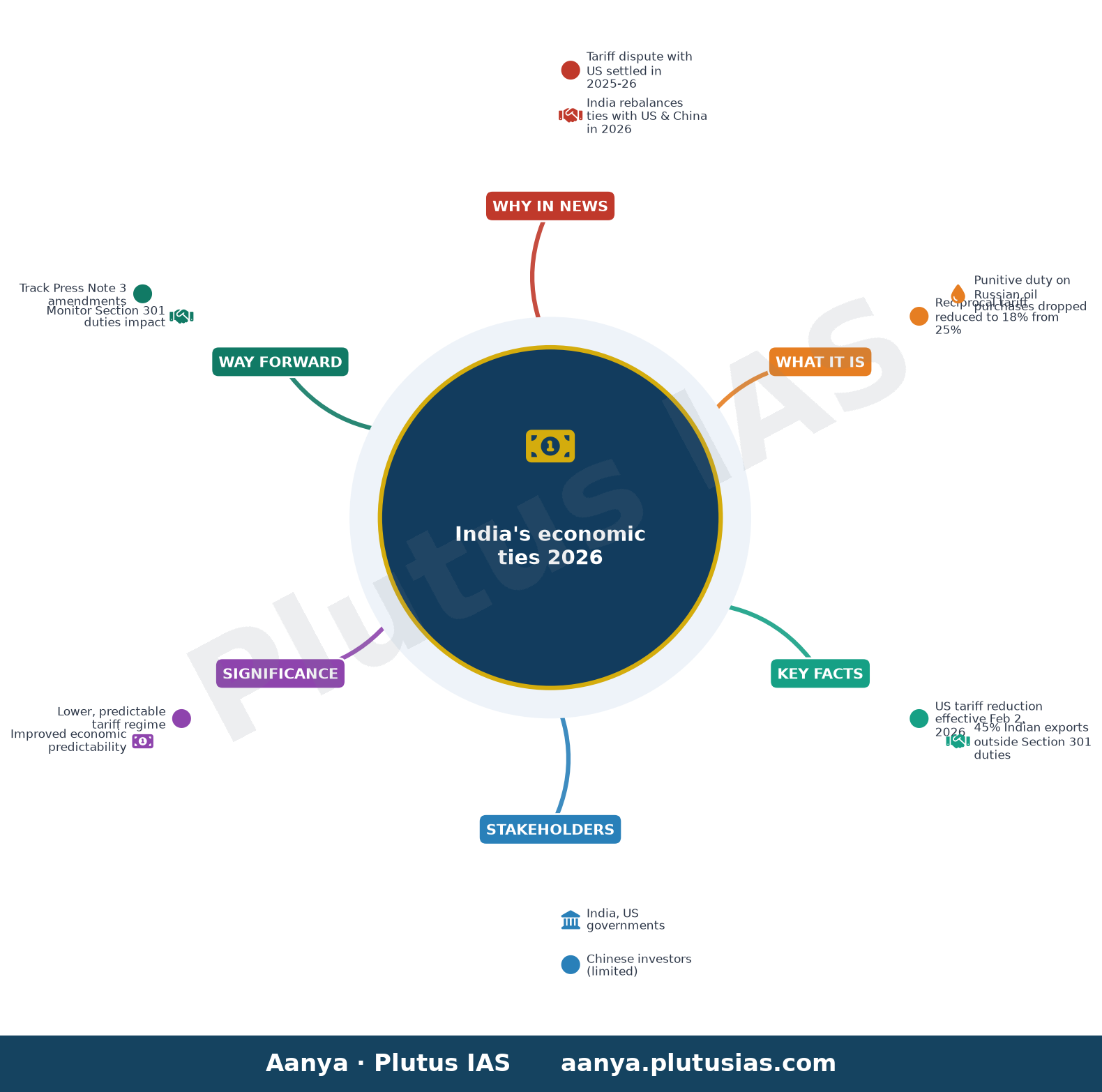
India has rebalanced its economic ties with the US and China in 2026 by resolving tariff disputes with Washington and easing restrictions on Chinese investments, as reported by *OrissaPOST*. The US agreed to reduce reciprocal tariffs on Indian goods from 25% to 18% and dropped punitive duties linked to Russian oil purchases, while China saw calibrated easing of its investment restrictions under Press Note 3, allowing non-controlling Chinese ownership below 10% in select sectors. These moves aim to diversify India’s economic dependencies amid slowing growth forecasts, with the UN projecting a 6.6% GDP growth in 2026, down from 7.4% in 2025.
For banking and SSC aspirants, this development highlights the interplay between trade policies, foreign investments, and macroeconomic stability—key topics in exams like RBI Grade B and IBPS. The RBI’s ability to manage currency and bond-market volatility due to reduced tariff risks and improved FDI inflows ($4.2 billion in June) underscores the importance of external sector management. For SSC candidates, understanding such geopolitical-economic shifts is crucial for governance and economy sections, while banking exams may test knowledge of trade agreements, FDI norms, and their impact on financial markets.
Source: orissapost.com
Generated by AanyaAi for educational purpose.

1 comment on “India’s 2026 Economic Shift: US Tariff Deal & China FDI Easing Explained”