
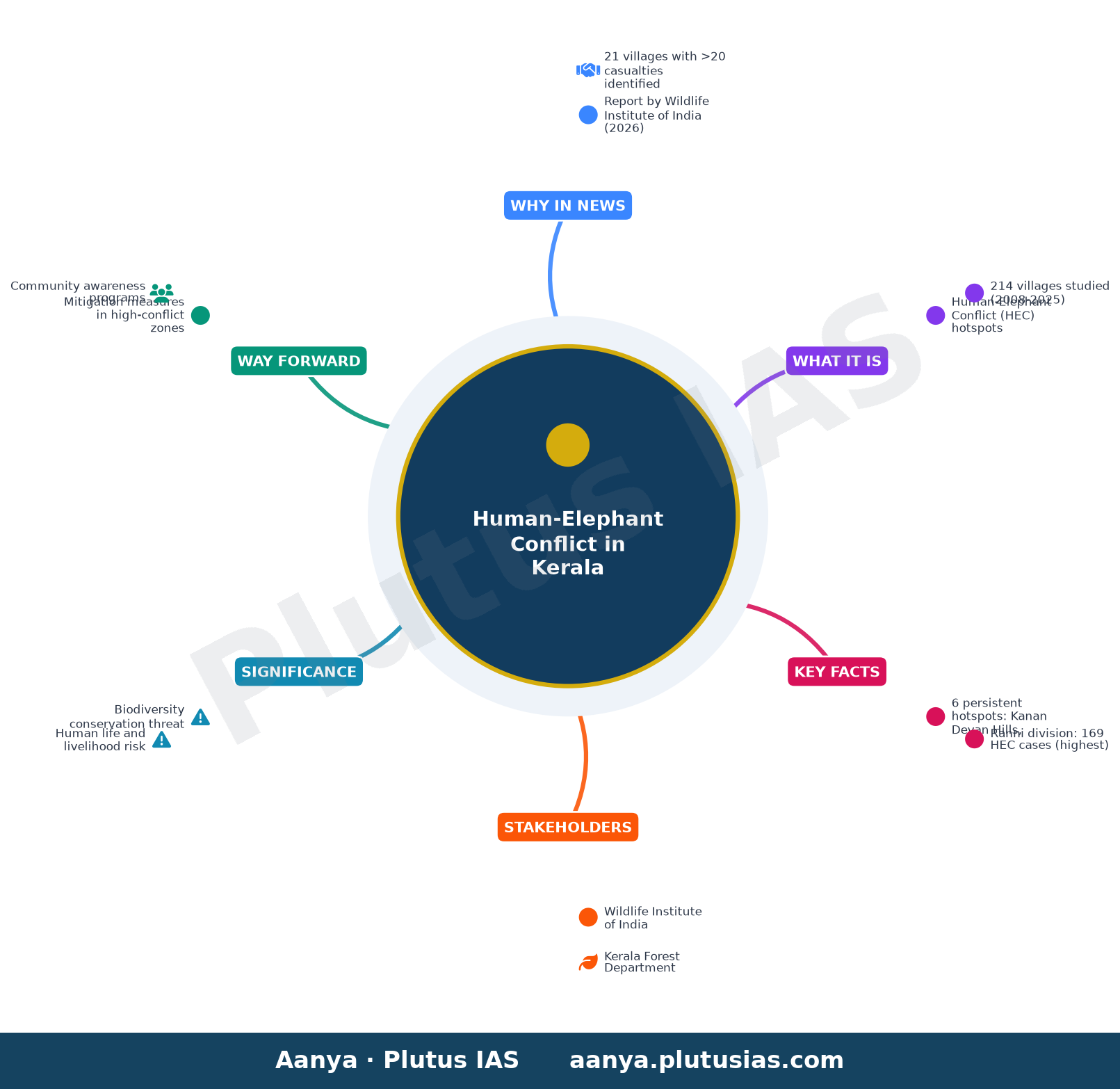
✎ Kerala’s 21 high-conflict villages face severe HEC, with Ranni and Nilambur South as worst-affected areas.
Relevance for Banking, SSC & RBI Grade B exams: Economy/Governance
A recent report by the Wildlife Institute of India has identified several villages in Keralam, including Kanan Devan Hills, Kuttampuzha, Chittar, Mankulam, Padavayal, and Peechi, as persistent hotspots for elephant mortality and human-elephant conflict (HEC). The study, covering 2008-2025, found 21 villages with over 20 human casualties, with Ranni forest division recording the highest HEC cases (169). Electrocution emerged as the leading cause of elephant deaths (154), followed by explosive baits (12) and retaliatory killings (11), highlighting the need for better wildlife management and infrastructure safety measures.
For banking and SSC aspirants, this report underscores the socio-economic challenges posed by human-wildlife conflicts, particularly in rural and forest-adjacent regions. Such issues often intersect with governance, environmental policy, and disaster management—key areas in competitive exams. RBI Grade B candidates may draw parallels with sustainable development goals (SDGs) and policy interventions for balancing conservation with human welfare, while banking exams may test awareness of rural infrastructure projects addressing such conflicts.
Source: The Hindu
Generated by AanyaAi for educational purpose.
