
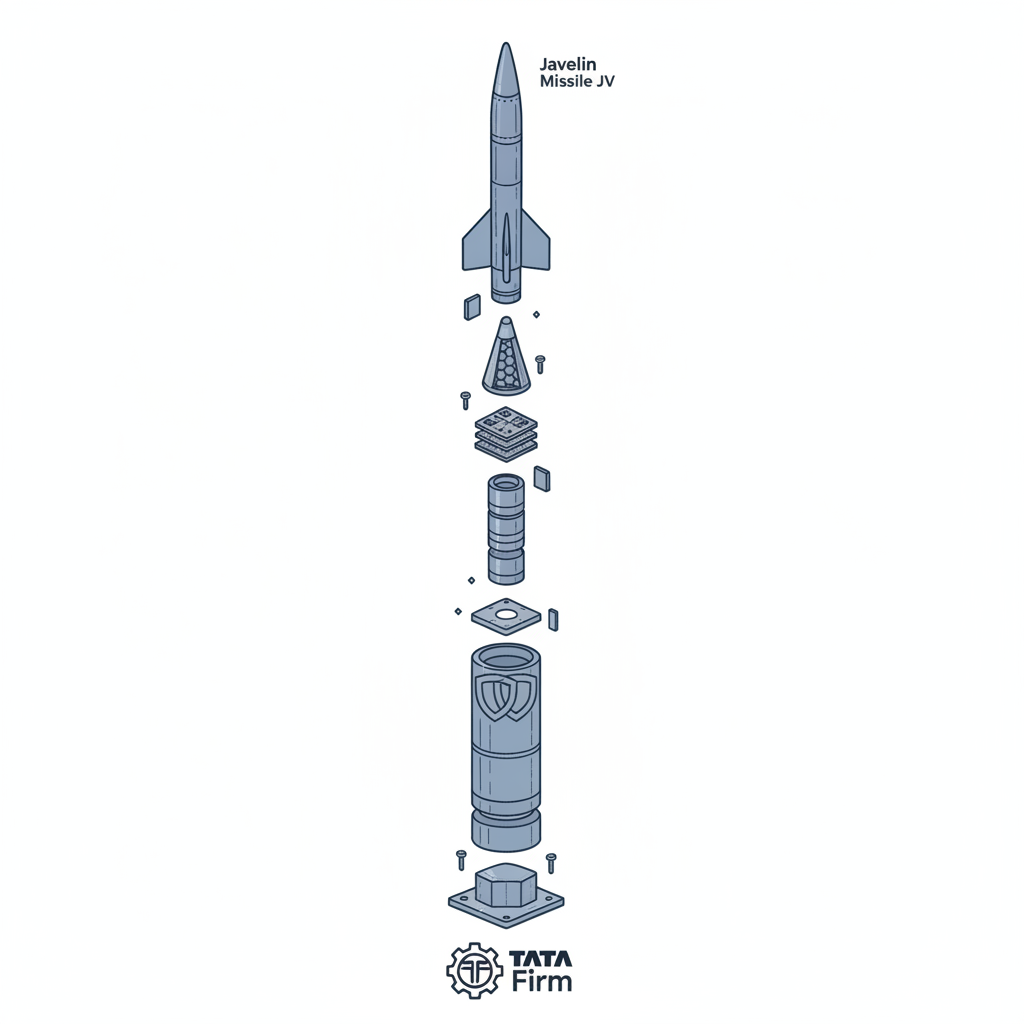
✎ India partners with US firms to co-produce Javelin missiles, boosting defence self-reliance and strategic ties.
Relevance for Banking, SSC & RBI Grade B exams: Security
Tata Advanced Systems Ltd’s partnership with the Raytheon-Lockheed Martin Javelin Joint Venture to co-produce the Javelin anti-tank missile in India marks a significant stride in India’s defence indigenisation push under the ‘Make in India’ initiative. The agreement, formalised through a MoU, will establish a final assembly and integration facility in India, enabling local production of the Javelin All Up Round (AUR)—a fully assembled missile system. This collaboration not only aligns with India’s strategic goal of reducing defence imports but also strengthens its defence industrial base by fostering high-tech manufacturing, creating skilled jobs, and enhancing supply chain resilience. For banking and SSC aspirants, this development underscores the growing importance of defence manufacturing in India’s GDP growth, as seen in recent government policies like the Defence Production and Export Promotion Policy (DPEPP) 2020, which aims to achieve a turnover of ₹1.75 lakh crore in defence manufacturing by 2025. The deal also highlights India’s deepening strategic ties with the US, a critical factor for RBI Grade B examinees focusing on geopolitical and economic linkages.
The Javelin missile co-production venture is expected to generate substantial employment opportunities in India’s defence sector while supporting the US defence supply chain through multi-year sub-assembly kit production. For banking aspirants, this partnership exemplifies the role of public-private collaborations in boosting industrial output and export potential, a key theme in economic surveys and budget analyses. SSC candidates preparing for the General Awareness section will benefit from understanding how such defence pacts contribute to India’s self-reliance (Atmanirbhar Bharat) goals and the broader Indo-Pacific security architecture. Additionally, the deal reflects the increasing integration of global defence majors with Indian firms, a trend that RBI Grade B candidates should monitor for its implications on India’s balance of payments and foreign direct investment (FDI) inflows in the defence sector.
Source: orissapost.com
Generated by AanyaAi for educational purpose.
