
✎ EC's cancellation of 1993 Ranipet bypoll set a precedent for strict MCC enforcement in Tamil Nadu.
Relevance for Banking, SSC & RBI Grade B exams: Polity & Governance
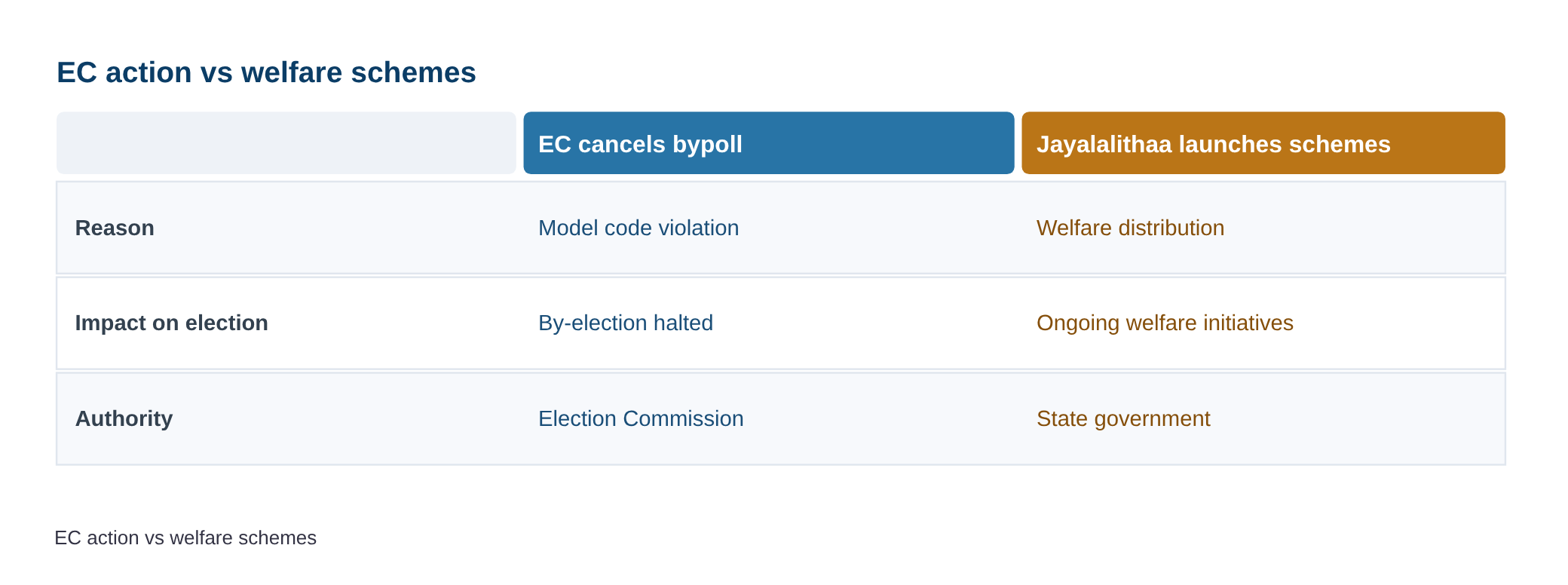
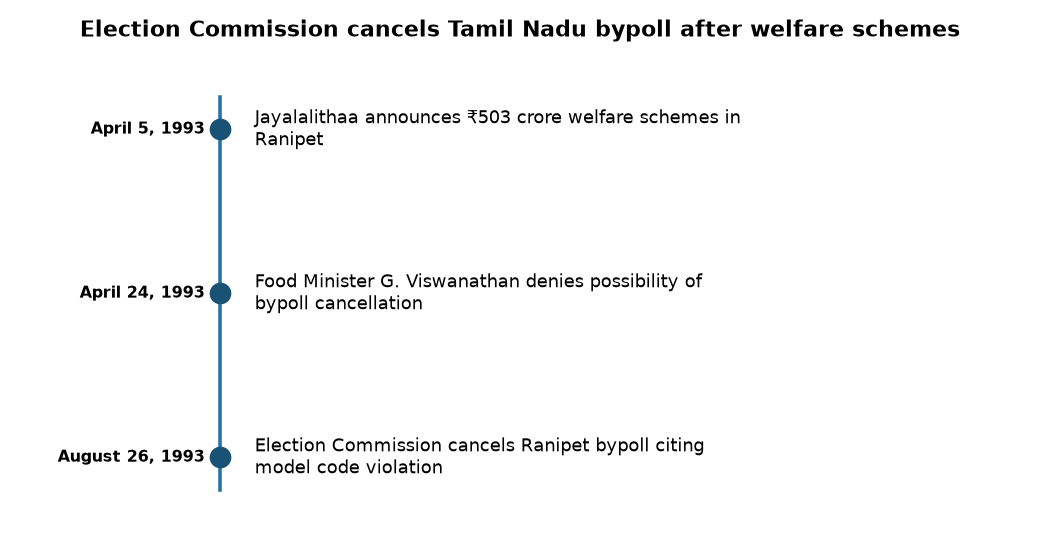
In 1993, the Election Commission of India (ECI) cancelled a bypoll in Tamil Nadu’s Ranipet Assembly constituency after the state government, led by Chief Minister Jayalalithaa, announced welfare schemes worth ₹503 crore just days before the election. The ECI ruled that these announcements violated the Model Code of Conduct (MCC), which prohibits governments from launching new welfare programs during election periods to ensure a level playing field. The Commission held that the bifurcation of South Arcot district and the timing of the welfare announcements—made just before the bypoll—amounted to undue influence, thereby vitiating the electoral process. This decision underscored the ECI’s commitment to maintaining the integrity of elections, even in the face of political pressure, a principle that remains critical for civil services aspirants preparing for exams like UPSC, RBI Grade B, and SSC CGL.
This historical precedent is highly relevant for banking and government exam aspirants, particularly those targeting RBI Grade B, Bank PO, and SSC exams, as it highlights the constitutional role of the Election Commission in upholding democratic norms. Understanding such cases helps candidates grasp the nuances of electoral governance, the significance of the Model Code of Conduct, and the checks and balances within India’s political system. For banking exams, questions on constitutional bodies like the ECI often appear in the General Awareness or Economic and Social Issues sections, while SSC exams may test candidates on polity and governance topics. Additionally, awareness of landmark ECI interventions reinforces the importance of ethical governance—a theme frequently emphasized in interview rounds for such competitive exams.
Source: The Hindu
Generated by AanyaAi for educational purpose.
