
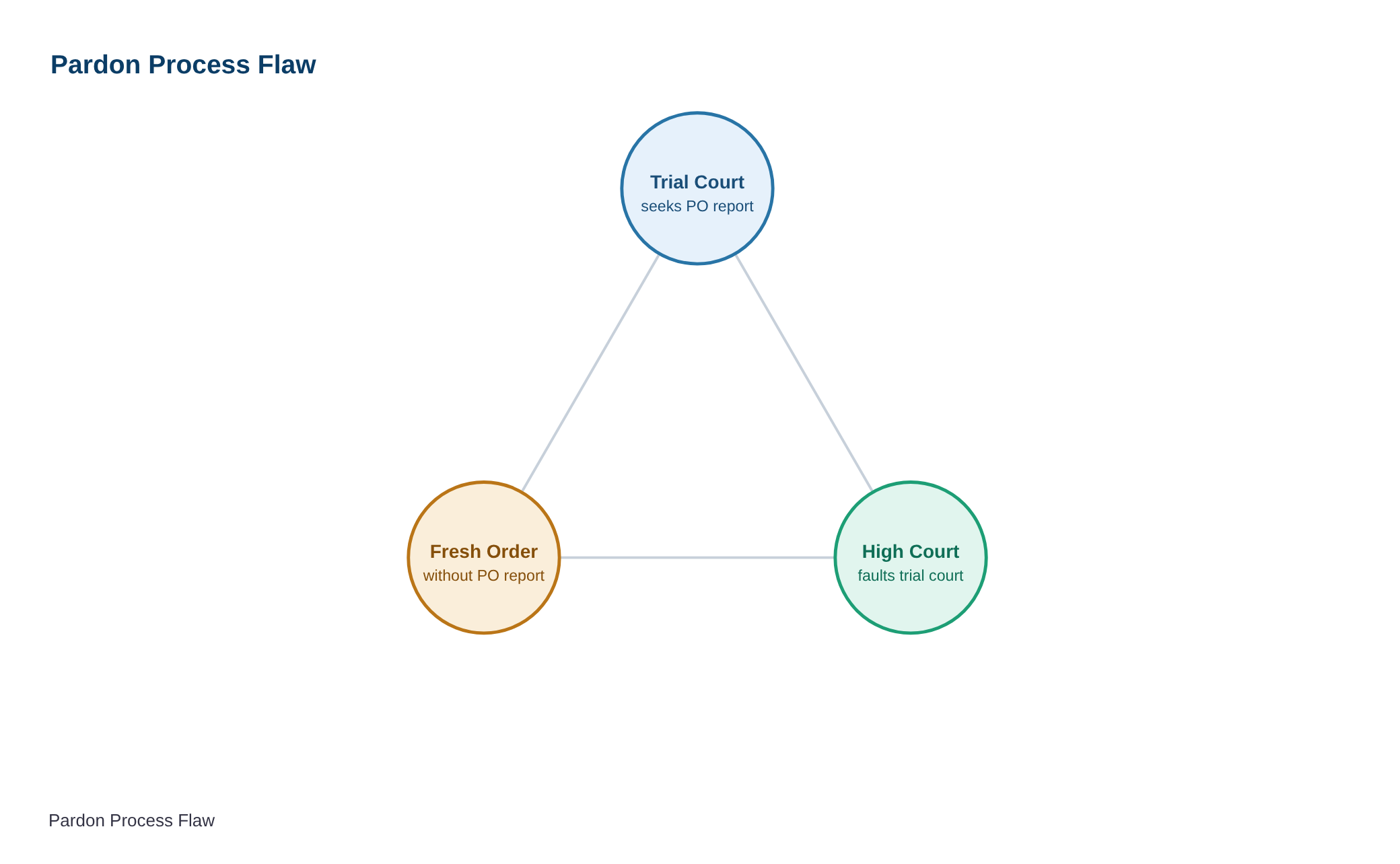
✎ HC directs trial court to pass fresh order on pardon plea without PO report, clarifying procedural limits of accused's challenge.
Relevance for Banking, SSC & RBI Grade B exams: Economy/Governance
The Karnataka High Court’s recent observation in the Renukaswamy murder case underscores the importance of procedural compliance in legal proceedings, a principle that resonates with governance and administrative efficiency—key areas tested in banking and competitive exams. The court ruled that the trial court erred by seeking a probation officer’s report before granting pardon to an approver, as the Probation of Offenders Act, 1958, mandates such reports only post-conviction for sentencing, suspension, or probation. This highlights the need for adherence to legal frameworks, a concept relevant to regulatory bodies like RBI and SEBI, where strict compliance with laws ensures financial stability and public trust. For SSC aspirants, understanding the distinction between procedural and substantive justice can aid in tackling governance-related questions in exams like CGL or CHSL.
The case also illustrates the limited scope of challenges by co-accused under Section 306 of the CrPC, restricting objections to procedural flaws rather than the merits of the pardon. This nuance is critical for aspirants preparing for exams like RBI Grade B, where questions often test knowledge of legal provisions and their implications on governance. Additionally, the emphasis on timely judicial decisions—here, the High Court directing a fresh order within a week—reflects the efficiency required in administrative and financial systems, a theme that aligns with the expectations of banking recruiters like SBI and IBPS, where timely decision-making is a valued skill.
Source: The Hindu
Generated by AanyaAi for educational purpose.
