
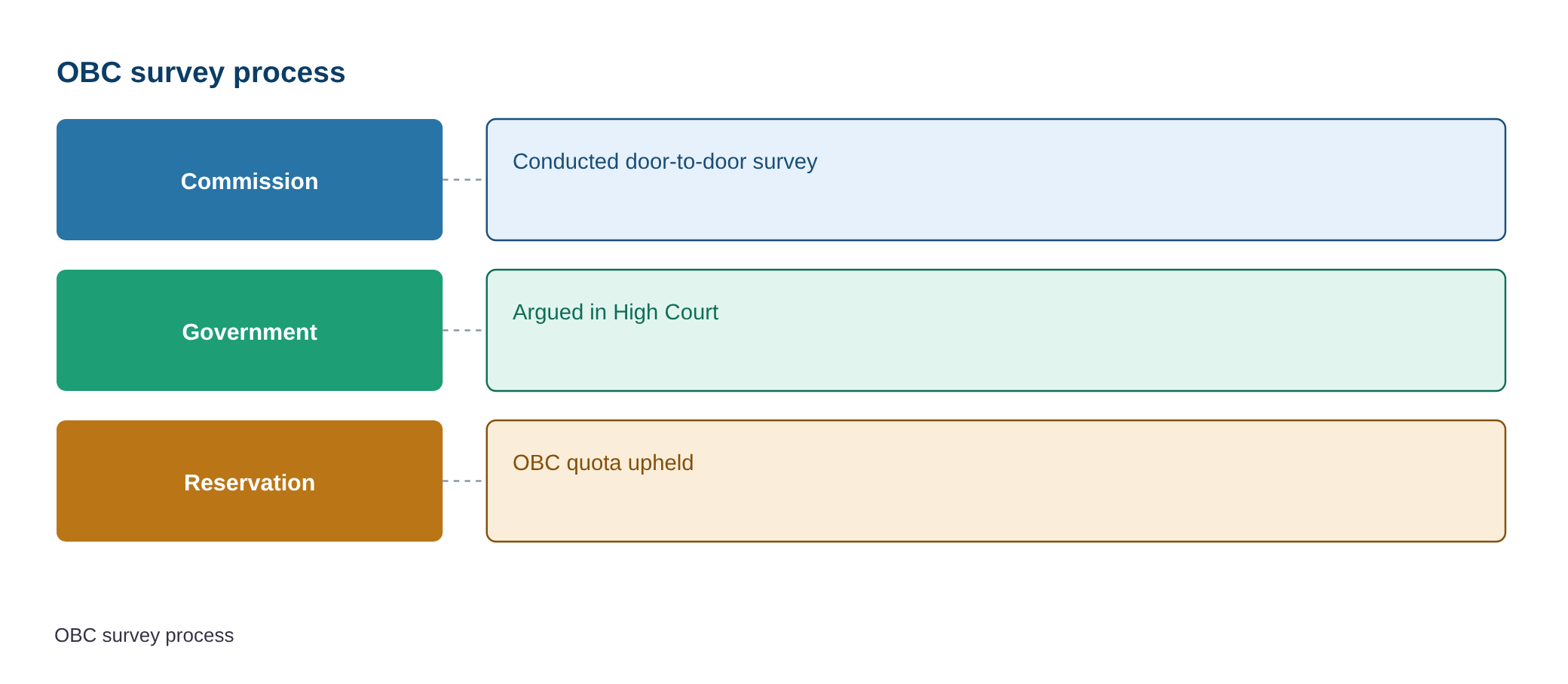
✎ Rajasthan HC validates OBC reservation in local polls based on commission report, ensuring constitutional compliance.
Relevance for Banking, SSC & RBI Grade B exams: Economy/Governance
The Rajasthan government has defended its decision to implement OBC (Other Backward Classes) reservations in local body and panchayat elections, citing a comprehensive survey conducted by the OBC Commission and analysis of Jan Aadhaar data. The government argued in the High Court that reservations were allocated within the 50% ceiling set by the Supreme Court, with SCs receiving 18.51%, STs 17.09%, and OBCs 16%—totaling 48.78% of reserved seats. The state justified the move by stating that the OBC Commission’s report, based on door-to-door surveys, recommended these percentages, ensuring proportional representation while adhering to constitutional limits.
This issue holds significance for banking and SSC aspirants as it highlights governance mechanisms, constitutional provisions, and judicial oversight in public policy. For RBI Grade B exams, understanding the balance between affirmative action and judicial constraints (like the 50% reservation cap) is crucial for governance and economic policy discussions. The case also underscores the role of data-driven policymaking, relevant for aspirants preparing for exams that test awareness of administrative reforms and their socio-economic implications.
Source: amarujala.com
Generated by AanyaAi for educational purpose.

1 comment on “Rajasthan HC Validates OBC Reservation in Local Body Polls via House-to-House Survey”