✎ Swachhta Udyami Scheme transforms livelihoods of waste pickers through financial support, boosting income and education opportunities.
Relevance for Banking, SSC & RBI Grade B exams: International Relations
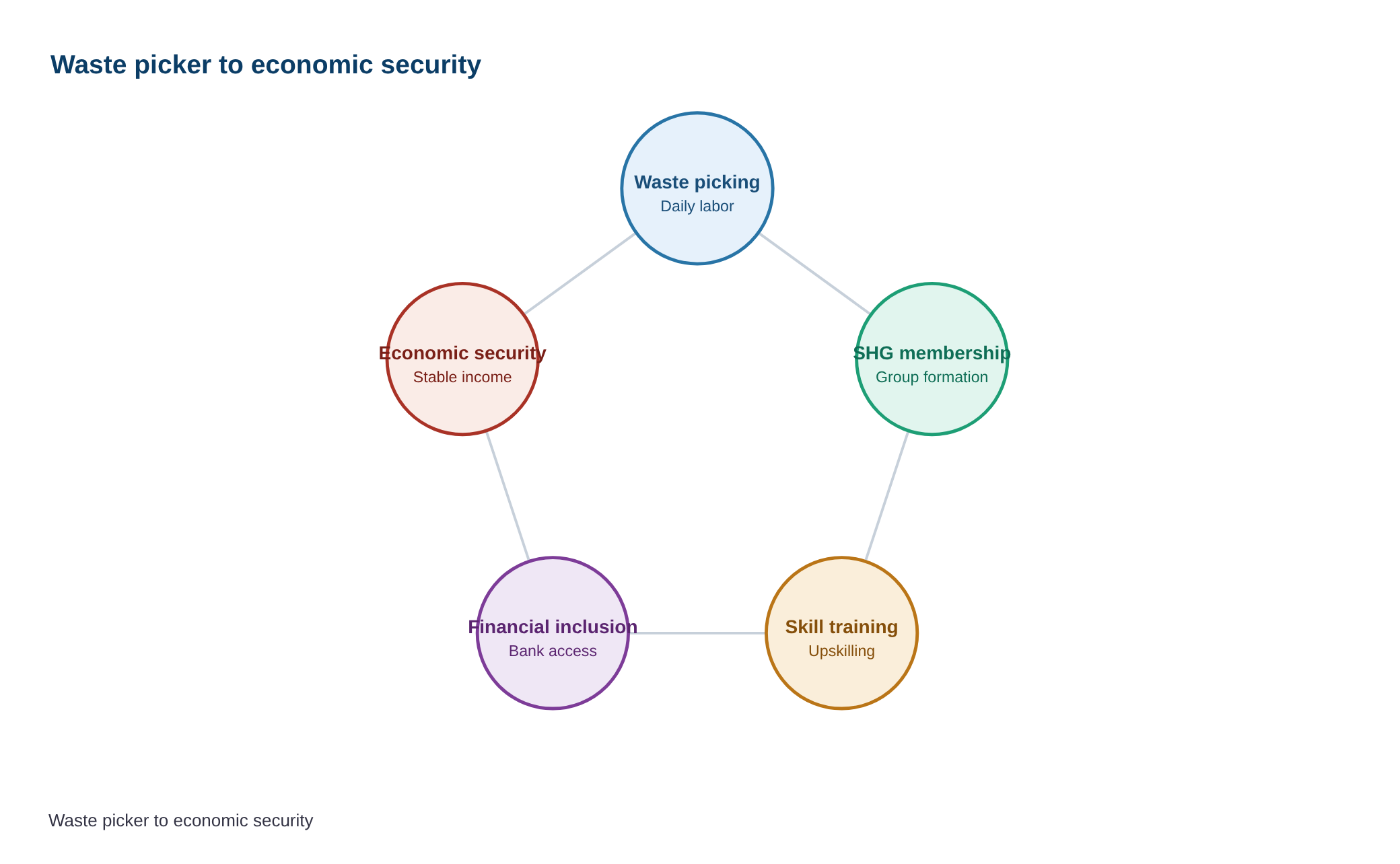
Ponnuru Sanjeevulu’s journey from scavenging waste to financial security highlights the transformative impact of targeted government schemes on marginalized communities. A 34-year-old member of the Scheduled Tribe community in Guntur, Sanjeevulu worked as a waste picker for 19 years, earning a meager ₹150–200 daily, which barely met his family’s basic needs in an urban slum. His illiteracy, compounded by social discrimination and limited opportunities, trapped him in a cycle of poverty. However, the *Swachhta Udyami Yojana* under the National Safai Karamchari Finance and Development Corporation provided him with a ₹6.75 lakh capital subsidy and a ₹10.25 lakh loan for a two-member group project, boosting his monthly income from ₹8,000 to ₹18,000. This enabled him to enroll his children in private English-medium schools and improve his family’s living conditions, underscoring how financial inclusion and skill development can break intergenerational poverty.
For banking and SSC aspirants, Sanjeevulu’s case exemplifies the role of government welfare schemes in poverty alleviation, a key theme in exams like RBI Grade B and SBI PO. The *Swachhta Udyami Yojana*, a flagship initiative under the Ministry of Social Justice and Empowerment, aligns with broader economic policies aimed at uplifting vulnerable sections through credit access and skill training. Such initiatives also reflect India’s commitment to the UN Sustainable Development Goals (SDGs), particularly SDG 1 (No Poverty) and SDG 8 (Decent Work and Economic Growth), making them relevant for current affairs sections in competitive exams. Understanding these schemes and their socio-economic impact can provide aspirants with a nuanced perspective on India’s development challenges and policy interventions.
Source: PIB (Press Information Bureau)
Generated by AanyaAi for educational purpose.

1 comment on “How Sanjeevulu’s Waste-Picking to Entrepreneurship Story Boosts Economic Security”