
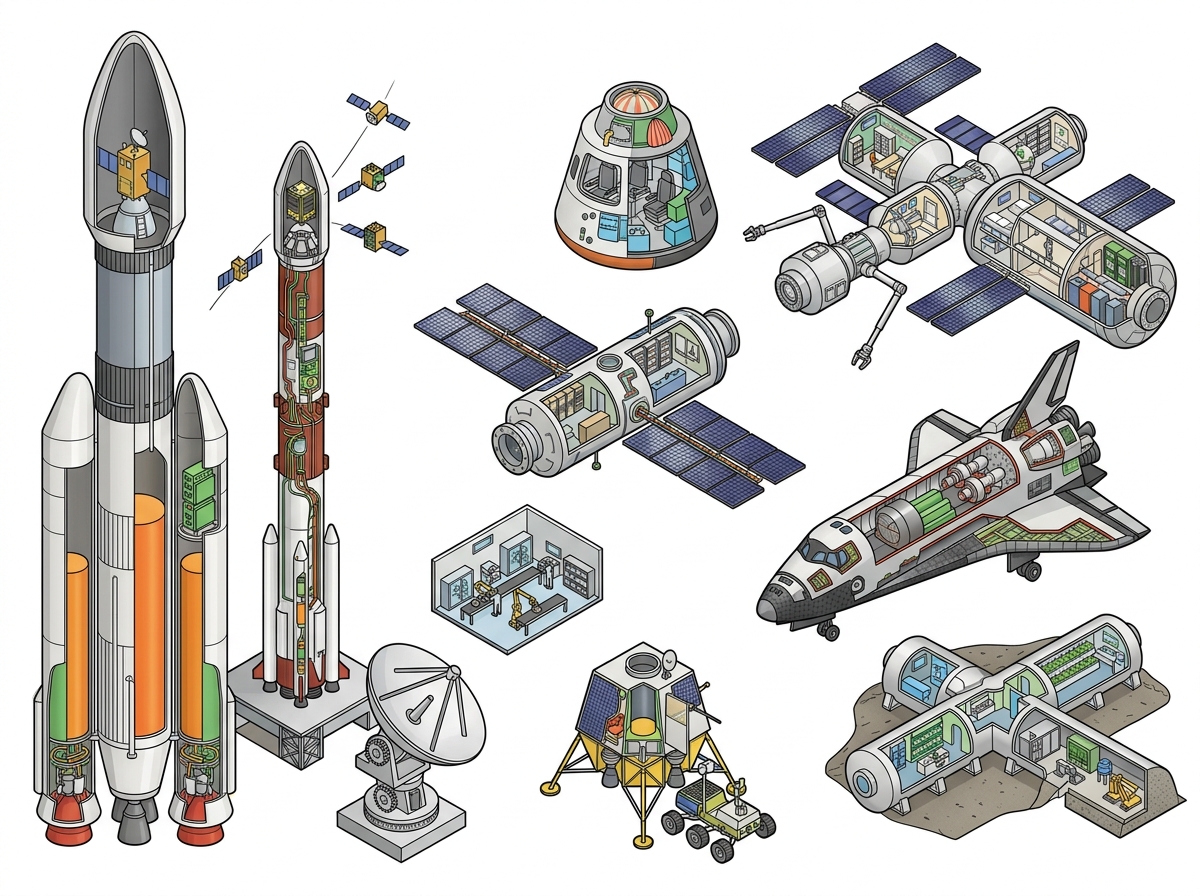
✎ India's space sovereignty ensures self-reliance in critical space assets while balancing global partnerships.
Relevance for Banking, SSC & RBI Grade B exams: Polity & Governance
India’s space sovereignty has evolved from merely executing space missions to establishing strategic autonomy and commercial resilience, a shift critical for aspirants preparing for Bank PO, IBPS, SBI, RBI Grade B, and SSC exams. The article highlights India’s transition from building indigenous capabilities—such as the Chandrayaan-3 lunar landing, Aditya-L1 solar mission, and autonomous docking (SpaDeX)—to ensuring sustained technological and industrial depth. This is particularly relevant for governance and polity sections, where questions often probe India’s self-reliance in critical sectors. For banking and SSC aspirants, understanding how space sovereignty impacts national security, supply chains, and economic policies can provide context for current-affairs-based questions, especially in exams testing awareness of India’s strategic advancements.
The growing role of private players, with over 440 space startups and investments exceeding $618 million, underscores a structural shift from a government-led model to a commercially viable ecosystem. This aligns with exam themes on economic reforms, FDI policies, and regulatory frameworks, such as the liberalization of space sector FDI (up to 100% in components). RBI Grade B aspirants, in particular, may find relevance in how space technology intersects with data security, infrastructure development, and India’s global positioning. The article’s emphasis on flight heritage, indigenous manufacturing, and policy gaps (like the pending space law) also mirrors questions on governance challenges and innovation-driven growth in competitive exams.
Source: Times of India
Generated by AanyaAi for educational purpose.
