
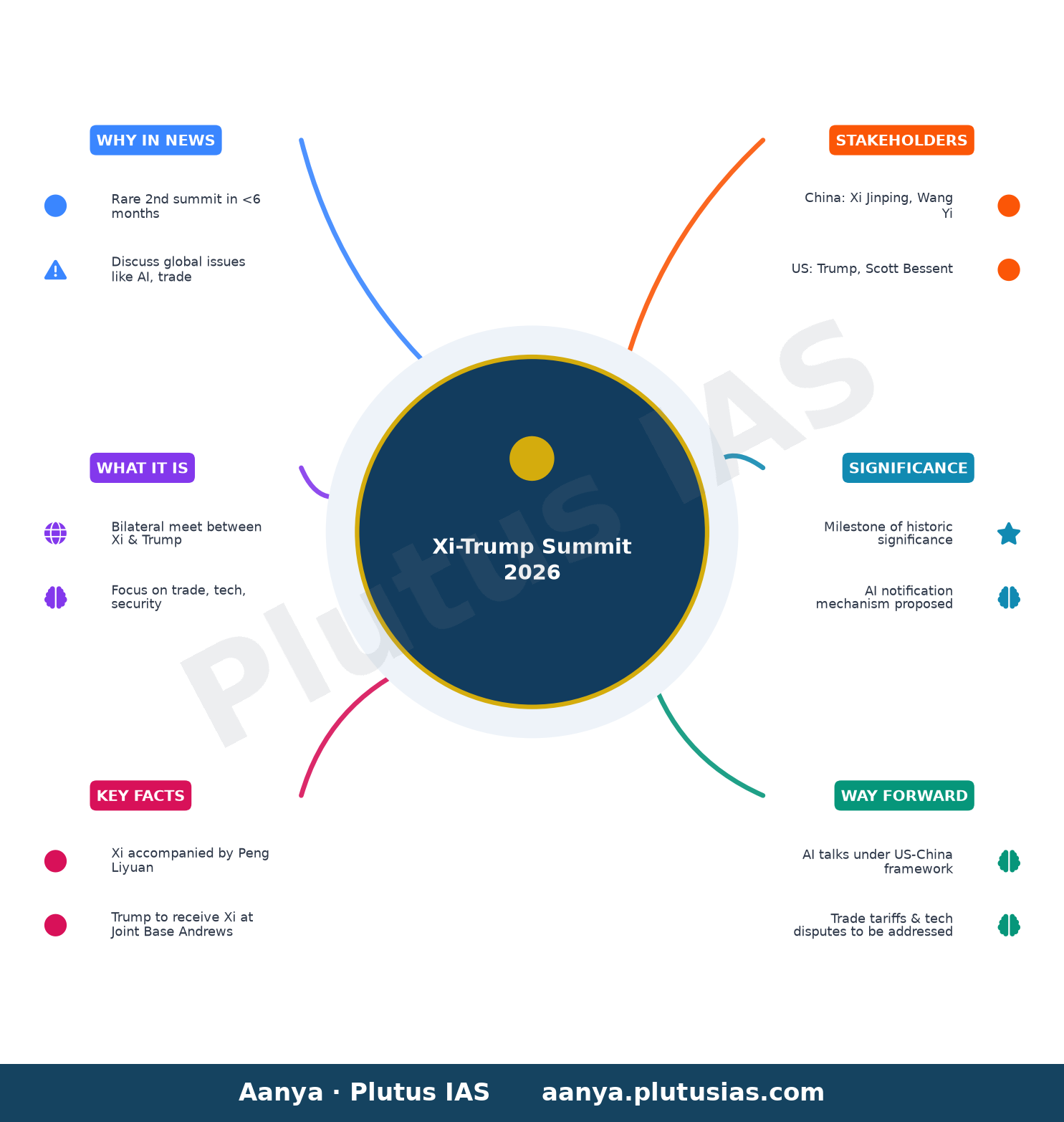
✎ Xi-Trump summit 2026 highlights US-China strategic dialogue on trade, AI, and global security.
Relevance for Banking, SSC & RBI Grade B exams: International Relations
Chinese President Xi Jinping’s visit to Washington for a high-stakes summit with US President Donald Trump carries significant implications for global trade, technology, and geopolitics, making it a critical topic for aspirants preparing for Bank PO, IBPS, SBI, RBI Grade B, and SSC exams. The discussions are expected to cover pressing issues like trade tariffs, AI regulation, military ties, and conflicts in Ukraine and the Middle East, all of which can influence international economic policies, currency fluctuations, and financial market stability—key areas tested in banking and financial awareness sections. Additionally, the summit’s focus on US-China trade dynamics and sanctions, such as the ‘Lindsey O. Graham Sanctioning Russia and Iran Act of 2026,’ could impact commodities like crude oil and gas, directly affecting India’s import costs and inflation, a frequent subject in SSC and RBI Grade B examinations.
For banking and SSC aspirants, understanding the geopolitical undercurrents of this summit is vital as it may shape future trade agreements, tariff policies, and AI governance frameworks, all of which have direct or indirect effects on India’s economic landscape. The mention of a reciprocal tariff reduction framework worth USD 30 billion between the US and China highlights the importance of trade negotiations in shaping global supply chains and inflation trends, topics often featured in descriptive and analytical questions in these exams. Meanwhile, RBI Grade B candidates should note how such high-level diplomatic engagements can influence foreign exchange reserves, capital flows, and monetary policies, as tensions or agreements between major economies often lead to volatility in financial markets, a key concern for central banks.
Source: orissapost.com
Generated by AanyaAi for educational purpose.
