
Relevance for Banking, SSC & RBI Grade B exams: Polity & Governance
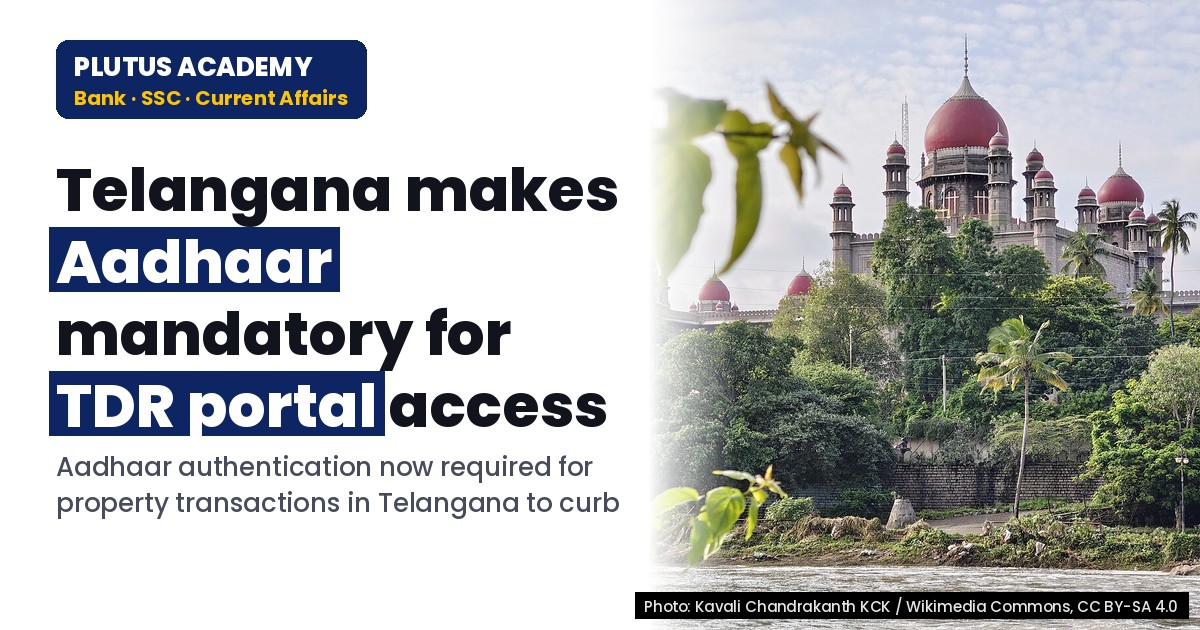
The Telangana government has introduced Aadhaar authentication on its online Transferable Development Rights (TDR) portal to enhance transparency and curb fraudulent activities in property transactions. Effective from October 22, 2026, the initiative mandates Aadhaar-based authentication for property owners, builders, and developers while submitting applications or accessing the portal. Additionally, officials from the Directorate of Town and Country Planning (DTCP) and the Greater Hyderabad Municipal Corporation (GHMC) will use Aadhaar to authenticate their roles, ensuring secure administrative processes. The move aims to prevent impersonation and duplication while maintaining accurate property records. Notably, Aadhaar authentication remains voluntary, with alternative identity proofs like PAN cards or driving licences permitted for those who opt out, ensuring inclusivity without service denial.
This development holds significant relevance for Banking, SSC, and RBI Grade B aspirants, particularly in Polity & Governance sections. For banking exams, understanding Aadhaar’s role in digital governance and fraud prevention is crucial, as it aligns with broader themes of financial inclusion and identity verification in public services. SSC candidates may encounter questions on Aadhaar’s legal framework, its voluntary nature, and government initiatives to streamline administrative processes. RBI Grade B aspirants should note how such authentication mechanisms bolster transparency in land and property transactions, a key area in economic governance. The policy also reflects India’s push towards digital identity integration, a topic often tested in competitive exams.
Source: The Hindu
Generated by AanyaAi for educational purpose.

2 comments on “Aadhaar Authentication Now Mandatory for TDR Portal Access in Telangana”