✎ APSRTC employees seek EPFO intervention for higher pension benefits under Supreme Court directives.
Relevance for Banking, SSC & RBI Grade B exams: Economy
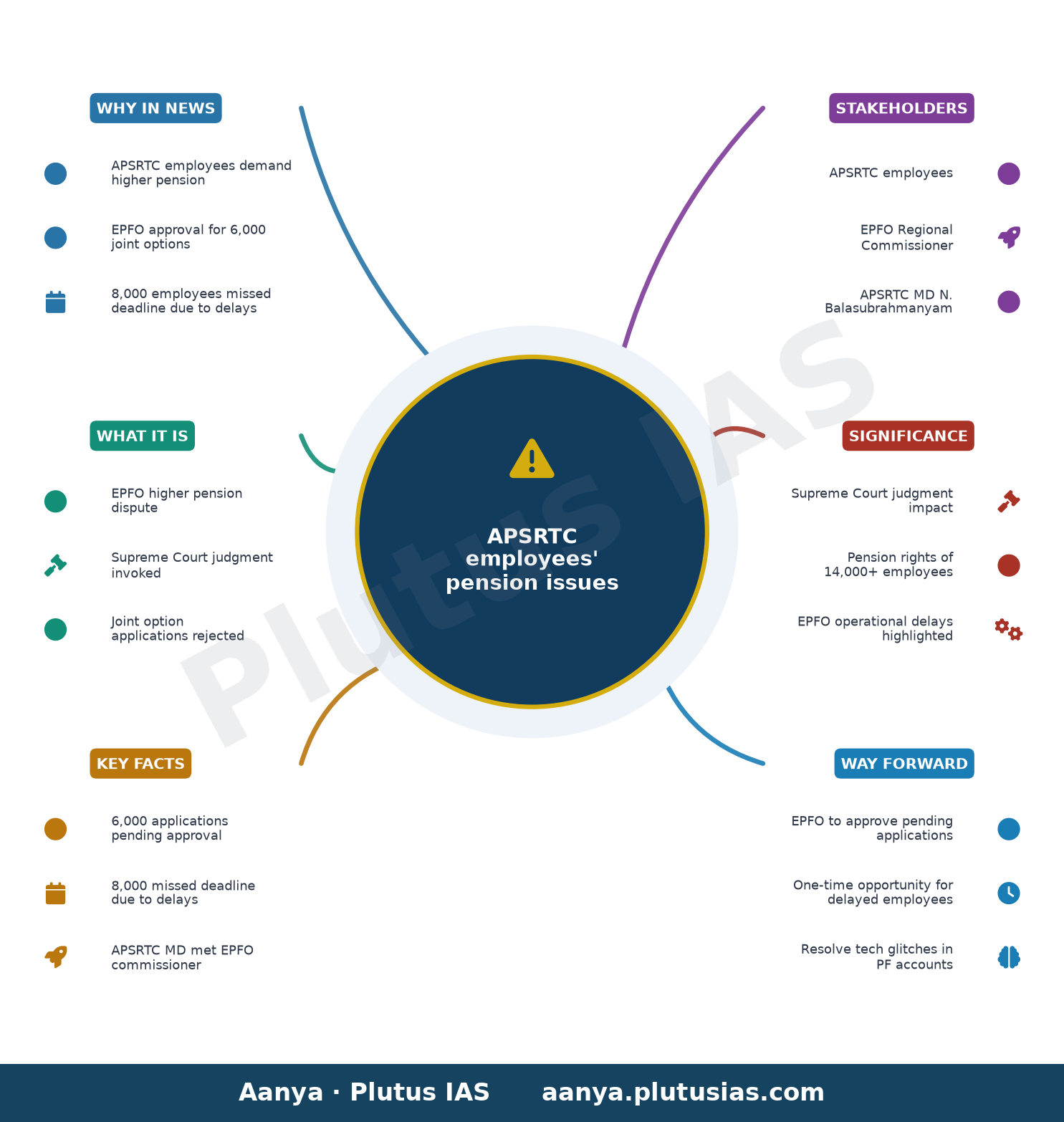
APSRTC employees have urged the Employees’ Provident Fund Organisation (EPFO) to address long-standing issues regarding higher pension, EPF/EPS benefits, pending claims, PF transfers, and technical glitches affecting thousands. In a meeting with the Regional Provident Fund Commissioner in Hyderabad, a delegation led by APSRTC’s MD N. Balasubrahmanyam and union representatives submitted a memorandum seeking approval for joint pension option applications of nearly 6,000 employees whose requests were rejected. They also demanded a one-time window for around 8,000 employees who missed payment deadlines due to portal issues, financial constraints, or delayed notices, allowing them to pay with interest. The employees opposed the Double Slab (Roorkee Formula) for pension calculations, arguing it reduces benefits by 30-40% contrary to the Supreme Court’s directives, and demanded recalculation based on revised salaries under past Pay Revision Commissions.
The JAC also sought immediate pension sanctions for employees above 58, refunds of ₹35 crore for those who continued working post-58, EPS payments for those under the Contributory Pension Scheme, and a special drive to clear pending claims. Additionally, they requested a separate PF code for APSRTC under the Andhra Pradesh Reorganisation Act, alleging existing arrangements under TSRTC’s code have caused hardship. The EPFO assured examination of all issues, though timelines remain unclear. For banking and SSC aspirants, this highlights the EPFO’s role in social security governance, pension reforms, and the Supreme Court’s influence on policy implementation—key topics in economy sections. RBI Grade B candidates should note the EPFO’s operational challenges, including portal technicalities and compliance gaps, which reflect broader financial sector governance issues relevant to monetary policy and financial inclusion.
Source: The Hindu
Generated by AanyaAi for educational purpose.
