
Relevance for Banking, SSC & RBI Grade B exams: Security
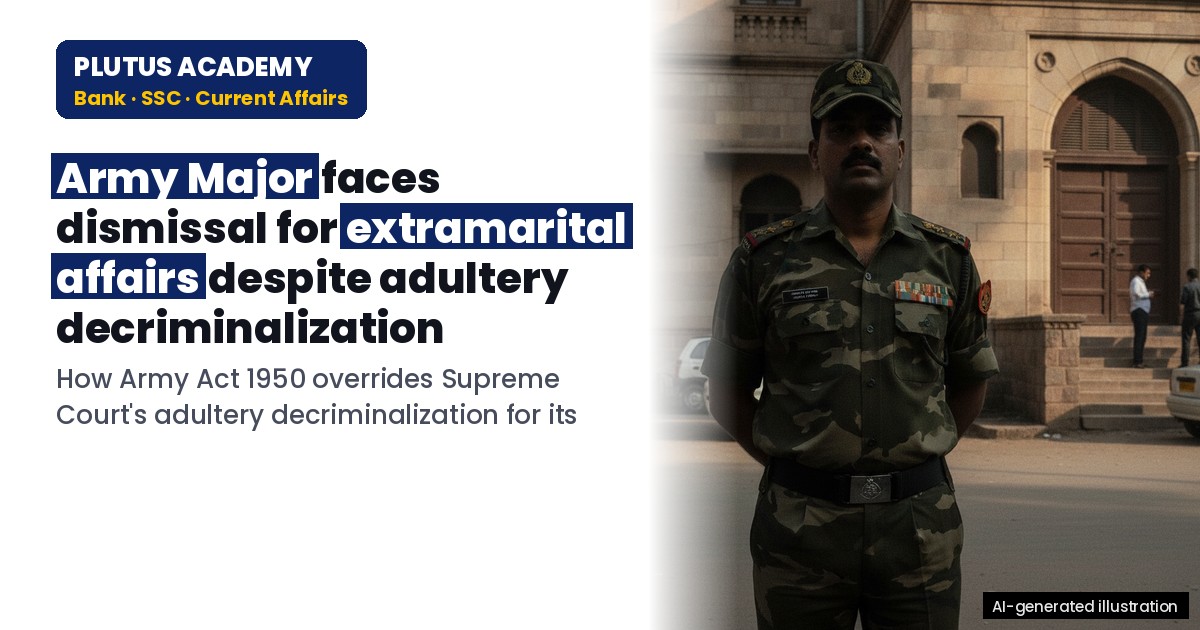
The recent case of an Army Major facing dismissal for extramarital affairs, despite the Supreme Court decriminalizing adultery for civilians in 2018, underscores the unique disciplinary framework governing the armed forces. While civilians are no longer prosecuted under Section 497 of the IPC, the Indian Army continues to treat such conduct as “conduct unbecoming of an officer and a gentleman” under the Army Act, 1950, citing the need to preserve military discipline. Article 33 of the Constitution empowers the armed forces to impose restrictions on fundamental rights to maintain cohesion and order, making adultery a punishable offense within the military’s internal justice system. The case highlights how security institutions prioritize institutional integrity over civilian legal norms, a distinction crucial for aspirants preparing for exams like the RBI Grade B or SSC, where governance and constitutional provisions often feature prominently.
For banking and SSC aspirants, this case serves as a practical example of how constitutional provisions (Article 33) and specialized laws (Army Act, 1950) interact in governance. The distinction between civilian and military justice systems is a recurring theme in exams like the RBI Grade B, where questions on fundamental rights and their exceptions are common. Similarly, SSC exams often test knowledge of constitutional articles and their application in real-world scenarios. The Major’s defense, citing procedural lapses under Army Rule 180, also reflects the importance of due process in administrative actions—a concept relevant to governance and public administration questions in these exams. Understanding such nuances can help aspirants tackle case-based or analytical questions in prelims and mains.
Source: The Indian Express
Generated by AanyaAi for educational purpose.

2 comments on “Army Major Faces Dismissal Over Extramarital Affairs Despite Adultery Decriminalization”